13 Oct 2025 - {{hitsCtrl.values.hits}}
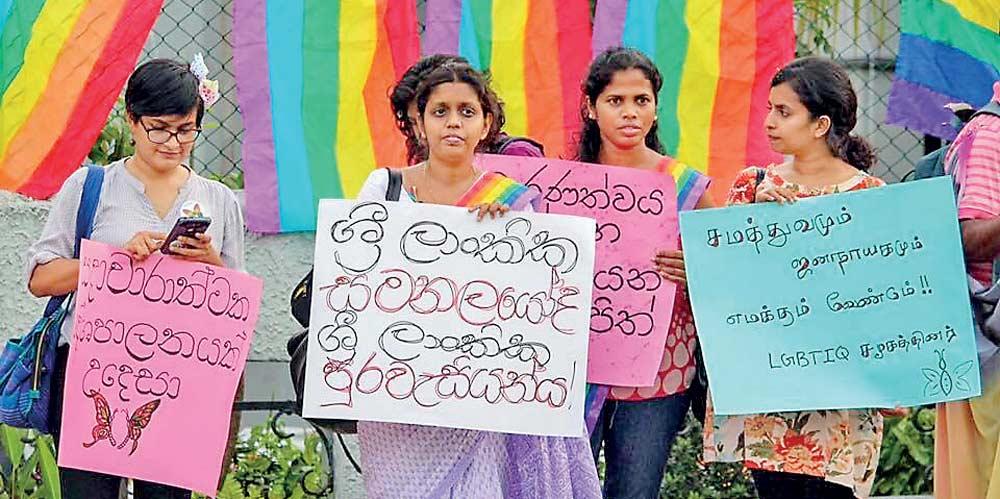
Political activists protested in support of the LGBTQIA+ community
 Following last week’s discussion on India’s LGBTQA+ tourism, I wanted to explore the deeper question many readers raised: what does science tell us about sexual orientation itself?
Sexual orientation is not a choice. It’s a natural part of who someone is—like being left-handed or having a particular eye colour. Throughout history and across all cultures, a small but significant number of people have been attracted to others of the same sex. Modern science helps us understand why.
What Science Tells Us
Our bodies produce two main types of hormones: testosterone (primarily in males) and estrogen (primarily in females). Everyone has both, just in different amounts. These hormones do more than shape our physical features—they also influence how our brains develop before we’re even born.
Testosterone is produced mainly in the testicles. It drives male characteristics like deeper voice, facial hair, muscle growth, and sperm production. Women also have testosterone, but in smaller amounts. Estrogen is the primary female hormone, produced mainly in the ovaries. It controls female characteristics like breast development, menstruation, and pregnancy. It also affects bone health and mood. Men also have estrogen, but in smaller amounts.Both hormones are present in everyone—just in different levels—and both play important roles in physical development, reproduction, mood, and overall health.
During pregnancy, these hormones help wire the brain in ways that later affect who we find attractive. Once these patterns form, they remain stable throughout life. This isn’t something that happens because of how someone was raised or what they experienced as a child. It happens in the womb, before birth. Estrogens and progestogens (natural and synthetic) persist in the environment as endocrine-disrupting chemicals (EDCs), potentially affecting wildlife and human hormone systems. Despite growing evidence of health impacts, long-term exposure effects remain poorly understood.
Detecting these hormones in water samples is challenging: they exist in trace amounts, samples degrade easily, and other substances cause interference. Each research project requires customised analytical methods.
[Based on National Centre for Biotechnology Information Review-UK--https://www.ncbi.nlm.nih.gov/]
Evidence from Nature
Same-sex attraction isn’t unique to humans. Scientists observe it throughout the animal kingdom—in dolphins, penguins, sheep, and many other species. In certain sheep populations, about 8% of rams consistently prefer other males even when females are available. Researchers found that these rams’ brains developed differently before birth.
Animals don’t have culture, religion, or complex family structures. Yet they show the same natural variation in attraction that humans do. This tells us we’re looking at something biological, not behavioural or learned. If someone’s orientation is determined before birth by biology they cannot control, how can it be fair to condemn them for it? Between 3% and 6% of people experience same-sex attraction. These individuals already face challenges in a world where they’re in the minority.
Medical and psychological experts worldwide have concluded that attempts to change someone’s orientation—so-called “conversion therapies”—don’t work and cause serious harm. You cannot change through willpower or treatment what nature has already determined.
Moving Forward with Understanding
Many religious traditions were established long before we understood genetics or how the brain develops. Their teachings reflected the knowledge available at that time. Today, we know more about biology than ever before.True faith calls us to compassion and understanding. Most spiritual traditions teach us to treat others with kindness and respect. When science shows us that people are born with certain traits they cannot change, responding with love rather than rejection reflects the best of what faith teaches us.
Culture naturally evolves as we gain new knowledge and understanding. What seems unchangeable tradition today was once someone’s new idea. Societies advance when compassion guides our actions more than rigid custom. Accepting natural human diversity doesn’t threaten our values—it strengthens them by showing we can balance tradition with wisdom.
For political leaders: Using LGBTQIA+ individuals as political tools—whether to rally conservative voters or appear progressive— is to treat real people as pawns. True leadership means protecting vulnerable citizens, ensuring equal treatment under law, and then allowing people to live in peace. Exploiting others’ challenges for votes is beneath the dignity of any public office.
The LGBTQIA+ community:
Lesbian, Gay, Bisexual (LGB): People attracted to the same sex or both sexes -- Transgender (T): People whose inner sense of gender differs from their birth sex--Intersex (I): People born with physical sex characteristics that don’t fit typical definitions--Asexual (A): People who experience little or no sexual attraction--Questioning (Q): People exploring their identity--And others (+): Many other identities and experiences.
While the scientific evidence is strongest for sexual orientation being biologically determined before birth, the principle of compassion applies to everyone. Whether someone’s identity stems from prenatal biology, genetics, or factors we don’t yet fully understand, they deserve respect and dignity.
The Human Side
LGBTQIA+ individuals don’t threaten society—they contribute to it. Artists, scientists, teachers, doctors, and leaders from this community have enriched human civilisation. They’re not asking for special treatment, just the same respect given to everyone else: the freedom to live honestly, to love openly, and to be treated with basic human dignity.
True compassion goes beyond tolerance—it means actively supporting the happiness and wellbeing of LGBTQIA+ individuals. When two women love each other and wish to marry, or two men want to build a life together as a couple, they’re seeking the same joy and security that heterosexual couples take for granted, and our duty as fellow human beings is simple: help make their lives happier, not harder. They’re not asking us to change our own relationships or beliefs—only to allow them the same opportunity for love, commitment, and legal recognition that strengthens any partnership.
The question isn’t whether we approve of their relationship. The question is whether we can extend the same kindness, legal protections, and social support that we offer to any couple in love. This means supporting their right to legally marry and enjoy all the benefits that come with marriage. It means welcoming their relationships at family gatherings and social events, and celebrating their commitments with the same warmth we show others. It means ensuring they have equal access to housing, employment, and healthcare, and standing beside them when others show prejudice.
Real compassion isn’t passive acceptance. It’s active participation in another person’s wellbeing. It’s treating their happiness as worthy of the same protection and celebration we want for ourselves and our loved ones.
A Simple Truth
In the end, this comes down to a simple question: Can we show kindness to those who are different from us? Can we accept that nature creates diversity in all things, including how people experience love and identity? These individuals ask only to live without fear, to use their talents, and to exist in peace. They’re not asking you to change your beliefs—only to extend the same basic human decency you’d want for yourself or your loved ones.
The measure of our humanity lies in how we treat those who are vulnerable. When we choose understanding over judgement and compassion over condemnation, we reflect the best of what it means to be human—regardless of our faith, culture, or background.
04 Jun 2026 4 hours ago
04 Jun 2026 5 hours ago
04 Jun 2026 6 hours ago
04 Jun 2026 6 hours ago
04 Jun 2026 6 hours ago