03 Jun 2025 - {{hitsCtrl.values.hits}}
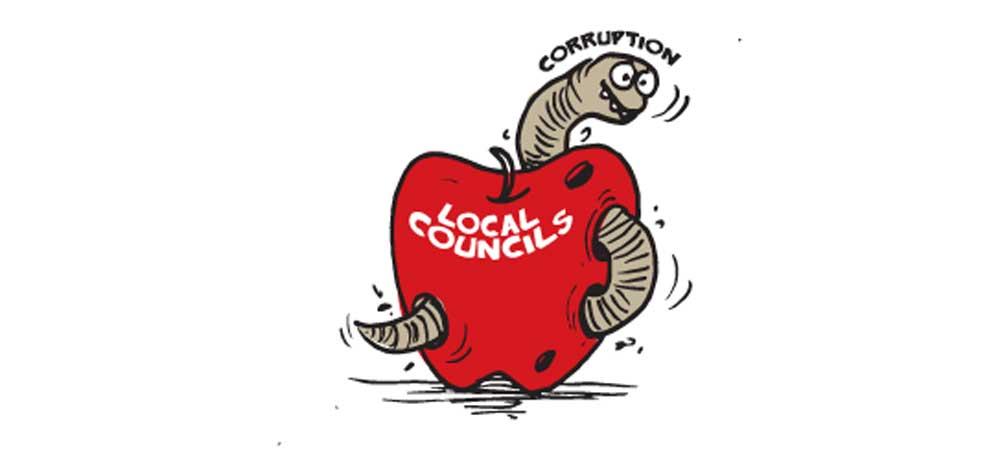
Now, the majority of councils are hung councils, and this would lead to unethical dealings between political parties.
The term of the 339 local government bodies for which elections were held on May 6 was scheduled to commence on June 2 (yesterday), according to a gazette extraordinary issued by the Minister of Provincial Councils and Local Government on February 17.
Out of the 341 local councils established in the country, the election for the Elpitiya Pradeshiya Sabha was held earlier on October 26, last year, while the election for the Kalmunai Municipal Council has been indefinitely deferred due to a legal issue.
However, Commissioner General of Elections Saman Sri Ratnayake had announced that only 161 out of 339 Local Councils where a single political party or independent group has secured more than 50% of the seats, were able to officially commence operations yesterday. These 161 councils include 14 Municipal Councils, 13 Urban Councils and 134 Pradeshiya Sabhas.
Even out of those 161 councils, there seem to be councils where political parties have failed to appoint members from their proportional lists to the slots they have been allocated. The only party that seems to have sorted out this issue is the National People’s Power (NPP). Infighting is going on over these slots in some other parties, such as the Samagi Jana Balawegaya (SJB), where organisers of some areas have threatened to resign unless their supporters are appointed to those seats. Both systemic and ethical issues are to blame for this state of affairs. The local government elections held in 2018 and 2025 have vividly demonstrated that the mixed electoral system introduced for the local authorities in 2012 is flawed and a burden to the public coffers. No political party can absolve it of its responsibility for this mess, as all parties supported this system in principle when it was brought in.
There are two major flaws in the system compared to the one implemented prior to 2012: a twofold increase of members of councils and the absence of a strategy to prevent the strength of the party that secures the highest number of seats from becoming less than the collective strength of all other parties. Despite eight years having passed since the first local government elections were held under the mixed electoral system, no government thought fit to amend the law. President Ranil Wickremesinghe proposed to downsize the councils in December 2022, but his intention seemed to be something else: the postponement of elections, in light of the drastic erosion of the vote bank of his party, the United National Party (UNP).
He, in fact, used various tactics to postpone the election and finally succeeded by not issuing funds for the polls, in spite of the Election Commission having fixed the date for the election. The Supreme Court in August last year ruled that he, as the Minister of Finance, had violated the fundamental rights of the people and ordered to Election Commission to conduct the elections as soon as possible.
President Anura Kumara Dissanayake, also possibly due to this ruling or for political reasons, did not want to delay the elections to amend the law. Nevertheless, it is not clear as to what prevented the NPP government from, at least, using the report compiled in 2023 by the Delimitation Committee headed by Mahinda Deshapriya, which had reduced the number of local government councillors to 4,714 from 8,400.
Now, the majority of councils are hung councils, and this would lead to unethical dealings between political parties. The smaller parties would be approached by the larger parties to form the administration of councils, when the former would attempt to extract maximum gains, financial or otherwise, out of the process. If money is involved in this horse-trading process, which could be expected in most cases, it could cause a chain reaction by way of increased corruption within the relevant councils.
It is high time the political parties displayed magnanimity in creating an environment where the councils can function smoothly and do their best for the people, without leaving room for corruption, fraud and waste of public funds. It is also important that institutions such as the Commission to Investigate Allegations of Bribery and Corruption (CIABOC) keep tabs, especially on these hung councils.
‘Your Thought’ is a space, a right of the readers to support or contradict and discuss the issues highlighted in the editorial and other articles in the editorial and op-ed pages. Designed as the reader’s editorial; our readers can send in their writings, with a word count not exceeding 200, to ‘Your Thought’, Daily Mirror Political Features Desk, No 8, Hunupitiya Cross Road, Colombo 2 or email to [email protected]
04 Jun 2026 8 hours ago
04 Jun 2026 8 hours ago
04 Jun 2026 9 hours ago
04 Jun 2026 9 hours ago
04 Jun 2026 9 hours ago