02 Apr 2025 - {{hitsCtrl.values.hits}}
 The UNP and SJB are all too engrossed in a vindictive internecine scuffle, and the Rajapaksas have been reduced to an insignificant 3 per cent of the popular vote
Dissanayake might still deserve his fair share of credit for not dismantling the economic reforms Wickremesinghe instituted under the IMF guidelines
After two consecutive years of negative growth, the economy expanded by 5% in the year 2024, and it is projected to grow at a healthy rate this year as well
It is also true that the country is still not out of the woods, and fiscal consolidation is an ongoing endeavour. Finally, the country has to pay restructured loans from 2028, some until 2042
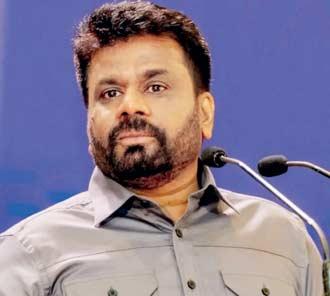
 President Anura Kumara Dissanayake was quoted as saying in one of those election rallies: “It usually takes a decade for a bankrupt nation to make an economic comeback. But we have been able to turn around the Sri Lankan economy within a surprisingly short time.”
This is both true and false.
True because Sri Lanka has shown a surprising degree of resilience through its darkest days of economic crisis.
|
The first six months of the AKD presidency are mercifully uneventful – and refreshingly lacking any efforts to make pie-in-the-sky promises of the JVP/NPP into reality |
The country has risen from the nadir far quicker than the economic pundits and multi-lateral agencies have forecasted. After two consecutive years of negative growth, the economy expanded by 5% in the year 2024, and it is projected to grow at a healthy rate this year as well.
It is also true that the country is still not out of the woods, and fiscal consolidation is an ongoing endeavour. Finally, the country has to pay restructured loans from 2028, some until 2042.
It is false because it was not the JVP/NPP that steered the economy through its worst-ever crisis to a safer refugee. Like it or not, it was the government of Ranil Wickremesinghe who lost his presidential bid to Dissanayake.
Wickremesinghe did not get the credit for stabilising the economy. Instead, the average Sri Lankan voter, who earlier voted for Gotabaya Rajapaksa and the Rajapaksa family autocracy for over a decade, was angry with Wickremesinghe for the austerity measures.
They voted en masse to Dissanayake, who glided to victory over a high wave of the protest vote.
Dissanayake might still deserve his fair share of credit for not dismantling the economic reforms Wickremesinghe instituted under the IMF guidelines.
But that was not what he and the NPP pledged during the election campaign: they promised to renegotiate the IMF’s Debt Sustainability Analysis (DSA) and criticised many cost-reflective pricing measures the country adopted on fuel and electricity, etc, under the IMF pressure.
His voters, that same 6.9 million who voted for Gota, voted for Dissanayake to deliver on this promise. Thank God he didn’t. If he did, he could have destroyed the recovering economy with a snap of fingers. His voters would have revelled the momentary relief like the crabs, who play on until the water boils in the pot- until the economy crashes with its full weight on them.
The president should be credited for his part in economic recovery by not delivering on the most ruinous parts of election promises.
The first six months of the AKD presidency and NPP/JVP government are mercifully uneventful – and refreshingly lacking any efforts to make pie-in-the-sky promises of the JVP/NPP into reality.
One would describe this cautious approach as one that takes its governing responsibilities with utmost seriousness. Gotabaya Rajapaksa could have served the country better by doing nothing, sort of stupid egoistic policies he put in place one after another. The same applies to the JVP/NPP. And non-partisan Sri Lankans should appreciate the NPP/JVP for exactly not doing that.
Imagine if Gota could unleash widespread economic destruction with his simple acts of stupidity; the destruction the JVP/NPP could unleash if it choose to give practical expression to a fraction of its doctrinaire view is dreaded beyond the imagination.
The usual cynics would mock the JVP/NPP for following the footsteps of Ranil Wickremesinghe, who himself was desperately hanging on the IMF reform program –to provide a semblance of justification for his presidency. Wickremesinghe would have prioritised his re-election over the success of the IMF program had it been during a different time.
There is nothing wrong if the NPP/JVP follow the footsteps of Ranil if that delivers on the economy. As Deng Xiaoping, China’s reformist leader, once said, it does not matter whether the cat is black or white as long as it catches mice.
Also, one could not help but notice the general lack of protests, trade union strikes, and the usual trash-talking of Sri Lanka since the new administration came to power.
That was not necessarily because the public lives were suddenly improved. Rather, it was the JVP that was behind many of those protests, amplifying minor grievances to advance their political ends.
The UNP and SJB are all too engrossed in a vindictive internecine scuffle, and the Rajapaksas have been reduced to an insignificant 3 per cent of the popular vote. These issues may contribute to the sudden lull of protest politics and economic sabotage.
But, the biggest agent of economic sabotage in this country was also the JVP itself.
In a crocked irony, the government has removed that pernicious handicap, which is itself, from the political life.
That is good news for every Sri Lankan.
05 Jun 2026 31 minute ago
05 Jun 2026 49 minute ago
05 Jun 2026 59 minute ago
05 Jun 2026 1 hours ago