26 Feb 2026 - {{hitsCtrl.values.hits}}
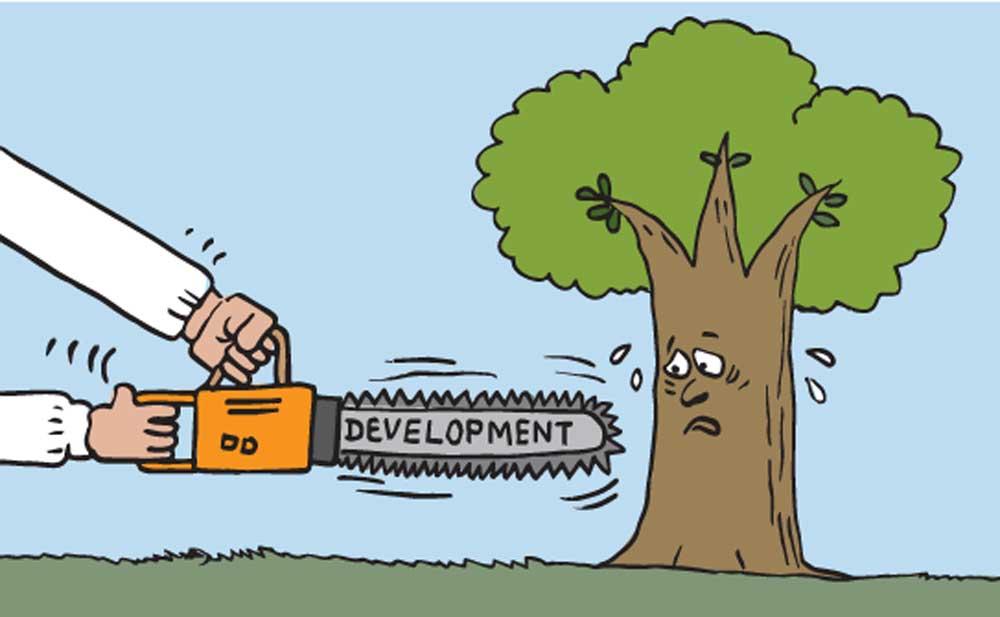
Mandaitivu is designated as a natural flood-retention zone and is regularly submerged during the rainy season. Its role in safeguarding Jaffna’s limited forest cover makes the island unsuitable for large-scale construction
It is quite ironic to see the incumbent government showing interests to build an international cricket stadium despite the worrying performances by our own national team. Following pressure from environmental groups, the Government halted the construction of the proposed international cricket stadium in Mandaitivu, Jaffna. Mandaitivu Island is an ecologically critical, biodiversity-rich area in Jaffna, Sri Lanka, boasting significant mangrove forests, seagrass beds, and over 150 bird species, including endangered spot-billed ducks.
According to environmental groups, Mandaitivu is designated as a natural flood-retention zone and is regularly submerged during the rainy season. Its role in safeguarding Jaffna’s limited forest cover makes the island unsuitable for large-scale construction. Additionally, if built, the complex would be prone to frequent flooding and inaccessibility, resulting in continual repair costs and raising serious concerns about the wasteful use of allocated resources.
The National Environmental Act No. 47 of 1980 mandates conducting an Environmental Impact Assessment (EIA) prior to carrying out mega scale projects in environmentally sensitive areas. An EIA is not a mere document loosely touching upon impacts of development activities on the natural and social environment. It is the responsibility of the project proponent to carry out an EIA, ensure that it is published in newspapers, that people are being consulted and that it is open for public comments for a mandatory period of 30 working days. Despite the extent of this project, project proponents have failed to conduct an EIA according to the Central Environmental Authority.
It is a known fact that mangroves acted as a crucial, natural, and highly effective barrier against the 2004 tsunami in Sri Lanka, significantly reducing fatalities and property damage in coastal areas where they remained intact. Studies showed that areas with dense, healthy mangroves such as Kapuhenwala suffered much lower damage compared to areas where mangroves were degraded or removed.
In 2015, Sri Lanka became the first nation to legally protect all its mangrove forests; hence mangrove management in Sri Lanka may act as an important exemplar for other nations. Mangroves play a vital role in reducing impacts of climate change and is listed in the carbon pricing policy of many developing countries due to its carbon sequestration capacity. Blue carbon in mangroves is considered as one of highest values of carbon stocks that can be achieved per hectare; this highlights the importance of mangrove forests in climate change mitigation.
It is still not clear as to how the incumbent government or any government has prioritised on safeguarding sensitive ecosystems of this nature. True that small, concerted efforts are being taken to declare forest complexes as forest reserves and protect endemic species such as the Bandula Pethiya. But unplanned and ad hoc development initiatives of this nature may sometimes question government’s credibility. Environmentalists by no means oppose development done in the right manner. But Sri Lanka is already suffering from large-scale unplanned development initiatives.
One of the obvious examples is the aggravating human-elephant conflict. Due to high population density and poor land-use planning, more lands are taken up for settlements, displacing elephants from their habitats. Another example is the destruction caused in the aftermath of cyclone Ditwah. From soil erosion along the banks of major rivers to earth slips and landslides, unregulated housing and constructions in high risk areas, quickly turned a natural hazard into a disaster.
Sri Lanka is governed by many laws to protect its natural resources. Yet, these laws are often overlooked when it comes to development. In this case, what is perhaps the best thing to do is to find some talented cricketers from Jaffna and other parts of the country and groom them to represent Sri Lanka in the national squad. Perhaps the finances allocated in setting up an entirely new cricket stadium in an isolated area should be put into good use in training and grooming the next generation of cricketers. More cricket stadiums could perhaps be halted, because it doesn’t address a need of the hour.
‘Your Thought’ is a space, a right of the readers to support or contradict and discuss the issues highlighted in the editorial and other articles in the editorial and op-ed pages. Designed as the reader’s editorial; our readers can send in their writings, with a word count not exceeding 200, to ‘Your Thought’, Daily Mirror Political Features Desk, No 8, Hunupitiya Cross Road, Colombo 2 or email to [email protected]
16 Jun 2026 1 minute ago
16 Jun 2026 22 minute ago
16 Jun 2026 2 hours ago
16 Jun 2026 2 hours ago
16 Jun 2026 2 hours ago