16 Oct 2025 - {{hitsCtrl.values.hits}}
When the New Vithanakande Tea Factory recently broke the Guinness World Record for their premium Ceylon Black Tea sold at the highest price of 125,000 Yen or USD 835 per kilogram at a Japanese tea auction, it didn’t come in as a surprise for many. Ceylon Tea has earned global recognition for its distinct flavours and rich aroma and is a beverage celebrated the world over.
But whether plantation workers who handpick tea leaves in Sri Lanka’s tea estates receive the same recognition has remained a question for over 200 years. Repeated exploitation and struggles have defined the greater part of the Malaiyaha community, who have blended rich traditions into the country’s social and cultural fabric. Today, even though they are slowly being recognised as a community with an identity and culture of their own, they seem to have a long way to go in terms of enjoying the rights of a citizen.
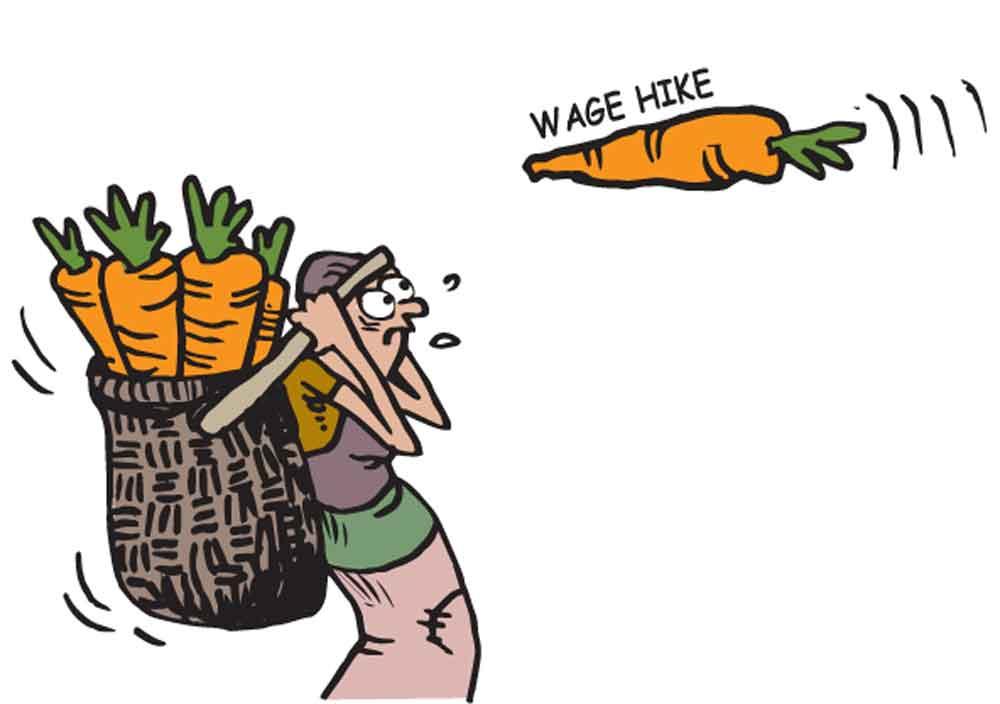
One of the most worrying aspects is with regard to the daily wages of plantation workers. If one takes a look at the wage history of plantation workers, they had worked with absolutely no wage between 1832-1939. Between 1940-1950, plantation workers were paid between Rs. 0.75-1.50. Over the years, it progressed rather slowly, and by 2016, they received Rs. 500. Between 2021-2023, they were given Rs. 1000. In 2024, the daily wage was increased to Rs. 1350. During an exhibition that showcased the struggles and hardships endured by plantation workers, visitors were asked to suggest a wage that plantation workers deserve to be paid by 2026. Many responses indicated that they should be paid between Rs. 2000-2500. But much needs to be done to convince plantation companies to increase the daily wage to Rs. 1750 as per a proposal made ahead of the 2024 Presidential Election.
This had been evident throughout the course of history. Even recently, when President Anura Kumara Dissanayake convened representatives of plantation companies for a special discussion regarding the proposed increase in the plantation workers’ daily wage, they argued about the practical challenges in implementing it.
Plantation companies warned that President Dissanayake’s bid to raise estate worker wages has ‘no firm economic logic’ and that it would saddle the sector with an additional Rs. 13 billion burden per year.
According to plantation companies, the current daily wage of Rs. 1350 accounts for 60% of production costs. They argue that the National Minimum Wage of Rs. 27,000 per month was introduced only in April this year, while the tea industry has been paying its workers Rs. 34,750 since October 2024.
One of the arguments made by civil society organisations is with regard to profits made by certain private tea companies. They question why these profits cannot be shared among plantation workers, thereby reducing the financial burden borne by these individuals who remain at the low-income levels. Most ‘line rooms’, as they are commonly known, are in dilapidated conditions and children have to walk long distances to commute to school. With social issues such as domestic violence, drug and alcohol abuse on the rise, the future seems quite grim for this community. Even though many organisations have come forward to support these individuals, they seem to be in a vicious cycle of exploitation that they cannot escape from. Therefore, at the end of the day, it is the government that could provide them with a lasting solution.
Recently, President Dissanayake handed over title deeds to 2000 housing units for the upcountry plantation community in Bandarawela. During this ceremony, one mother broke into tears while receiving her title deed, which shows the amount of desperation that they had been living with over the years.
While various global certifications now look for ethical practices and fair treatment of labor, it is equally important to prioritise on plantation workers’ basic rights. They don’t deserve to endure more brutalities in the form of exploitation and discrimination when equity itself is a fundamental right. It is only then could we truly enjoy a refreshing cuppa of Ceylon tea without any form of guilt.
‘Your Thought’ is a space, a right of the readers to support or contradict and discuss the issues highlighted in the editorial and other articles in the editorial and op-ed pages. Designed as the reader’s editorial; our readers can send in their writings, with a word count not exceeding 200, to ‘Your Thought’, Daily Mirror Political Features Desk, No 8, Hunupitiya Cross Road, Colombo 2 or email to [email protected]
06 Jun 2026 5 hours ago
05 Jun 2026 05 Jun 2026
05 Jun 2026 05 Jun 2026
05 Jun 2026 05 Jun 2026
05 Jun 2026 05 Jun 2026