08 Jun 2026 - {{hitsCtrl.values.hits}}
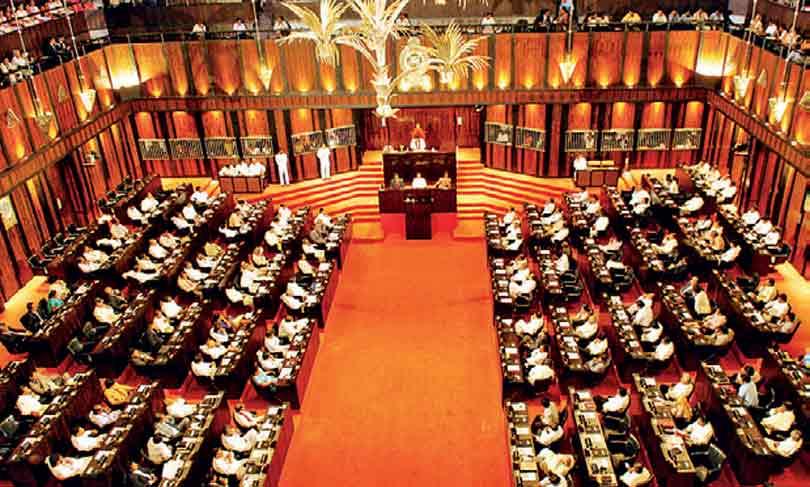
The proposed crossover ban raises fundamental questions about the nature of representative democracy itself
 From Independence, defections have played a decisive role in shaping governments and altering the country’s political direction
However, opponents of strict anti-defection laws warn that they can weaken parliamentary democracy by concentrating excessive power in party leaderships
 The government argues that the proposed law is necessary to protect the people’s mandate and eliminate a political culture in which elected representatives switch allegiances for personal benefit. However, critics see a more immediate political calculation behind the move.
Despite its overwhelming parliamentary majority of 159 MPs, there is growing speculation in political circles that sections of the government are concerned about declining public enthusiasm and the possibility that dissatisfied MPs could eventually drift towards the Opposition if political fortunes change. Government leaders strongly reject such suggestions, insisting that the proposed legislation is part of a broader effort to reform political culture and strengthen democratic accountability.
The National People’s Power (NPP) government’s proposal to introduce a comprehensive anti-defection law has reopened one of the most contentious debates in Sri Lankan politics: should elected representatives be free to cross over from the party under which they were elected, or should they lose their seats for abandoning the mandate given by voters?
The issue, a few years ago, acquired renewed urgency following the Supreme Court’s landmark ruling upholding the expulsion of former Minister Naseer Ahamed from the Sri Lanka Muslim Congress (SLMC). The Court ruled that the SLMC had acted lawfully in expelling Ahamed after he voted in favour of the 2021 Budget against party instructions, resulting in the loss of his parliamentary seat.
The judgement has been widely viewed as a victory for party discipline and a warning to politicians who seek to defy the parties that brought them to office. It has also intensified calls for a stronger legal framework to prevent defections and political crossovers. Whatever the motivation, the proposal has brought into focus Sri Lanka’s long and often unsavoury history of political crossovers.
From Independence, defections have played a decisive role in shaping governments and altering the country’s political direction. One of the earliest and most significant occurred in 1951 when S.W.R.D. Bandaranaike left the United National Party (UNP) and formed the Sri Lanka Freedom Party (SLFP). The move transformed the political landscape and eventually led to the SLFP’s historic victory in 1956.
Another defining moment came in December 1964 when C.P. de Silva crossed from Prime Minister Sirimavo Bandaranaike’s government benches to the Opposition along with 13 MPs. The government subsequently lost a crucial vote by a single ballot, forcing fresh elections and paving the way for a UNP-led administration.
Mass defections again altered political fortunes in 2001 when several prominent members of President Chandrika Kumaratunga’s government crossed over to the Opposition, contributing to the fall of the administration and the election of a UNP-led government. Yet, while some crossovers were driven by policy disagreements or political convictions, many others have been viewed as exercises in political opportunism.
Sri Lankan politics is replete with examples of politicians moving from one party to another while denouncing former allies as corrupt, incompetent or authoritarian, only to later rejoin the same political camps. Several senior politicians have served as ministers under governments representing vastly different political philosophies, reinforcing public perceptions that power and privilege often take precedence over principle.
Perhaps the most controversial period of crossover politics occurred during the administration of President Mahinda Rajapaksa. In 2008, a group of 17 senior UNP politicians led by Karu Jayasuriya crossed over to the government. Many received ministerial portfolios, helping the government consolidate its parliamentary strength and eventually secure the numbers needed for major constitutional changes. Such episodes fuelled accusations that political defections were being encouraged through ministerial appointments, state resources and other inducements. For many voters, these crossovers amounted to a betrayal of the mandate granted at elections.
The Constitution already contains provisions designed to discourage defections. Under Article 99(13), an MP who is expelled from the party under which he or she was elected may lose the parliamentary seat, subject to review by the Supreme Court.
However, these safeguards have often proved inadequate. Court proceedings can take years, allowing defecting MPs to retain their seats while litigation continues. In several instances, courts have invalidated expulsions because parties failed to follow proper disciplinary procedures.
Among the most notable cases were those involving Tilak Karunaratne, Sarath Amunugama and several other UNP MPs, Basheer Segudawood and P.H. Piyasena. These rulings exposed procedural weaknesses and demonstrated the difficulty parties face in enforcing discipline under existing constitutional provisions.
The Supreme Court’s ruling in the Naseer Ahamed case has therefore assumed significance far beyond the fate of a single MP. It is widely seen as reinforcing the principle that elected representatives cannot casually disregard party mandates while continuing to enjoy the privileges of office. Supporters of a comprehensive anti-defection law argue that voters primarily elect parties, policies and manifestos rather than individuals. They contend that permitting MPs to switch sides after elections distorts electoral outcomes and undermines public confidence in democracy.
Advocates also point to India’s Anti-Defection Law, introduced through the Tenth Schedule to the Indian Constitution in 1985. That legislation allows legislators to be disqualified for voluntarily leaving their party or defying official party directives. Although controversial, it is credited with reducing political instability and limiting the practice of governments engineering parliamentary majorities through defections.
However, opponents of strict anti-defection laws warn that they can weaken parliamentary democracy by concentrating excessive power in party leaderships. They argue that legislators must retain the freedom to challenge party decisions and act according to conscience when necessary.
This tension between party discipline and individual judgement lies at the heart of the current debate. Sri Lanka’s political history demonstrates that not every crossover is necessarily unethical. Political movements, party realignments and ideological disagreements have often produced major political changes. Yet such examples are relatively rare. More often, crossovers have been associated with the pursuit of ministerial office, political protection or personal advancement.
One proposal gaining increasing support is the concept of a “conscience crossover.” Under this model, an MP wishing to leave a party would be required to resign and contest a by-election. Voters would then decide whether the defection reflected genuine principle or political convenience.
As the government moves towards drafting legislation, lawmakers face the challenge of striking a balance between protecting the people’s mandate and preserving parliamentary independence. An overly rigid law could transform MPs into mere agents of party leaders. A weak law, on the other hand, would leave intact a political culture that many Sri Lankans view with deep cynicism.
The proposed crossover ban is ultimately about more than preventing defections. It raises fundamental questions about the nature of representative democracy itself. Should MPs primarily reflect the will of the party under whose banner they were elected, or should they retain the freedom to depart from party directives when circumstances demand?
As Parliament considers new legislation, the challenge will be to design a framework that discourages political opportunism without stifling legitimate dissent. Finding that balance may prove far more difficult than drafting the law itself. Yet the manner in which Sri Lanka resolves this issue could shape the relationship between political parties, elected representatives and voters for decades to come.
08 Jun 2026 40 minute ago
08 Jun 2026 56 minute ago
08 Jun 2026 1 hours ago
08 Jun 2026 1 hours ago
08 Jun 2026 1 hours ago