29 May 2025 - {{hitsCtrl.values.hits}}
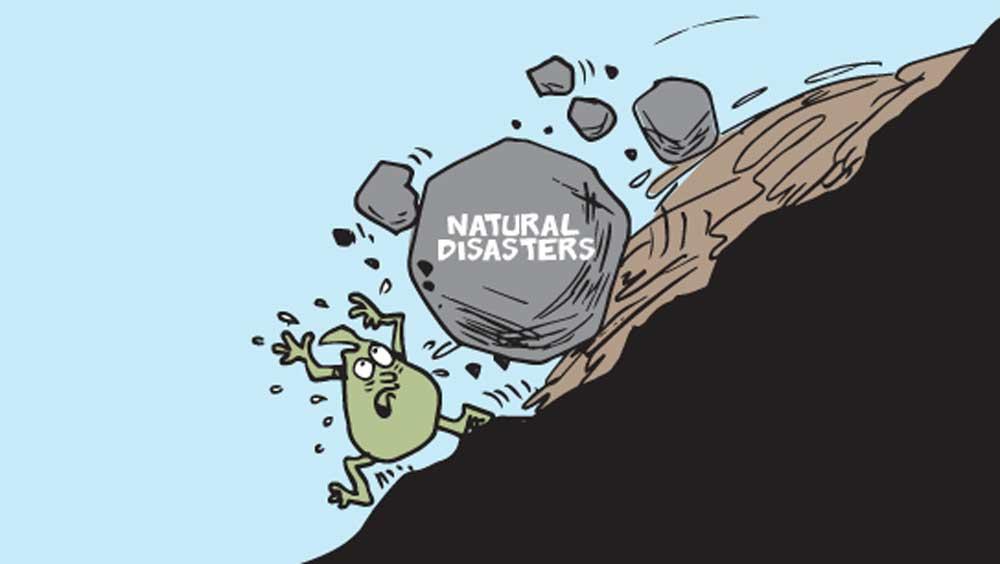
Sri Lanka needs to draw lessons from countries such as Japan, which not only has adopted disaster-resilient infrastructure but also prepares its people to face major natural disasters such as tsunamis and earthquakes.
Following the 2004 tsunami, which swept away the lives of over 35,000 people, Sri Lanka expedited its approaches in disaster risk reduction and disaster management. One of the main priority areas had been to upgrade existing infrastructure into disaster-resilient infrastructure to withstand natural disasters in the face of adverse climate change conditions. But 21 years later, people continue to be affected by heavy rains and winds.
Prevailing adverse weather conditions have affected over 1500 people from across the country. Statistics issued by the Disaster Management Centre indicate that at least eight people have sustained injuries due to heavy winds, fallen trees and collapsed walls. In addition, around 321 houses have been partially damaged.
According to the Meteorology Department, these weather conditions are a result of the Southwest monsoon season. The Met. Department forecasts high tides at a height that could range from 2.5m to 3m in coastal areas extending from Mannar to Pottuvil via Puttalam, Colombo, Galle and Hambantota. Gale force winds and fallen trees have caused damage to the main power transmission lines in Hatton, Norwood, Kotagala and Norton.
According to the Climate Risk Index, Sri Lanka ranks among the top ten countries most affected by extreme weather events. This ranking highlights the country’s high vulnerability to climate change impacts, particularly extreme heat, increased precipitation, and sea-level rise. Sri Lanka is a country that experiences a drastic economic impact in the face of natural disasters. According to a status report compiled by the United Nations Office for Disaster Risk Reduction indicates that economic losses following the 2017 flooding increased by 50% when compared to the previous decade between 2007 and 2016.
Sri Lanka has explored various approaches to mitigate landslides and floods in rural areas. According to local research studies, slope stabilisation, retaining walls for landslide mitigation, construction of floodways and flood-prone buildings to control flooding, construction of seawalls to reduce the impact of tsunami run-up, and design and detailing earthquake-resistant structures are some methods that can be implemented in building disaster-resilient infrastructure systems.
The National Policy on Disaster Management was approved by the 2005 Parliament Select Committee on Natural Disasters in December 2010. The Policy provides directives to address the issues such as inadequate coordination among stakeholder agencies, duplication of efforts and insufficient policy directives to reduce the human and economic impacts of disasters, which were identified in the aftermath of the 2004 Tsunami and other recent disaster situations. Even though the vision of this Policy was to establish a country safe from disaster, its people have been grappling with loss of lives, injuries, property damage and adverse economic impacts due to extreme weather conditions.
It is in this backdrop that Sri Lanka needs to draw lessons from countries such as Japan, which not only has adopted disaster-resilient infrastructure but also prepares its people to face major natural disasters such as tsunamis and earthquakes. The Sendai Framework for Disaster Risk Reduction, adopted in 2015 at the Third UN World Conference on Disaster Risk Reduction, provides a framework on how other at-risk countries could draw lessons and benefit from Japan’s experience. With regular drills for people to prepare themselves to face earthquakes, tsunamis and other natural disasters, in addition to earthquake response manuals and other materials provided to people, Japan has indeed taken the lead in ensuring minimum harm to people despite the severity of disasters.
Sri Lanka certainly has a long way to go in terms of adapting itself to climate change. But future governance policies need to integrate governance and technology into disaster risk reduction at the national and subnational levels. It’s high time that the government consults subject experts and integrates these facilities to minimise vulnerabilities experienced by people in the face of natural disasters.
‘Your Thought’ is a space, a right of the readers to support or contradict and discuss the issues highlighted in the editorial and other articles in the editorial and op-ed pages. Designed as the reader’s editorial; our readers can send in their writings, with a word count not exceeding 200, to ‘Your Thought’, Daily Mirror Political Features Desk, No 8, Hunupitiya Cross Road, Colombo 2 or email to [email protected]
04 Jun 2026 04 Jun 2026
04 Jun 2026 04 Jun 2026
04 Jun 2026 04 Jun 2026
04 Jun 2026 04 Jun 2026
04 Jun 2026 04 Jun 2026