08 Sep 2025 - {{hitsCtrl.values.hits}}
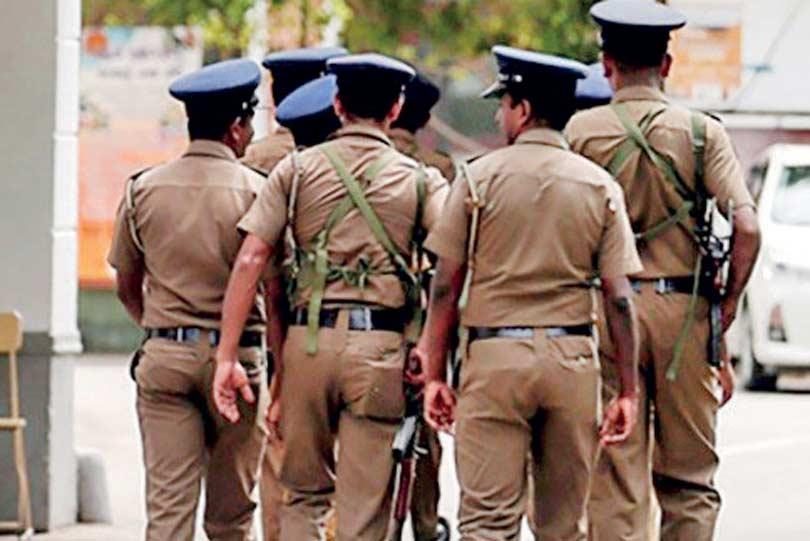
Police -In our social hierarchy, policemen below officer ranks (constables and sergeants) usually address members of the public as ‘mahattaya’ (though the English word ‘Sir’ is strictly reserved for their superiors
 In Sri Lanka, older people are commonly called ‘uncle’ or ‘aunty’ by those younger. This term denotes blood relationships, but is commonly used to as a term of respect when greeting older people, derived from the Sinhalese usage of ‘mama’ and ‘nanda’ (usually in rural areas). It’s the same case in much of the subcontinent, in contrast to Western societies where older strangers are usually addressed as Mr. or Mrs, and older friends by their first names (uncle and aunt used only in case of family relations).
As time moves on and cultural patterns and linguistic usage changes (along with how we perceive others) I have noticed the ‘unusual’ usage of the above term of respect or endearment. Once I was approached by a young traffic policeman who called me ‘uncle.’ Another time, a young garbage collector did the same. Recently, a young security guard used the same term of endearment as I entered.
Signifying that something really odd has been happening culturally and linguistically, another garbage collector who looked my age too, once called me ‘uncle.’ Several people who may have been just a few years younger have called me ‘uncle’ over the years.
On the one hand, this is a shakeup of the usual social hierarchy. Should one be glad that old barriers are breaking down? But, since we are not aiming for a classless society where everyone’s ‘comrade uncle,’ I think some sort of safety barriers are necessary if only for the sake of common sense.
In our social hierarchy, policemen below officer ranks (constables and sergeants) usually address members of the public as ‘mahattaya’ (though the English word ‘Sir’ is strictly reserved for their superiors). Down the pecking order, bus drivers sometimes address constables as ‘sir’ (and not ‘mahattaya’) which is a nod and bow over hostile battle lines.
In general, members of the public, regardless of who they think they are, address policemen as ‘ralahami.’ This antiquated colonial era term (of respect, if not exactly of endearment) is still used, and does not offend policemen. It pleases them (though it’s not advisable to call a police officer (sub inspector and above) as ‘ralahami’ (though I did that mistakenly once at a dark roadside checkpoint, and the officer in question, clearly taking me for a half blind old fool, let it pass).
But, when a member of the public is addressed as ‘uncle’ by a policeman, you can sense a degree of confusion, even disorientation. It ruffles the established order. I have never been an advocate of strict social hierarchies, especially when they smack of being feudal. But ‘mahattaya’ or ‘Sir’ isn’t the same as ‘Hamu’ or ‘Menike’ (the latter a term of endearment only in feudal manor houses and pop songs). But, since we have never truly been comrades except in the strong imaginations of some people, I think a sense of order is necessary in daily affairs, business or pleasure.
Supermarket chains insisted on this (strictly business) when they instructed employees to address customers high or low as ‘sir’ or ‘madam.’ Come Covid followed by the bottomless pit of the Rajapakse economic miracle, these niceties were thrown overboard by staff. But some of them still observe this sales nicety in some supermarkets. Even in some government officers, a visitor may be startled to be addressed as ‘sir’ or ‘madam.’ These are the little civilities which define a civil society.
Whether ours is a civil society or not is debatable after this post 2021 roller-coaster ride. Civility nowadays is often a matter of personal upbringing, regardless of social standing. When defence secretaries call newspaper editors ‘pigs’ over the phone (I hope memories aren’t too short on that sordid episode), how the rank and file choose to call those whom they disagree with is very much a personal choice. Barriers can be broken, but respect for those at the receiving end remains a personal responsibility. The so-called ‘minions’ are often the most polite of citizens, and that civility can be attributed to parents and grandparents who put courtesy before ego and ambition, teaching by personal example.
The ‘uncle’ and ‘aunt’ format, when used so casually by people, indicates just that – a worrying casualness of attitude regarding the world and its myriad inhabitants. A salesperson who calls customers ‘sir’ or ‘madam’ shows an innate sense of responsibility. He or she maintains the correct distance between self and the other party. This principle also applies to those engaged lower down the pecking order, such as the garbage collector and the police constable. That distance is necessary for social harmony and stability. If not, we all become shadow comrades without a party or defining line to hang on to.
Therefore, language is a harsh reflection of social realities. Sri Lanka has become a ‘casual’ society in almost every sphere. Serious content is shunned and serious people avoided like people who don’t bathe. Our social media where serious content is negligible is an example, but it’s the print media (newspapers) which set the tone decades ago with ‘casual’ (damala gehuwa) headlines (especially in the vernacular). And now, almost anyone caught in the glare of the streets is fair game to the other party’s casual approach. The time may not be far when schoolteachers are called ‘uncle’ or ‘aunty’ by students in classrooms.
15 Jun 2026 2 minute ago
15 Jun 2026 6 minute ago
15 Jun 2026 9 minute ago
15 Jun 2026 14 minute ago
15 Jun 2026 30 minute ago