04 Jun 2026 - {{hitsCtrl.values.hits}}
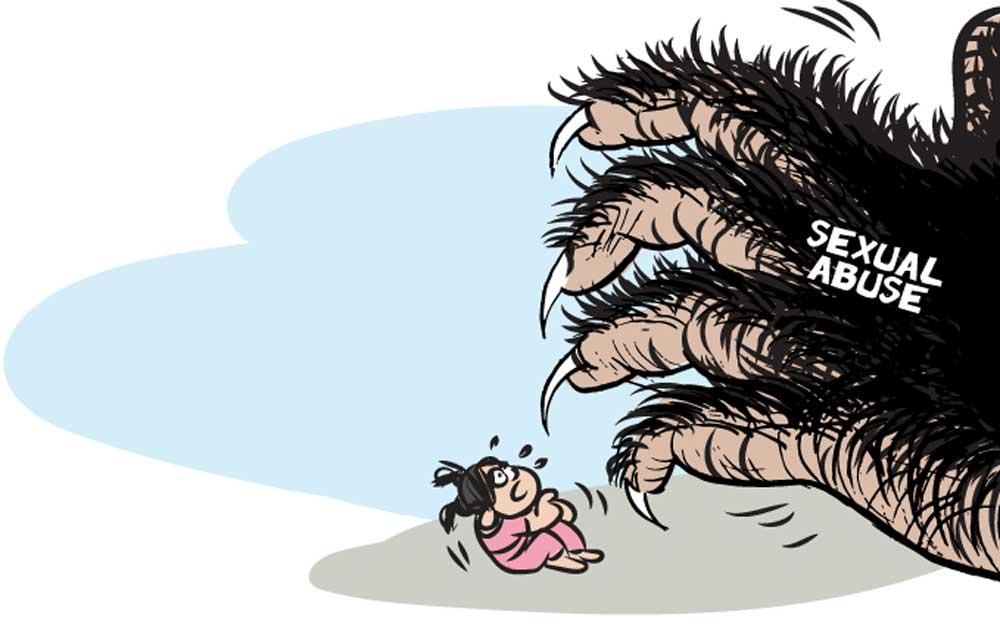
Sri Lanka’s children are increasingly becoming vulnerable to various forms of violence, abuse and harassment. From infants being abandoned by the roadside to parents attempting to sell off their children due to abject poverty, children and youth continue to be at the receiving end of various societal pressures.
Today, it has come to a point where children have in fact become a burden to families in underserved settlements. Children are being forced to work at a young age despite strict child labour laws. Some help their parents with their small businesses including food and vegetable stalls by the roadside. The eldest in the family often feels the pressure, when parents continue to argue due to financial difficulties, compelling them to end their education even before completing O/Ls and seek employment. Sometimes, their fathers abandon these families which makes children including girls quite vulnerable to harassment and abuse.
In a majority of cases, the main perpetrator of abuse is a known person including a close relative. This is evident in estate sector settlements where children are left at home with their grandparents while the mother and father goes to work.
The trauma endured during an incident of abuse has a lasting impact on a child’s mental and physical well-being. Children would develop anxiety, and depression; and once they become adolescents, they are highly likely to adopt risky coping behaviours. To numb emotional pain, youth may resort to maladaptive behaviours including self harm, substance abuse or high-risk sexual activity. Such negative experiences may even compel youth to engage in criminal behaviour as a coping mechanism.
Children who undergo abuse and harassment in underserved settlements have limited access to justice. This was quite evident during the recent case involving a 15-year old girl who was allegedly sexually abused by a high ranking monk in the country. While around 30 lawyers appeared for the accused, barely a handful of lawyers appeared for the victim. Lawyers at the National Child Protection Authority (NCPA) said that they had to literally chase after the Police to obtain a statement from the alleged perpetrator. It took several weeks for the main Buddhist chapters to take a decision on this monk indicating the power imbalance between the alleged perpetrator and the victim. Finally, the Malwatu Chapter last week removed the positions affiliated with the monk in question until court proceedings conclude. This is in fact a litmus test for all other child abuse cases.
What is even more shocking is that a Right to Information request filed to the NCPA revealed that the Authority has received around 300 complaints of child abuse against Buddhist monks. These figures emerge in a backdrop where many parents in impoverished communities continue to ordain their children in temples as a solution to poverty. Some children have endured repeated attempts of abuse, compelling them to take off their robes and go in search of actual mental and physical freedom.
A March 2026 study by Rohana Ranasinghe of the Kelaniya University analysed the nature of complaints received by the NCPA between 2010 and 2025. The study highlighted variations across different categories of abuse. These included cruelty to children, sexual harassment, child neglect, child labour, and grave sexual abuse.
A significant rise in complaints was observed during the period following 2020, which may reflect both heightened vulnerability of children during periods of social disruption, and increased public willingness to report incidents. Cruelty to children and sexual harassment consistently emerged as the most frequently reported categories, highlighting persistent challenges in family and community environments.
In this backdrop, while it is important to strengthen child protection policies, the state needs to expand child protection services such as safe houses. Legal representation is another key aspect that needs to be strengthened.
Right now, the child abuse crisis is becoming an overwhelming burden to the state. If not resolved immediately, Sri Lanka would experience its consequences very soon.
‘Your Thought’ is a space, a right of the readers to support or contradict and discuss the issues highlighted in the editorial and other articles in the editorial and op-ed pages. Designed as the reader’s editorial; our readers can send in their writings, with a word count not exceeding 200, to ‘Your Thought’, Daily Mirror Political Features Desk, No 8, Hunupitiya Cross Road, Colombo 2 or email to [email protected]
04 Jun 2026 2 hours ago
04 Jun 2026 2 hours ago
04 Jun 2026 3 hours ago
04 Jun 2026 3 hours ago
04 Jun 2026 3 hours ago