28 Apr 2018 - {{hitsCtrl.values.hits}}
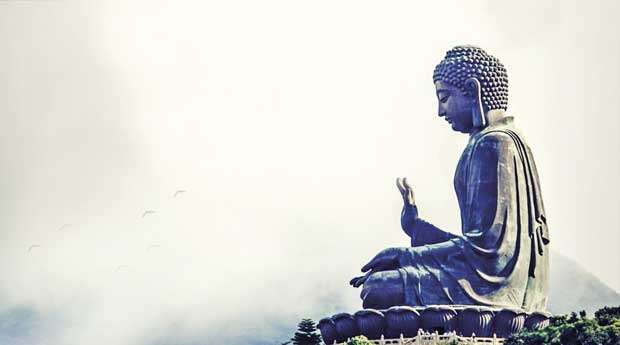
 At the instigation of the foreign minister, the late Lakshman Kadirgarmar, Vesak Full Moon Poya day was declared as an international religious day. This was done because it is the most important day for Buddhists world over due to a number of religious incidents that took place on this day.
Temangula
In Sinhalese ‘Te’ means three. ‘Mangula’ denotes auspicious occasions of good fame. Due to three incidents i.e., the last birth of the Bodhisattva as prince Siddhartha, the Enlightenment and Parinibbana, Vesak Full Moon Poya day is of special significance not only for Buddhists in Sri Lanka, but also for those living in other Asian countries including Nepal, India, Myanmar (Burma), Thailand (Siam), Japan, China, Cambodia, Laos, Vietnam, Tibet, Bangladesh, Maldives and Pakistan and many other countries in the Western world.
The last birth of the Bodhisattva
The last birth of the Bodhisattva as prince Siddhartha took place on the Vesak Full Moon Poya day Two Thousand Six Hundred and eight years ago. He was born as the son of King Suddhodana of the kingdom of Kapilawasthu and queen Maha Maya. The queen was on her way to her parental palace in Devdaha. When she was resting at Lumbini Park under a Sal tree, accompanied by a mass of followers, prince Siddhartha was born. It is said that immediately after the prince’s birth the infant had walked on seven Lotus flowers which emerged before him. The queen had proceeded back to Kapilawasthu together with the newborn child. King Suddhodana’s teacher, Saint Asitha Kaladewala, who visited the palace on the same day, asserted that the blessed prince was to be the savior of the universe and the teacher of every one in all the three worlds. He said that the Bodhisattva was to attain Buddhahood enabling him to direct the universe to the path of emancipation.
First salutation of the father
The saint, who had developed meditation skills, envisaged that he was due to die before the Enlightenment of the Bodhisattva. The saint worshiped the newborn prince. The king who watched the behaviour of his teacher realized that his son was superior to the saint who had worshipped the Bodhisattva himself.
The prince was raised at the royal palace in the lap of luxury leaving no room for him to realize the vanity of worldly life. The king was anxious to see his son becoming the Universal king envisaged by the learned Brahmins at the naming ceremony. The king’s Endeavour was to prevent the Bodhisattva from leaving the worldly life to attain Buddhahood in keeping with the words of Saint Kondanna who raised one finger and said that the prince was sure to attain the Buddhahood.
Renunciation
In spite of the precautionary measures taken by the king the prince came into direct contact with the stark realities of life, “Satara Pera nimiti” – a sick man, a decrepit old man, a corpse and a monk- which made him determined to become an ascetic. He left the palace refusing the luxuries including the crown, princess Yasodhara and the newborn son, prince Rahula.
Enlightenment
As a seeker of total emancipation he struggled for seven years and ultimately through his own efforts realized the truth. One happy Vesak night, as he was seated under the shade of the famous Peepal tree (Sri Maha Bodhi) at Buddha Gaya, with the mind tranquilized and purified, in the First watch he developed that supernatural knowledge which enabled him to remember his past lives Pubbe-nivasanussati Gnana.
In the Middle watch he developed the clairvoyant supernatural vision dealing with the death and rebirth of beings, Chutupapata Gnana- perception of the Disappearing and Reappearing of beings.
In the Last watch of the night he developed the supernatural knowledge with regard to the destruction of passions – Asavakkhaya Gnana and comprehending things as they truly are- and attained Perfect Enlightenment which is known as Samma Sambodhi.
He served the universe during a period of more than half a century as the Exalted One, the Omniscient One and the holiest of holies. He served all the three worlds, the world of gods, the world of men and the lower region- the world of demons where its inhabitants are liable to passions.
The Exalted One led the Universe to the eternal bliss with the highest knowledge realized by Him without any guidance. He gained this insight as a human being and He never posed Himself as a person with supernatural powers. He did not want His followers to believe in the existence of an almighty Creator God. He showed that man can serve himself.
Parinibbana
As a human being He served the universe and on a Vesak full moon poya day He attained Parinibbana at Upavattana Sal Park in Kusinara there by showing the world that nothing is permanent in the universe.
Niyata Vivaranaya
Niyata Vivaranaya –The Positive explanation of the assurance of becoming Buddha was given to Gautama Bodhisattva for the first time by Deepankara Buddha on a Vesak Full Moon Poya day. In that birth Bodhisattva was born as ascetic Sumedha. The road was being cleared for the Buddha to pass that place. Ascetic Sumedha was among those who were preparing and decorating the road. He was expected to clean a patch on the road which was full of muddy. Buddha arrived at that place before ascetic Sumedha could repair the road. He did not want the Buddha to walk on the muddy road and he lay down on the muddy part of the road desiring the Buddha to walk over him. His decision was deep and sincere that Deepankara Buddha gave him Niyata Vivaranaya –Positive explanation of assurance of attaining Buddhahood.
Twin miracles
It was on the Vesak Full Moon Poya day, exactly one year after the Enlightenment, that Sakyamuni Gautama Buddha performed the Yama Maha Perahera- Twin miracles in order to dispel the arrogance of His relatives.
Third visit to Sri Lanka
Apart from the above incidents Vesak Full Moon Poya day is of special significance to Sri Lankans because of the Enlightened One’s third visit to the country. In the eighth year after the Enlightenment Gautama Buddha visited Sri Lanka at the invitation of Naga King Maniakkhika of Kelaniya. Naga King Maniakkhika made this invitation when the Enlightened One visited Sri Lanka for the second time to quell a dispute between two groups of Nagas led by Chulodara and Mahodara. Naga King Maniakkhika, who had gone to Nagadeepa to support his nephew, Mahodara embraced Buddhism after listening to the Dharma preached by the Blessed One and invited the Buddha to visit his Kingdom – Kelaniya. In response to this invitation the Enlightened One had visited Kelaniya.
Invitation by God Sumana Saman
God Sumana Saman, who brought a Kiripalu tree from Seveth Nuwara Dewram Vehera to provide shelter to the Buddha during His second visit to Sri Lanka, accompanied Him to Sri Lanka during Gautama Buddha’s third visit to the country. On his invitation Gautama Buddha proceeded to Samantakuta where He placed His footprint. This footprint remains in full sanctity and is being worshiped by us with extreme devotion.
Origin of the Sinhala Community
Furthermore Vesak Full Poya day is regarded as the day of the origin of the Sinhala Community. According to chronicles, Prince Vijaya with his followers, seven hundred in number, had disembarked at Tammanna. A coincidence is that Vijaya had set foot in Sri Lanka on the very day on which the Enlightened One had attained Parinibbana.
The female leader of the Yakkha clan who was presumably the leader of that part of the country had fallen in love with Vijaya and offered the throne to him. This was done with the hope of occupying the position of the queen. It is believed that Vijaya was thus enthroned as the first king of Lanka.
Anointment of King Devanampiyatissa
King Devanampiyatissa was anointed for the second occasion on a Vesak Full Moon Poya day. Although he had been anointed earlier as the king of Lanka, after embracing Buddhism emperor Dharmasoka had anointed him again and had him installed as the king of the island.
Initiation of the work of Ruwanweliseya
According to chronicles King Dutugemunu had initiated the construction work of Ruwanweliseya on a Vesak Full Moon Poya day. It is to be noted that King Dutugemunu had made a statue with pure gold and had enshrined it in the Mahaseya with four Kurunis or gallon measures of relics.
Amisa puja and Pratipatti puja
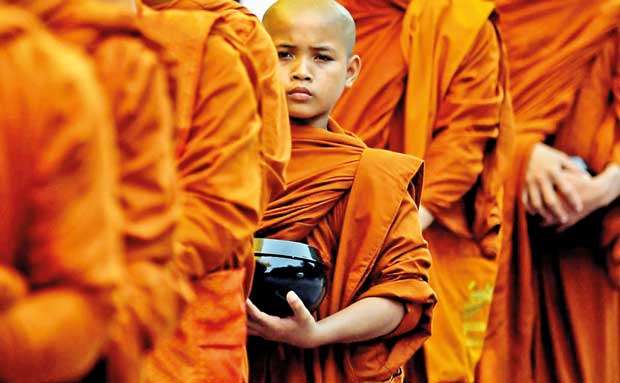
The Vesak day observations take two forms -Amisa puja and Pratipatti puja. Amisa puja includes offerings including alms to Buddha and His followers – Maha Sangha and lay disciples – Upasaka Upasika. This is done by way of Dansal. Food donations are made to paupers, travelers or passers-by and animals. In addition to food other items such as medicinal drugs, clothes and money are included in Dana. Devotees engage in meditation and observe sil especially on this very important religious festive day.
23 Jun 2026 4 minute ago
23 Jun 2026 44 minute ago
23 Jun 2026 3 hours ago
23 Jun 2026 8 hours ago
23 Jun 2026 9 hours ago