31 May 2025 - {{hitsCtrl.values.hits}}
By Dr. Anula Wijesundere and Dr. Surantha Perera
Tobacco kills. It often maims before it kills, as it is capable of harming all organs in the body. It robs the potential of its countless victims and their families. Children are particularly vulnerable to the influencing of the tobacco industry, which targets them as future smokers. The addictive nature of tobacco undermines the true freedom of choice of its users. Every year, thousands of young people in Sri Lanka become victims of its addictive grip.
Can we imagine a future where our children can grow up without the predatory shadow of tobacco looming over them? Are we determined enough to work for it?
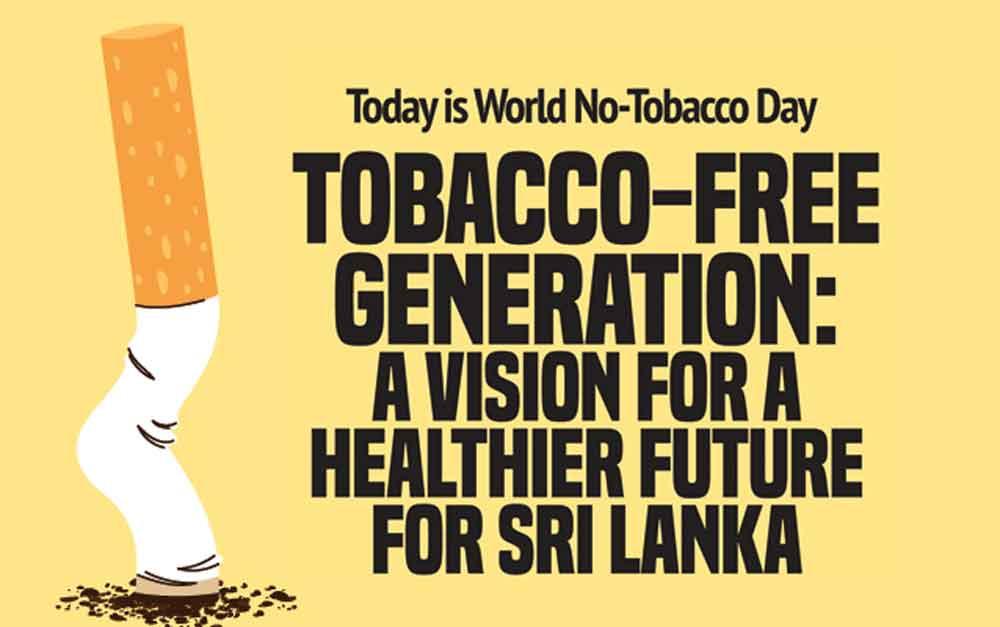
The Tobacco-Free Generation is a policy initiative that bans the sale of tobacco to all individuals born after a specific year, for example, 2010. It is a concept rooted in ethical considerations that prioritise the health and well-being of future generations based on the principles of human rights and social justice. It ensures that children are not subjected to preventable harm. It will also ensure significant social and economic gains.
The concept of a tobacco-free generation is becoming a reality on the world stage with the government of the United Kingdom introducing the Tobacco and Vapes Bill, which prohibits the sale of tobacco to anyone born on or after January 1, 2009.
Our generation has a moral duty to protect those who come after us from the destructive effects of tobacco, particularly in marginalised communities which are disproportionately affected by smoking-related illnesses in Sri Lanka. Therefore, we strongly urge the government to implement a ban on the sale of all tobacco products to those born in or after the year 2010. This means that children turning 21 in 2031 or younger will never legally be able to purchase tobacco products. It will result in effectively raising the legal age of sale by one year annually until it applies to the entire population decades later.
The concept of a tobacco-free generation is also justified through international child rights and human rights instruments, which emphasise the protection and well-being of children. The right to health and life is a fundamental human right recognised in various international treaties, including the Universal Declaration of Human Rights. The wording of the National Authority on Tobacco and Alcohol Act (2006) of Sri Lanka also supports the objectives of this concept:
Convention on the Rights of the Child (CRC) contains several key articles that reflect the principles of a tobacco-free generation. These are Articles 24 (mandating the right to the highest attainable standard of health), Article 3 (mandating that the best interests of the child should be a primary consideration in all actions concerning children), and Article 32 (mandating the protection of children from economic exploitation).
Articles 8,13 and 16 of the WHO Framework Convention on Tobacco Control (FCTC) state the need for protection from exposure to tobacco smoke, particularly for vulnerable populations such as children, recommend banning sales to those below a specific age and also mandate protecting children from manipulative marketing tactics of the tobacco industry.
The preamble of the National Authority on Tobacco and Alcohol Act is supportive of such a policy, stating that the purpose of the Act is to make provisions discouraging persons, especially children, from smoking or consuming alcohol through actions that include curtailing their access to such products. Among the functions of this Authority is to recommend measures to minimise the harm arising from the consumption of tobacco and alcohol products (section 14c). These clauses can be used to develop the legal framework for implementing this policy in Sri Lanka.
As previously mentioned, implementing tobacco control measures such as the tobacco-free generation leads to substantial social and economic gains:
By preventing the initiation of smoking among new generations, this initiative will significantly reduce the healthcare costs of tobacco use, which run into billions of rupees each year.
It is also well established that smokers tend to take more sick days and may experience decreased productivity while at work due to health issues related to smoking. This initiative will therefore ensure a healthier workforce that is more productive over the years.
Research has also clearly shown that money that would have been spent on tobacco, if spent on other products or services, stimulates economies. This reallocation of spending creates new jobs in different sectors, countering any job losses in the tobacco industry.
The tobacco-free generation initiative will also generate significant public backing, as the vast majority of Sri Lankans do not consume tobacco. Studies have also shown that even tobacco users in Sri Lanka support tobacco control measures. Such support can therefore be leveraged to demonstrate commitment to public health, the welfare of future generations, and a commitment to address health inequities of vulnerable populations. This will strengthen the electoral appeal of those who back this policy.
Therefore, implementing measures to ensure a truly tobacco-free generation is a win-win situation for the children, the country and those who work for it, and paves the way for a future that is healthier and a future that protects children from preventable harm caused by tobacco while ensuring social justice and economic gains.
The writers, Dr. Surantha Perera, is the President of SLMA, and Dr. Anula Wijesundere is the Chairperson of the Expert Committee on Tobacco & Alcohol Illicit Drugs at the SLMA
11 Jun 2026 2 hours ago
11 Jun 2026 2 hours ago
11 Jun 2026 2 hours ago
11 Jun 2026 3 hours ago
11 Jun 2026 3 hours ago