15 Jul 2025 - {{hitsCtrl.values.hits}}

By Kusal Amarasinghe and Akalanka Thilakarathna
Faculty of Law, University of Colombo
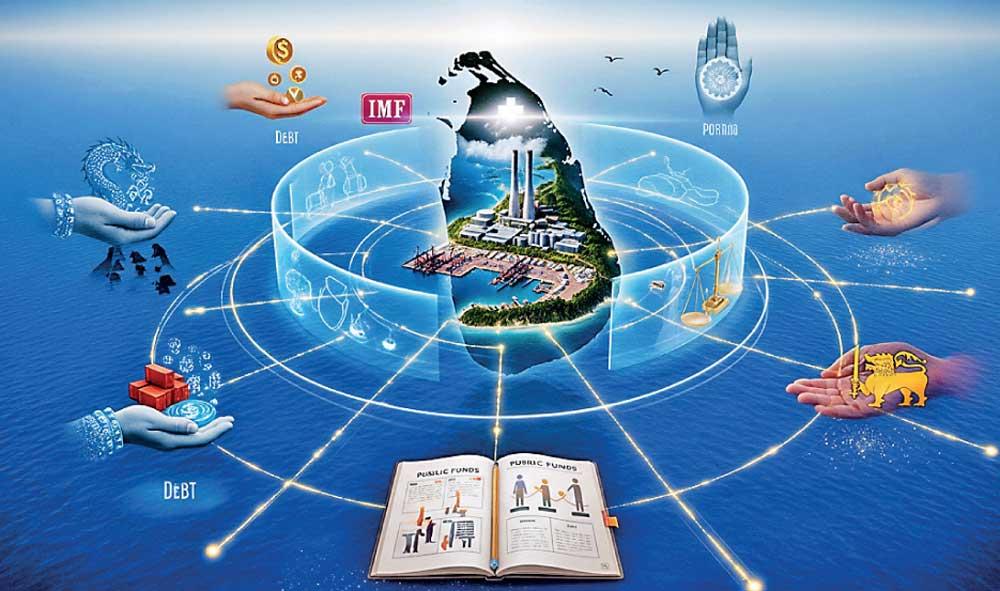
In an increasingly volatile geopolitical landscape, Sri Lanka, strategically positioned at the nexus of vital Indian Ocean sea lanes, faces a profound choice regarding its future. A strategic recalibration, is not merely a diplomatic preference but an imperative for safeguarding the nation’s sovereignty, fostering internal cohesion, bolstering economic resilience, and ensuring enduring stability amidst the escalating competition that defines the contemporary Indian Ocean
Sri Lanka, an island nation at the crossroads of vital Indian Ocean sea lanes, faces escalating geopolitical competition. The authors argue that adopting a formal, permanent, and political neutrality modeled on Switzerland offers the optimal strategic path for Sri Lanka’s future stability, sovereignty, and prosperity.
By analyzing historical parallels, geostrategic realities, and economic imperatives, this article demonstrates how neutrality would mitigate external interference, foster internal reconciliation, enhance economic resilience, and secure Sri Lanka’s long-term national interests in an increasingly contested region.
Geostrategic importance
Sri Lanka occupies a location of immense strategic significance, sitting across key shipping routes connecting the energy-rich Middle East with the economic powerhouses of East Asia. Historically, because of this strategic location in the middle of the Indian Ocean, Sri Lanka has been subjected to many foreign interventions from the 1st century BC to the 16th century.
In the contemporary era, it places Sri Lanka directly within the sphere of intense competition involving regional giant India, rising superpower China, and established powers like the United States.
The recent debt crisis and subsequent external engagements highlight the vulnerabilities inherent in its non-aligned but often pressured position.
Therefore, the strategic recalibration required to move beyond the traditional non-aligned approach towards a formal, neutral approach is of utmost importance.
What is international law of Neutrality?
International law of neutrality ensures the ‘non-belligerency’ of the states. Accordingly, the law of neutrality which was codified in ‘The Hague Convention (V) on the rights and duties of neutral powers and persons in the event of war on land or at sea of 18 October 1907’ and the customary international law, define the rights and obligations of a neutral state. The most important of these rights is the inviolability of a neutral state’s territory. The main obligations are as follows:
Refrain from engaging in war
Ensure its own defence
Not supply mercenary troops to belligerent states
Not allow belligerent states to use its territory
The law of neutrality applies to international conflicts but not to internal conflicts, which the majority of conflicts currently represent.
Also, the law of neutrality does not apply to a military operation authorized by the United Nations (UN) Security Council, in order to re-establish peace and international security. Nor does the law on neutrality prevent neutral states from supporting such operations.
The international law of neutrality is vital because it legally shields non-belligerent states from conflict, prevents wars from spilling across borders, upholds sovereignty, and enables impartial humanitarian mediation.
The Swiss Model
After Napoleon’s defeat, the Congress of Vienna formally declared Switzerland a “perpetually neutral state” under international law. The Treaty of Paris (1814) first affirmed this status, and the Final Act of Vienna (1815) solidified it, transforming Switzerland into a buffer zone between France and Austria.
Under Article 173 and 185 of the Federal Constitution of the Swiss Confederation (1999) ‘Federal Government shall take measures to secure the external security, the independence, and the neutrality of Switzerland’. Hence, Switzerland itself accepts the state of neutrality through the supreme law of the country as well. This neutral model ensured Swiss survival and prosperity through centuries of European conflict, including two World Wars.
Switzerland’s neutrality is based on armed neutrality. However, it doesn’t mean that Switzerland has no own armed forces to defend its independence and territorial integrity. Neutral Switzerland has never left any doubt that it is prepared to use its conscript armed forces for self-defence when required.
Geostrategic Imperatives
After the end of the cold war tension between US and USSR in late 1990s now we are in a multi-polar world. Therefore, even though Sri Lanka has represented the Non-Aligned Movement since its inception, it is difficult to remain unbiased with the complexity of the contemporary geopolitical situation. As an island nation situated at a strategic point at the Indian Ocean, Sri Lanka is at the unavoidable middle of the interests of regional and global power holders.
In the regional level, Sri Lanka’s relationship with India is historically paramount but complex. While economic and cultural ties are deep, Indian security concerns regarding foreign (particularly Chinese) influence in Sri Lanka are persistent and legitimate. Therefore, formal neutrality, credibly implemented, would directly address these concerns by preventing strategic military alliances with extra-regional powers such as China, thereby reducing perceived threats to India and fostering greater trust with the neighbour.
In other hand, considering the Chinese intervention into Sri Lanka, China’s Belt and Road Initiative (BRI) investments (e.g., Hambantota Port, Colombo Port City) offer economic benefits but carry significant debt burdens. The stimulus of the People’s Republic of China on Sri Lanka, as a giant in the world economy and a permanent member of the United Nations Security Council, will have a definite positive impact on the country, while at the same time increasing strategic anxieties for India and the West. Hence, the neutrality does provide a framework for Sri Lanka to engage economically with all partners (China, India, Japan, EU, US) on purely commercial and developmental terms, without being perceived as aligning with any single bloc. This reduces the risk of becoming a pawn in US-China-India competition at the Indian ocean.
Also, as a neutral state guaranteeing freedom of navigation, Sri Lanka could position itself as an essential custodian of critical global trade routes. This role garners international goodwill and provides a security rationale recognized by all major maritime powers.
Sri Lanka’s current geopolitical position is unsustainable. Attempting to “balance” between great powers invites perpetual pressure and vulnerability. Non-alignment, while historically valuable, lacks the formal structure and defensive credibility needed in today’s contested environment. Adopting a formal, armed, and permanent neutrality modeled on Switzerland represents a bold but rational strategic choice.
While the transition demands significant effort, political courage, and investment in defense and diplomacy, the long-term benefits true strategic autonomy, enduring stability, and sustainable prosperity make the pursuit of Swiss-style neutrality not just desirable, but a strategic imperative for Sri Lanka in the 21st century.
11 Jun 2026 5 hours ago
11 Jun 2026 5 hours ago
11 Jun 2026 5 hours ago
11 Jun 2026 6 hours ago
11 Jun 2026 6 hours ago