28 May 2025 - {{hitsCtrl.values.hits}}
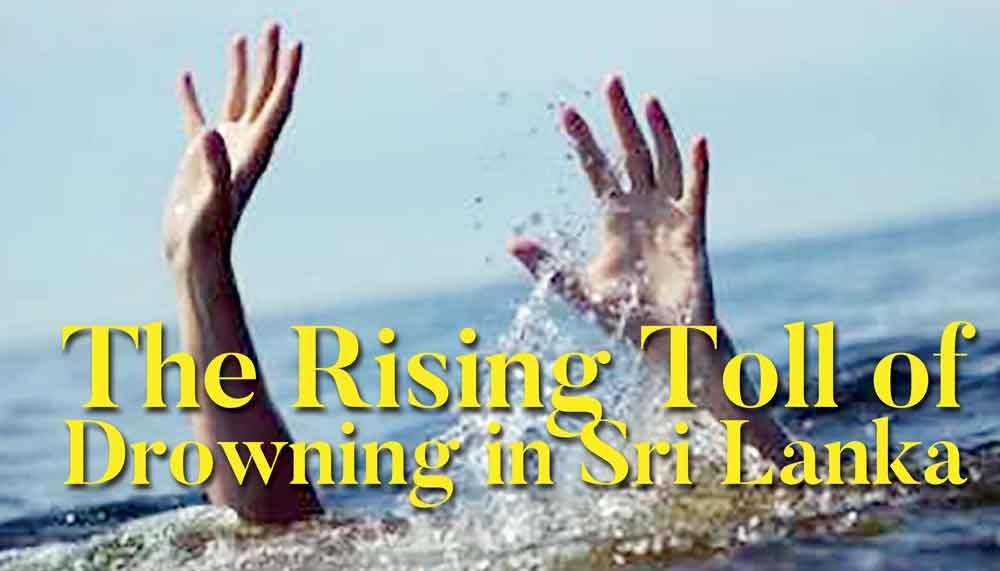

 Each year, approximately 800 people meet their watery graves, with the Northern Province recording the highest crude drowning rate. As of 2025, the island nation has seen a concerning rise in such fatalities, particularly during the month of May
Swimming is an essential life skill which everyone should acquire. An SLLS report states that the lack of swimming ability among the population is a major contributor to drowning in Sri Lanka. This issue largely stems from limited public awareness and opportunities for children to learn swimming
By Zainab Hussein
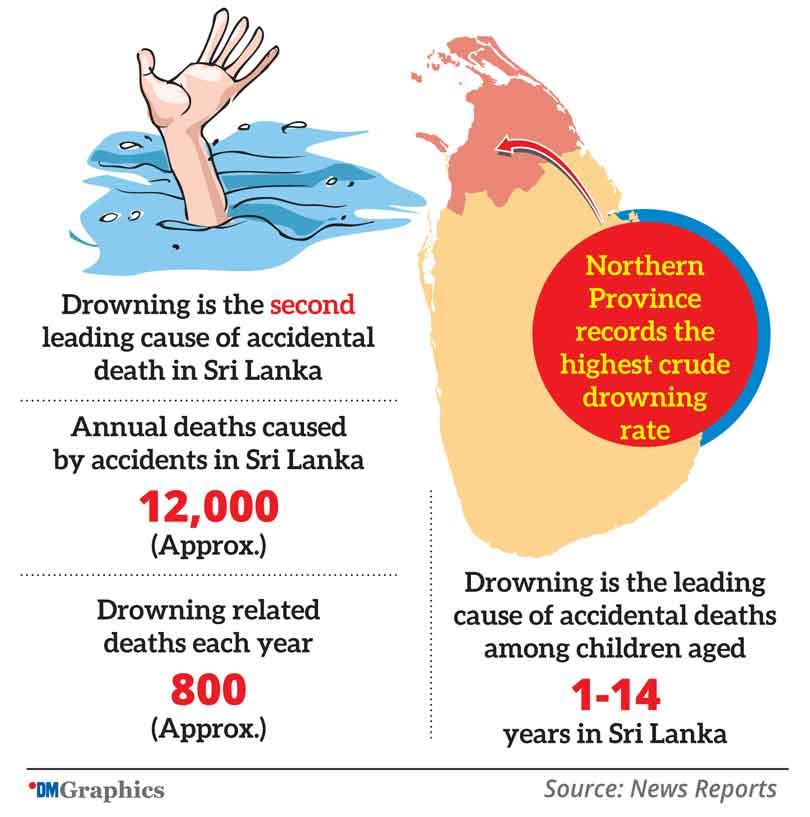
Water, which sustains life, can just as swiftly take it away. Sri Lanka’s natural landscapes and abundant water bodies are indeed a source of pride and economic prosperity through tourism and agriculture. However, we cannot ignore the grim reality which has become increasingly evident, as drowning remains the second leading cause of accidental death in the country.
Each year, approximately 800 people meet their watery graves, with the Northern Province recording the highest crude drowning rate. As of 2025, the island nation has seen a concerning rise in such fatalities, particularly during the month of May. Among recent tragic incidents are the deaths of two young girls in Palukadawala Lake, the drowning of an inmate in the Mahaweli River during a prison escape, and three youths swept away by strong waves in Wennappuwa.
So, why exactly does drowning remain a deadly, yet preventable public health crisis in Sri Lanka? Daily Mirror spoke to Dr. Samitha Siritunga, National Programme Manager for the Injury Prevention Programme and specialist in the Non-Communicable Diseases Unit of the Ministry of Health. He explained that the causes of drowning can be broadly categorised into human risk factors and environmental conditions.
Causes of drowning
In most cases, poor swimming skills, negligence, alcohol consumption, lack of water safety knowledge and medical conditions such as epilepsy and fatigue lead to drowning. He said that there are also environmental factors like strong currents, rip tides and seasonal monsoons which can turn calm waters into a death trap.
“Unfamiliarity with the area and water conditions lead to many drowning incidents since victims are not usually from the particular area where the incident occurs. They’re unaware of specific dangers like sudden drops, currents, or fluctuations in water levels. However, drowning remains largely preventable if people are alert to these environmental changes. If someone is unfamiliar with a particular lake or river, they should always consult local residents about its safety. When it comes to the sea, it is far safer to swim in areas supervised by lifeguards, or at least in the company of someone who is capable of assisting in an emergency,” Dr. Samitha advised.
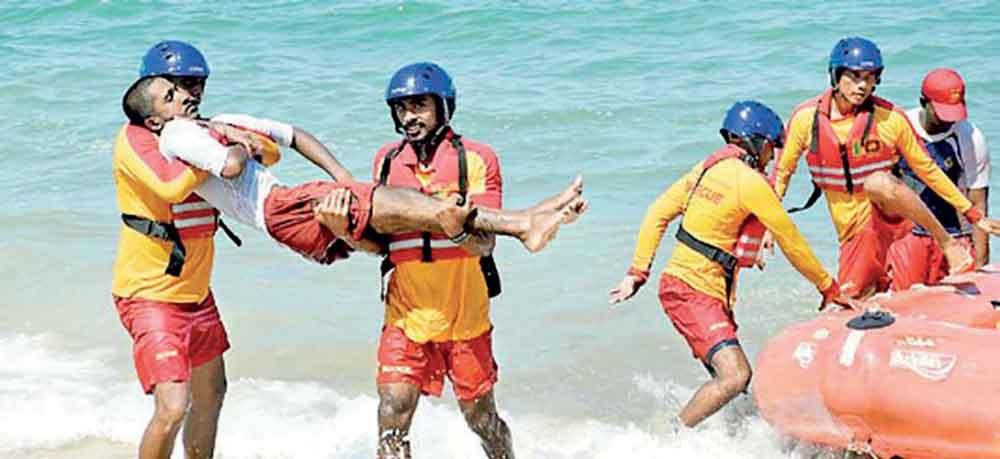
Swimming is not just a recreational activity, it is an essential skill
He further spoke about a lesser-known but critical issue: failed rescue attempts. “There have been several tragic cases where someone tries to rescue a drowning person without proper training. Even if the rescuer can swim, they may not know the correct rescue techniques, and both individuals end up drowning. This is often why two or more people are reported to have drowned at the same location. There are safer alternatives to help someone in distress - like forming a human chain, throwing a rope, or using a floating object,” he added.
Domestic drowning
|
Dr. Samitha Siritunga |
|
Asanka Nanayakkara |
Drowning is not just confined to oceans, rivers and other water bodies; domestic drowning is another major concern, especially for infants and toddlers. Fatalities have been reported in seemingly harmless places such as bathtubs, buckets, wells, septic tanks, garden ponds, and toilets. According to statistics, drowning is the leading cause of accidental deaths among children aged 1-14 years in Sri Lanka. Experts emphasise that if a child goes missing, the first place to check is any nearby water source—because even as little as two inches of water can be enough to claim his or her life.
The American Red Cross states that a person who is drowning has the greatest chance of survival if these steps are followed:
The Daily Mirror also spoke to Asanka Nanayakkara, the CEO of the Sri Lanka Life Saving Association (SLLS), which is the national body for life-saving and water safety-related activities in Sri Lanka. He shared that over the past 77 years, the SLLS has successfully saved more than 5,000 lives. To strengthen nationwide drowning prevention efforts, the organisation has trained nearly one million individuals including schoolchildren, armed forces, and the police—in essential life-saving skills and water safety awareness.
“We’ve focused heavily on preventive measures because it’s far more important to stop an incident before it happens than to respond after a tragedy,” Asanka remarked.
 Swimming is an essential life skill which everyone should acquire. An SLLS report states that the lack of swimming ability among the population is a major contributor to drowning in Sri Lanka. This issue largely stems from limited public awareness and opportunities for children to learn swimming.
‘Swim for safety’
However, the SLLS has taken steps to address this problem through their ‘swim for safety’ programme which offers free swimming classes, particularly for underprivileged schoolchildren. Moreover, the public is strongly encouraged to participate in swimming lessons, because swimming is not just a recreational activity, it is a fundamental skill that can make the difference between life and death.
When asked about the measures the government should take to prevent drowning related deaths, Dr. Samitha explained: “Based on injury prevention and drowning, the Ministry of Health has identified key activities and is currently developing an action plan. This plan focuses on preventing day-to-day drowning incidents, excluding those caused by natural disasters, since the strategies for these two scenarios are very different.
Training for the public
“The plan also includes training for the public and tourist guides in proper rescue techniques, and raising awareness on identifying high-risk areas. We have recently developed national standards for swimming pools—something Sri Lanka has lacked for years, especially in hotels. These standards cover areas like lifeguard training, suitable infrastructure, and availability of safety equipment. The finalised guidelines will be released to the public soon.”
Dr. Samitha highlighted the importance of prioritising injury prevention at the national level, noting that around 12,000 people lose their lives to accidents in Sri Lanka annually. He concluded by emphasising that strategic, well-coordinated efforts are important to address this preventable public health crisis in Sri Lanka.
11 Jun 2026 10 minute ago
11 Jun 2026 27 minute ago
11 Jun 2026 52 minute ago
11 Jun 2026 57 minute ago
11 Jun 2026 1 hours ago