07 Apr 2026 - {{hitsCtrl.values.hits}}
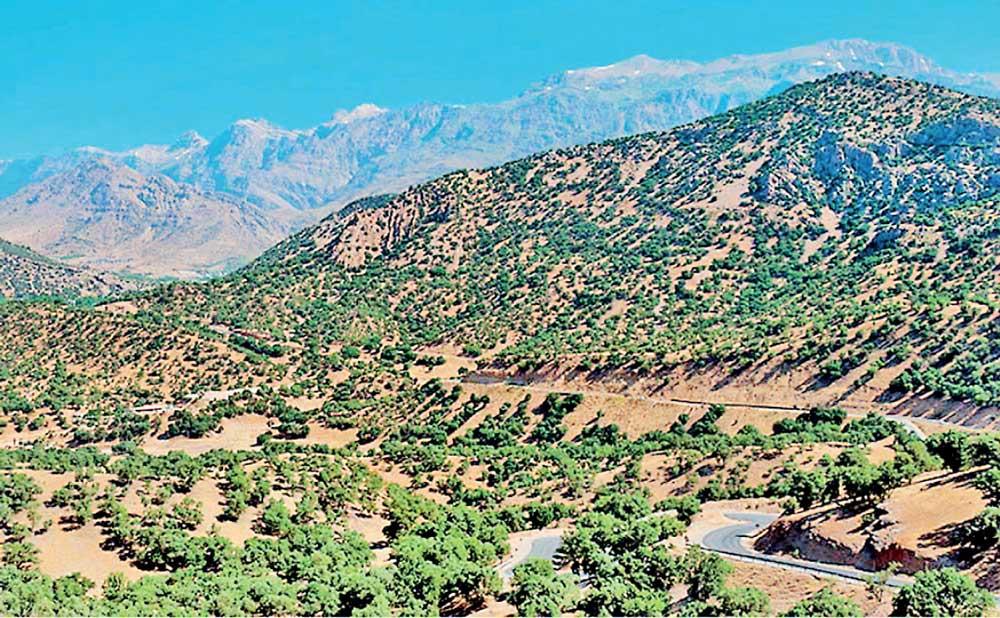
Mountainous landscape provides Iran with a unique topographical defence
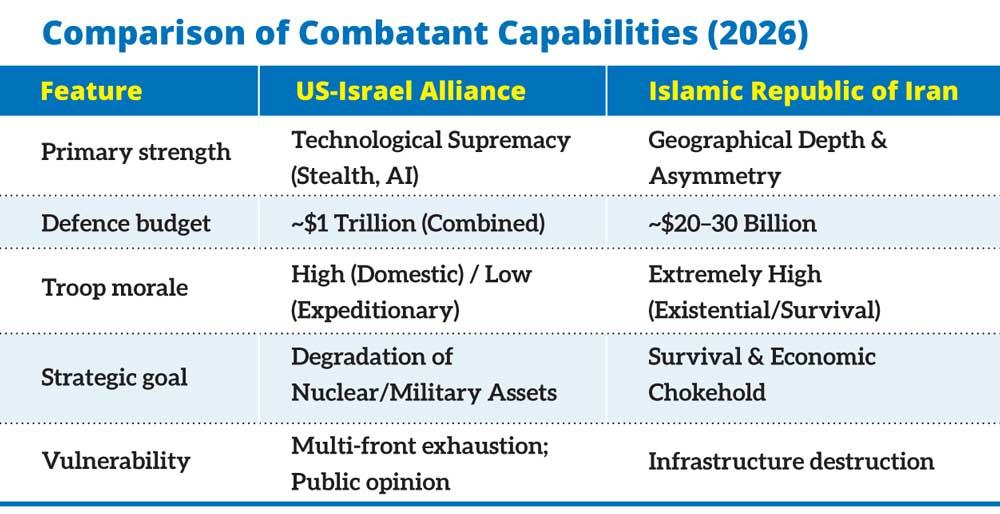
 The military conflict that erupted on February 28, between the United States-Israel alliance and Iran has fundamentally challenged the traditional dogmas of modern warfare. On one side stands a superpower with a defence budget nearing one trillion US Dollars, equipped with the pinnacle of technological military hardware - stealthy fighter jets, carrier strike groups, and sophisticated AWACS. On the other is a nation with a fraction of that budget, relying on a ‘natural fortress’ of geography and a doctrine of asymmetric endurance.
As we look towards the end of 2026, the stalemate suggests a profound shift in global security - technology can strike, but geography and human motivation determine who survives.
The natural fortress
Geography as a strategic shield: The primary reason the United States and Israel have been unable to achieve a “decisive victory” despite overwhelming air superiority is the sheer physical reality of the Iranian plateau.
Topographical defence: Iran is nearly 1.6 million square kilometers, roughly three times the size of Iraq. It is rimmed by the Zagros and Alborz mountain ranges, which serve as massive granite walls against any ground invasion.
The ‘boots on the ground’ dilemma: While the US has theoretically discussed ground deployments, the reality is that a land invasion would require a force size and logistical tail that the American public is unwilling to support. Unlike the flat deserts of Iraq, the Iranian interior is a maze of high altitudes and narrow passes.
The stealth limitation: Advanced technology like the F-35 and B-21 Raider can penetrate air defences to hit specific targets (as seen in the February 28 strikes), but they cannot occupy territory. Airpower is a tool of destruction, not governance. Without ground forces, the ‘end state’ remains elusive.
The motivation gap
Survival vs. expedition: A critical, often overlooked factor in this conflict is the psychological state of the combatants. History shows that even the most advanced armies falter when the soldier’s heart is not in the fight.
The foreign war syndrome: Much like the Indian Peace Keeping Force (IPKF) deployment in Sri Lanka in the late 1980s, American and Israeli soldiers are increasingly questioning the “why” of this conflict. In the Sri Lankan context, Indian soldiers often felt no personal stake in the battle against the LTTE, leading to a marked reluctance in combat.
The ‘hired sword’ perception: Many US personnel view this as “fighting Israel’s war,” leading to a degradation in morale. Conversely, the Iranian forces whether regular army or IRGC view this as an existential fight for survival.
Israel’s multi-front exhaustion: By mid-2026, the Israeli Defence Forces (IDF) are stretched to their breaking point. Fighting simultaneous ground wars in Gaza and Lebanon while maintaining a high-intensity air campaign against Iran has led to combat ineffectiveness in several reserve units.
The weaponisation of global trade
The Strait of Hormuz: If geography is Iran’s shield, the Strait of Hormuz is its sword. Following the initial strikes in February, the Strait transitioned from a free-passage waterway to a controlled Iranian ‘toll booth.’
The closure: Effective late February 2026, Iran enforced a selective closure. While the waterway is technically ‘open’ for neutral parties like China and India (often trading in non-dollar currencies like the Yuan), it is strictly closed to the US, Israel, and their direct allies.
The ‘Tehran toll booth’: In a bold move of economic warfare, Iran has begun imposing ‘sovereign security tolls’ reaching up to $2 million per transit for commercial vessels. This formalisation of a protection racket has forced global shipping to choose between paying the ‘shakedown’ or rerouting around the Cape of Good Hope, adding weeks to transit times and skyrocketing insurance premiums.
Asymmetric warfare
The third world’s equaliser: Iran’s strategy is not to win a dogfight against an F-22, but to make the cost of the war unbearable for the aggressor. This is the same doctrine that led to the US exits from Vietnam and Afghanistan.
Cost-exchange ratio: The US spends millions on a single interceptor missile to down a ‘suicide drone’ that costs Iran a few thousand dollars. This fiscal asymmetry is unsustainable for even a trillion-dollar budget. Information Systems vs. Local Knowledge: While the US possesses superior information systems, Iran utilises decentralised command structures. Even if the ‘head’ is struck (as with the events of February 28), the ‘limbs’ continue to function autonomously, making a traditional ‘decapitation strike’ ineffective.
The new concept of national security
The ‘war between technology and geography’ marks the end of the era where a large defence budget guaranteed a quick victory. We are witnessing a new paradigm where:
Geography is a permanent deterrent that no amount of ‘stealth’ can fully overcome
National motivation acts as a force multiplier that outweighs technological hardware
Economic chokepoints (like Hormuz) are more effective than aircraft carriers in a long-term conflict
In the meantime, President Pezeshkian has announced Israeli vessels would face a permanent ban from passing through the strait of Hormuz, one on the world’s most critical energy routes. The statement signal Iran’s intent to enforce this blockade as a long term strategy, regardless of whether current hostilities subside.
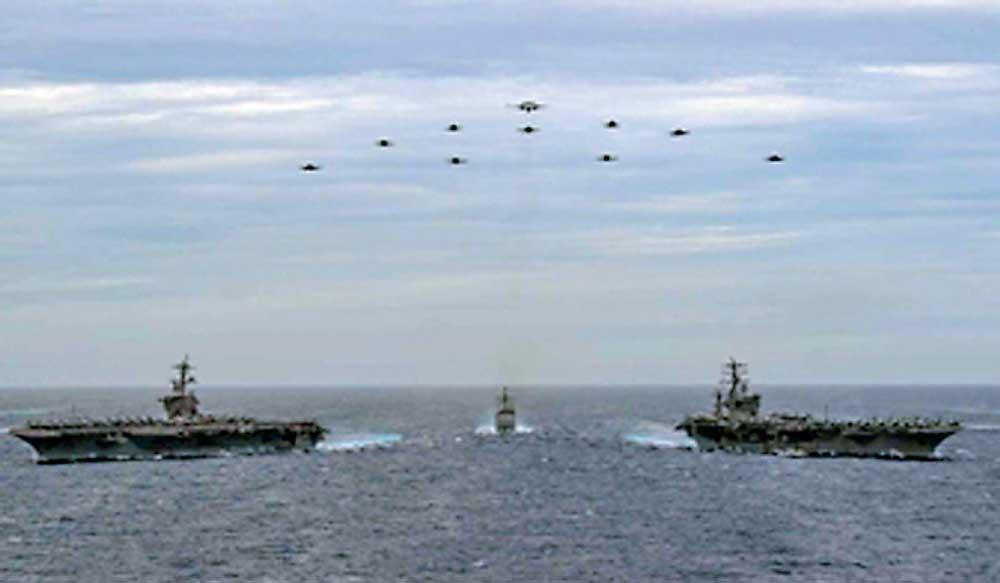
The US strike groups on scheduled deployments
As 2026 draws to a close, the ‘superior force’ finds itself struggling against a ‘third-world’ adversary. This conflict proves that in the future of national security, the most advanced hardware in the world cannot defeat people who have the advantage of the land and the will to endure. The end state for the US and Israel is increasingly looking like a strategic overextension a retreat not due to a loss of firepower, but a loss of purpose and the immovable reality of the earth itself.
(The writer is an international researcher, author and analyst with a career spanning over 36 years of service in the Sri Lanka Army, including 20 years in active combat. A seasoned Infantry officer, Major General (Retd.) Dr. Boniface Perera, holds a PhD in Economics and has authored 17 books and over 200 research articles. His multifaceted expertise bridges the gap between national security, global politics and economic strategy. As an entrepreneur and international analyst, he provides strategic insights into the intersection of security and economic policy. He can be reached [email protected])
04 Jun 2026 5 minute ago
04 Jun 2026 29 minute ago
04 Jun 2026 40 minute ago
04 Jun 2026 2 hours ago
04 Jun 2026 2 hours ago