31 Jan 2025 - {{hitsCtrl.values.hits}}
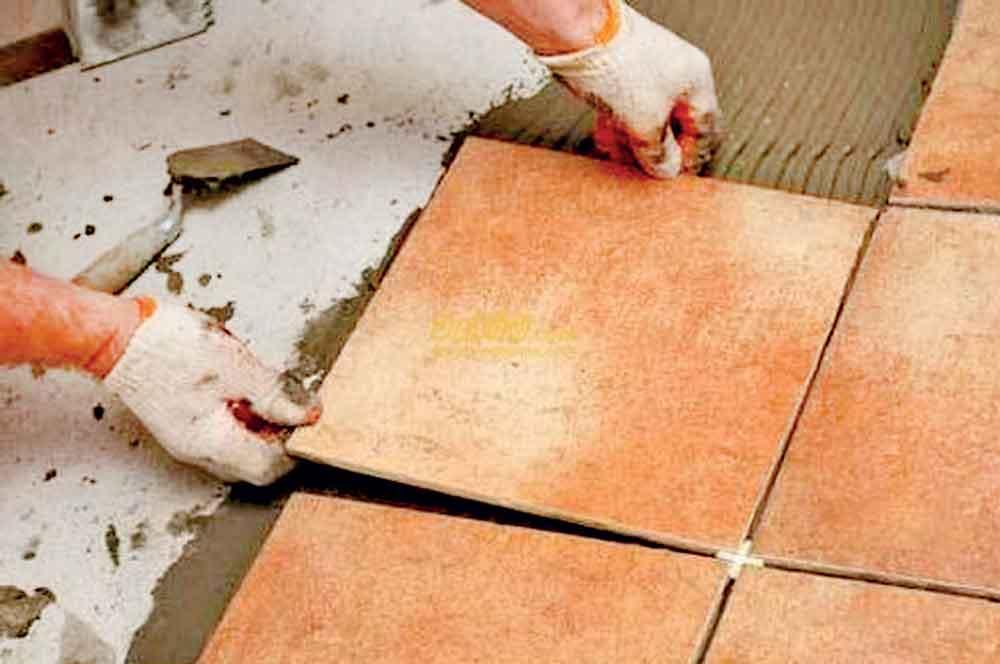
The Tile and Sanitary Ware Importers Association warns that escalating taxes will stifle competition, reduce variety, and worsen supply chain issues, pushing essential goods out of reach for ordinary Sri Lankans
|
Current Tax measures have triggered significant price hikes, impacting everyone from large-scale developers to ordinary families aspiring to build their homes or buildings Customs data underscores the importance of imports in the tile and sanitary ware market Local manufacturers supply only 45% of the tile market, leaving 55% reliant on imports The sanitary ware market imports about 20,000 pieces monthly, sustaining over 2,000 distributors and nearly 100,000 direct and indirect jobs High-end construction projects, including hotels, are also affected |
Sri Lanka’s construction and building sectors are reeling from the imposition of steep taxes on imported tiles and sanitary ware, and its quality certified by the Sri Lanka Standards Institute (SLSI) inspection scheme. Current Tax measures have triggered significant price hikes, impacting everyone from large-scale developers to ordinary families aspiring to build their homes or buildings.
The cascading effects are felt across the economy, slowing tourism infrastructure projects and burdening consumers with soaring costs.
A market at risk
Customs data underscores the importance of imports in the tile and sanitary-ware market. Local manufacturers supply only 45% of the tile market, leaving 55% reliant on imports.
The cascading Customs overall cumulative overall average tax rates on these imports are climbing to a staggering 130-135 percent mainly varying due to dollar fluctuations and size of the tiles.
This has driven the price of a 2x2-foot tile from Rs. 650 to Rs. 1,750, and a complete bathroom set—once Rs. 15,000—now costs Rs. 35,000.
While the government argues these protectionist measures support local manufacturers, economic analysts highlight their monopolistic impact. The industry comprises only five domestic manufacturers, including two dominant players, unable to meet demand or provide the variety required for high-end projects like five-star hotels, stake holders said. These policies, they argue, disproportionately benefit a few while burdening consumers.
Economic Fallout
The economic implications are far-reaching. According to Sri Lanka Customs, the tile sector generates approximately Rs. 1.35 billion in monthly revenue (Rs. 16.2 billion annually). Sanitary-ware imports contribute Rs. 183 million monthly (Rs. 2.2 billion annually). Importers also point out that the industry provides a net revenue of USD 1.35 for every dollar spent on the import bill, countering claims of foreign exchange losses.
Despite these contributions, importers are grappling with customs delays, compounded by high tariffs based on weight and CIF value.
The sanitary-ware market imports about 20,000 pieces monthly, sustaining over 2,000 distributors and nearly 100,000 direct and indirect jobs.
The Tile and Sanitary-ware Importers Association warns that escalating taxes will stifle competition, reduce variety, and worsen supply chain issues, pushing essential goods out of reach for ordinary Sri Lankans.
Consumer and industry impacts
Young couples and families striving to build homes are particularly hard-hit. Critics liken the situation to the infamous “sugar and rice mafias,” warning of a near-monopoly in the tile and sanitary-ware market.
The Condominium Developers Association of Sri Lanka (CDASL) has expressed concerns over the wider economic fallout. They emphasize that over-taxation and monopolistic practices drive up construction costs, further reducing the affordability of housing—a critical driver of inclusive growth.
High-end construction projects, including hotels, are also affected.
These developments rely on branded imports to justify their premium rates. Yet, according to the SLSI’s past performance report, only 0.01% of imported tiles fail to meet quality standards, setting a high benchmark for imported products.
This track record highlights the importance of maintaining access to quality imports to support the construction and tourism sectors.
Proposed Solutions
Stakeholders are urging the government to adopt a more balanced approach.
The Tile and Sanitary-ware Importers Association has proposed revising customs tariffs to 118-120% of CIF value, which would reduce costs by 15% for end consumers.
This adjustment, they argue, would still generate significant revenue while alleviating some of the burden on consumers.
With the customs taxes on sanitary-ware linked to the weight of the product thus on an average 113% on CIF value is applied on the sanitary-ware as import taxes.
Thus this industry provides a net revenue of US$ 1.35 for every $1.00 spent on the import bill. Hence technically there is no foreign exchange loss from this sector.
As per the Statistics Directorate of Sri Lanka Customs, the sanitary-ware sector is providing a monthly revenue of approximately Rs 183 million revenue per month (2.2 billion per annum) as per imports data between December 2023 to June 2024.
The importers have also called for 15 % reduction in tariffs on tiles to lower construction costs and stimulate growth. A five-year policy to attract foreign investment in property and real estate ha also been proposed. .
Striking a Balance
Policymakers must find a middle ground that protects consumer interests while supporting domestic industries. Protectionism, without addressing the monopolistic tendencies of local manufacturers, risks undermining market fairness and public trust.

Young couples and families striving to build homes are particularly hard-hit
11 Jun 2026 32 minute ago
11 Jun 2026 36 minute ago
11 Jun 2026 40 minute ago
11 Jun 2026 45 minute ago
11 Jun 2026 47 minute ago