23 Jul 2025 - {{hitsCtrl.values.hits}}
Sri Lanka’s first Student Ambassadorship Programme aims to foster a healthy relationship between senior students and freshers
 The SAP Programmer was launched to convert traditional, staff-run orientations to one that is conducted by the student-led
Orientation is the bridge in terms of skillsets, tools and knowledge for students from school to university, as emphasised by Dr. Bakmeewewa
The orientation focuses on practical skills like CV Writing and communication
|
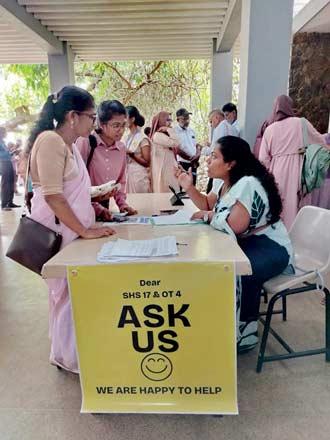
A help desk at the orientiation programme |
In an attempt to empower student leadership and promote a culture free of ragging and bullying in State Universities, the Department of Disability Studies (DDS) at the Faculty of Medicine, University of Kelaniya, launched Sri Lanka’s first Student Ambassadorship Programme (SAP) with the objectives of transforming the traditional, staff-led orientation process into a more collaborative and student-centered experience.
At the successful completion of two cycles, it has been noted that Student Ambassadors served as the first point of contact for new students navigating a crucial transition into university life.
A groundbreaking initiative
University orientation programmes for students are conventionally delivered by academic staff members and coordinated by non-academic staff members. But since 2024, the academic staff at DDS had started thinking whether some sessions would be more productive if they were conducted by students. The idea then evolved to a point where the entire orientation programme was handed over to students.
“Orientation is important because students have a lot to learn when they transition from school to university,” said Dr. Dinushee Atapattu-Bakmeewewa, Head and Senior Lecturer at DDS. “We get students from all over Sri Lanka. Our course is particularly delivered in English. Students who travel from faraway places have to change their socio-demographics; they have to change the language they speak and so on. Once they transition from school to university, they have to learn to use computers and management systems. Therefore, they have a lot to learn in terms of creating their accounts, and these two weeks include a lot of work,” explained Dr. Bakmeewewa.
Since these are important sessions, a concept paper was drafted to introduce the Student Ambassadorship Programme without haphazardly passing it onto students. “This was approved by the Dean of the Medical Faculty and Vice Chancellor of the University,” she added.
As per the concept paper, student ambassadors are being trained for about a month. During the first cycle, students are being asked to volunteer via advertisements. The students were trained, paired with academic mentors and were subsequently allowed to organise sessions and coordinate all the work.
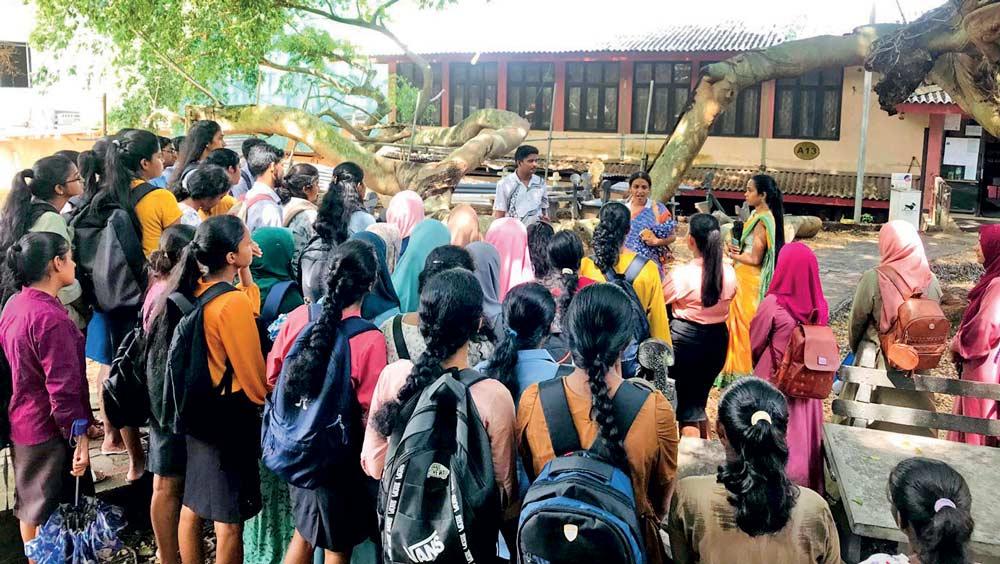
“We allowed them to do some official communication where they had to remind resource persons of the sessions, conduct the Kelaniya campus tour under the supervision of demonstrators in addition to clinical tours,” Dr. Bakmeewewa further said.
She further said that an early clinical course is conducted for students so that they would understand what a disability is, and what they are going to be working with for the rest of their lives. The students are encouraged to take the lead in these initiatives in addition to several informal sessions working in faculties to gain experience.
“This time there was a large number of applicants and it was a competitive selection process. We did a little bit of a change where we gave them more autonomy to sort of be very creative, to take out sessions from the last orientation and introduce new sessions. We gave them a little direction – we told them to do things which are professionally important or in the professional grooming of a person. They conducted sessions on how to write a CV and other aspects which they have to learn as they transition into a professional life,” she added.
With the completion of two cycles, the Department aims to conduct many more such programmes to spread the word among other universities to encourage students to take the lead under the supervision of academic staff. Students are taught about effectively delivering a presentation, the vocabulary they should use, the body language, email communication, accountability, taking responsibility, and how to write certain emails with different tones depending on whom they write to.
The Department of Disability Studies is the only department in a state university that offers programmes related to disability and trains professionals related to disability. Everybody from speech therapists to audiologists and occupational therapists is being trained here. These three professional courses are only offered at Kelaniya University, and once students complete these programmes, they are registered under the Sri Lanka Medical Council, and they practice with people with disabilities, including children and adults.
Creating an inclusive environment
The student ambassadorship programme is open for 3rd and 4th year students and according to Dr. Bakmeewewa. There’s a growing interest among students to join this programme. “We have noticed students adding this programme to their CVs and some of them have even been selected for foreign opportunities. Their involvement in this programme has been highly commended.
“What we want to tell students is that professionalism is beyond academics, and when taking up a professional career, apart from the theoretical knowledge, there are so many other skills that they need to have.
This for us was an opportunity to groom students; and from the feedback, we felt that it benefited new students because we talk a lot about ragging,” she said.
The general notion in a university is to find a ragger and punish the ragger. But this programme includes a more proactive approach. Dr. Bakmeewewa said that one other reason to introduce this programme is that students then they get to interact with new students in a controlled, healthy environment. “Through that interaction, they get to learn a lot of things they otherwise wouldn’t have known. When a student ambassador is asked to take a group of first-year students on a faculty tour, he or she unintentionally encounters certain opportunities to interact with them and hear their stories.
“Then the senior students see a different side, or they can build these relationships without having to bully, rag or create forced friendships, which we call the ragging culture. When they interact with new students, they hear their stories and become comfortable with them because ‘freshers’ feel that these seniors are endorsed by the Department. They feel that nothing will happen to them. “That gives them a sense of security. In their feedback, they say they had someone to speak to. In subsequent weeks, when they had encountered questionable personalities, they had suggested going and speaking to a student ambassador even though the programme was over. Student ambassadors themselves take this message back to the batch. In fact, it has helped to create an inclusive environment,” she underscored.
A proactive and long-standing approach to ragging
Dr. Bakmeewewa aspires to see this programme running and see it evolve into a paid part-time initiative. Since many university students are now engaged in conducting tuition classes or working in restaurants and doing odd jobs to find pocket money, she feels that if this programme evolves into a paid opportunity, it would encourage students to earn as well as learn professional skills.
While the SAP is open for students at the Kelaniya University, Dr. Bakmeewewa said that they have heard of many students who are waiting for an opportunity to become a student ambassador. Dr. Bakmeewewa was inspired by her own experience as a student ambassador while studying in England.
“The programme in England involved bringing international students to the university, sometimes escorting them all the way from the airport. I would like to see this programme evolve into that level. Rather than talking about punishing and criminalising students involved in ragging, I believe that this would allow students to develop healthy friendships, be more empathetic towards others and serve as a proactive and long-standing approach to ragging,” she said in conclusion.
Empowering students for a better university culture
Speaking about the importance of conducting orientation programmes, Prof. Madawa Chandratilake, Dean of the Faculty of Medicine at the Kelaniya University, said that students need some guidance when they transfer from school to an adult learning environment. “If they don’t go through a proper orientation process, they may not follow the academics and other activities. They might do unnecessary things and end up with psychological issues. Sometimes they might decide to walk away from programmes. So these are the consequences of not having proper orientation programmes. During orientations, we plan something which we think would be helpful for new students, and we execute it. Certain areas might work and some might not work.
“In the meantime, we are aware of ragging, psychological and physical harassment and so on. Though there are no physical elements as a university and a faculty, we are concerned about this toxic culture, and we have taken a lot of steps to control and eliminate this culture. In the meantime, we need to empower students to come up with a better culture in the university. Keeping these objectives in mind, we introduced the student ambassadorship programme last year.
“It is not only beneficial to freshers, but it is also beneficial for people who are here to develop their leadership skills. The whole idea is to empower students for a better culture in the university, and it has worked out very well. We have the idea of introducing it to other programmes as well. Senior students have now become lifelong mentors for junior students, and so the expected change is happening,” he added.
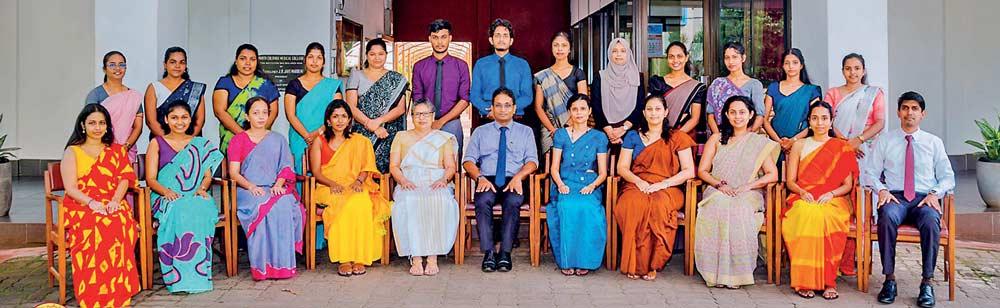
Faculty and student ambassadors of the 2025 programme
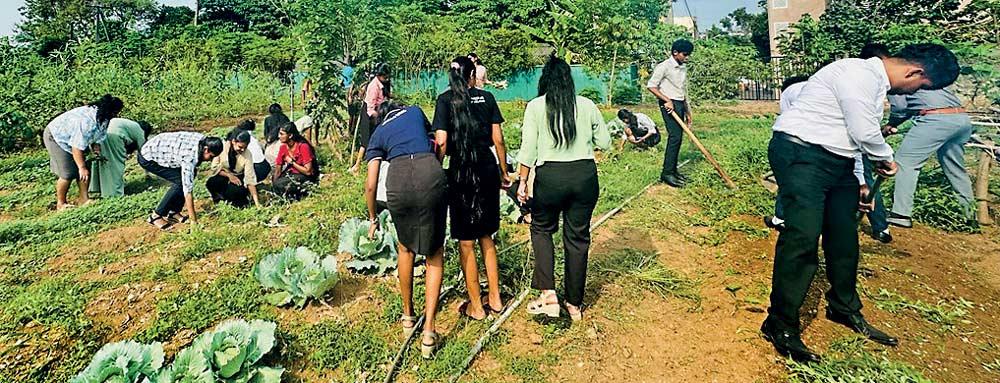
Field day at the organic vegetable garden
11 Jun 2026 8 hours ago
11 Jun 2026 8 hours ago
11 Jun 2026 8 hours ago
11 Jun 2026 8 hours ago
11 Jun 2026 8 hours ago