07 Jun 2025 - {{hitsCtrl.values.hits}}
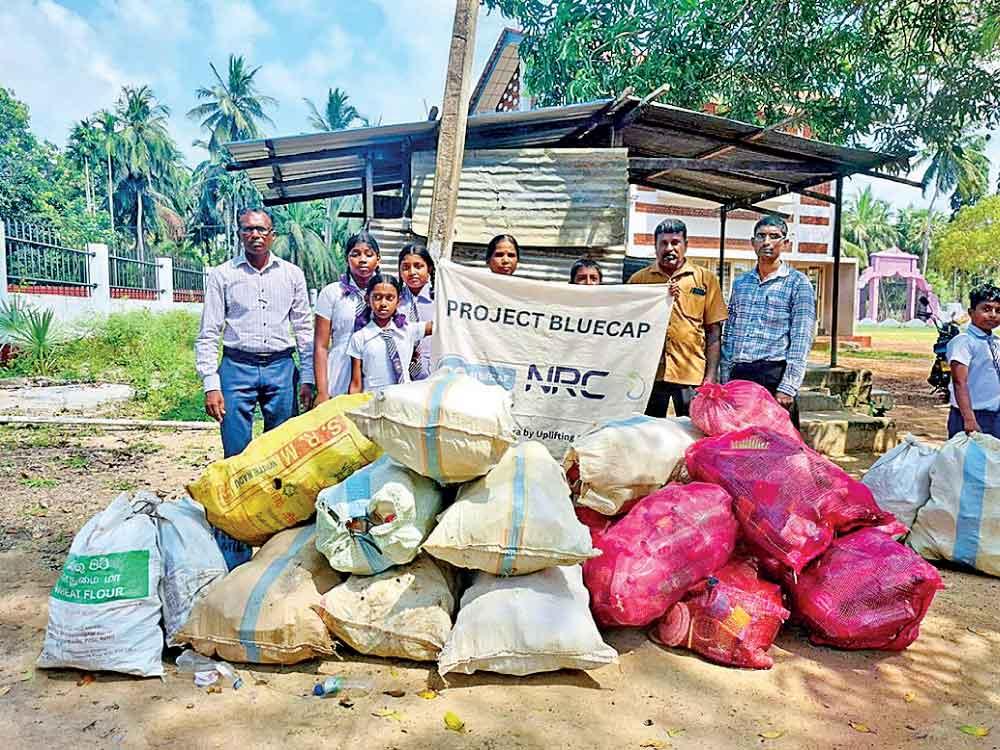
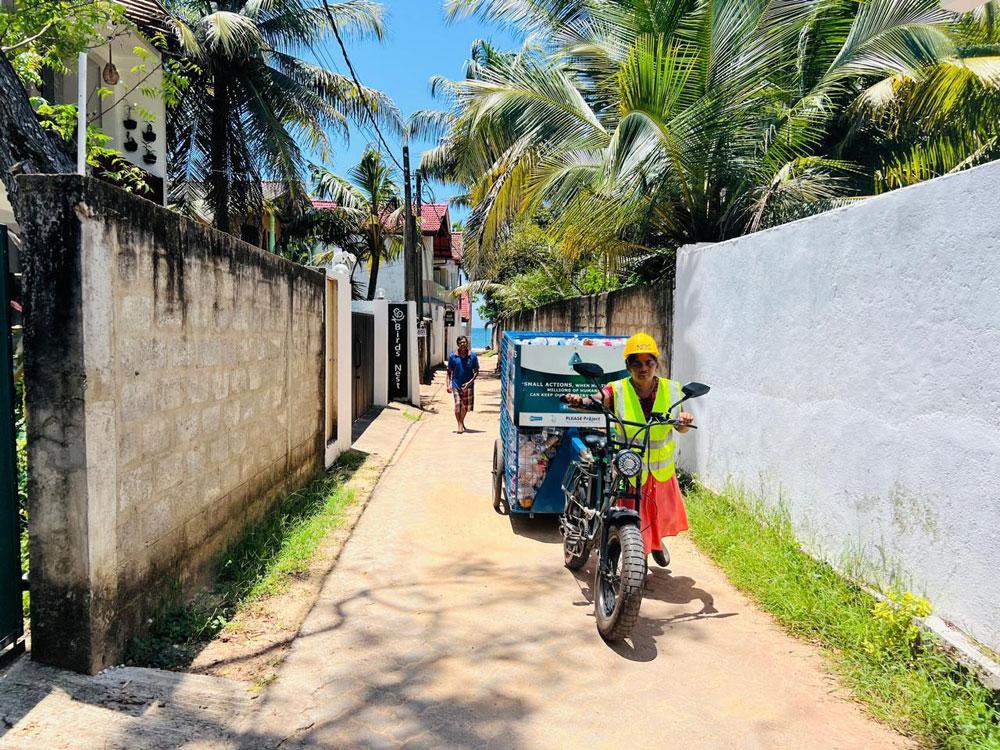
The programme has set up plastic collection centres across 15 districts, acting as community hubs where residents, women’s groups, and children bring in sorted plastic waste
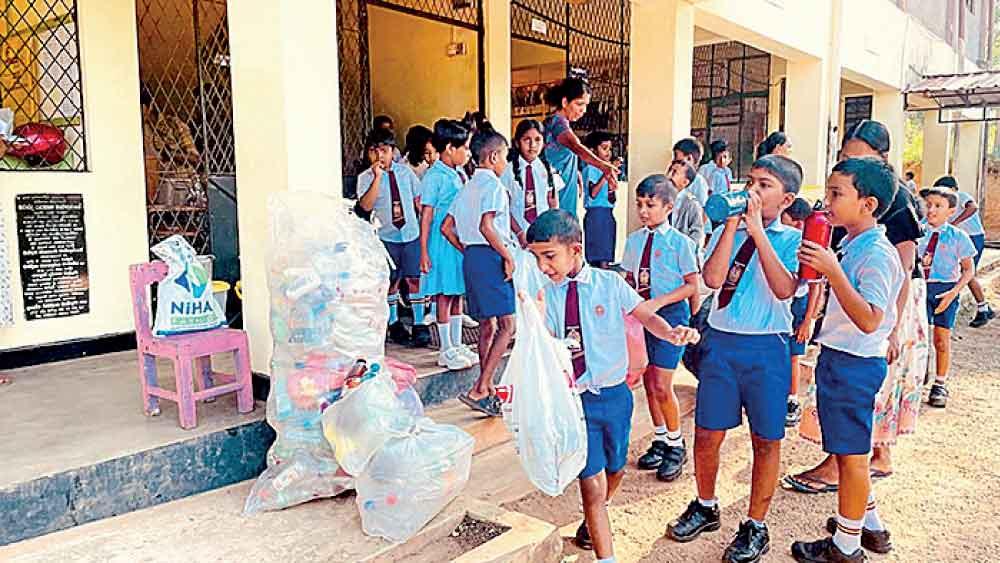
Through school awareness programs and community campaigns, children actively bring collected plastic waste to local collection centers, fostering environmental responsibility from a young age and involving families in the recycling movement
A powerful, women-led recycling movement in Sri Lanka is successfully combating plastic pollution and empowering communities through innovative waste management and a new factory.
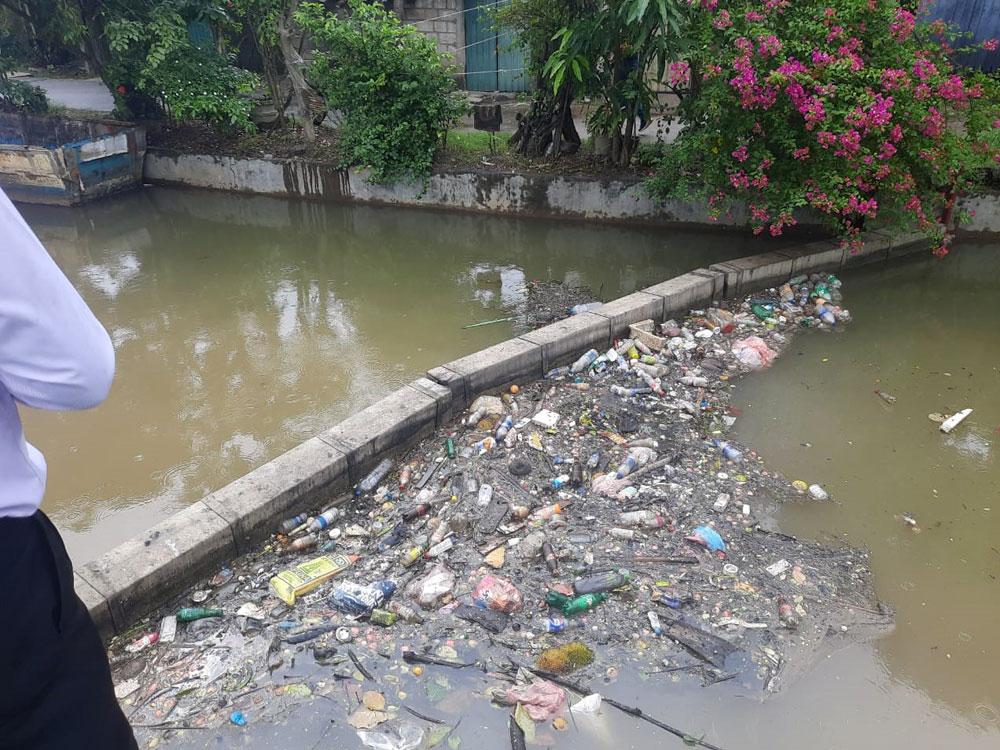
 In a world increasingly burdened by the relentless tide of plastic waste, the global conversation about polythene and plastic pollution has become urgent.
This year’s World Environment Day theme “Ending Global Plastic Pollution” isn’t just a slogan. It’s a call to action resonating in communities, cities, and countries across the planet. And in Sri Lanka, one remarkable initiative is not only answering that call but also transforming lives in the process.
At the heart of this story is a determined female workforce and a groundbreaking recycling factory, both products of the country’s growing commitment to combat polythene and plastic pollution.
While the headlines often focus on climate change, plastic waste has quietly but silently been choking waterways, degrading ecosystems, and harming livelihoods especially in coastal nations like Sri Lanka.
But this isn’t a tale of doom. It’s a story of resilience, innovation, and the power of community.
The rise of a regional movement
Sri Lanka, like many of its South Asian neighbors, is part of the Plastic Free Rivers and Seas for South Asia (PLEASE) programme, a regional initiative supported by the World Bank, Implemented by the South Asia Cooperative Environment Programme (SACEP) with the support of UNOPS, six countries Sri Lanka, Maldives, Bangladesh, Nepal, Bhutan, and Pakistan have united under a common goal: to drastically reduce the devastating impact of plastic waste.
Among the many projects sprouting from this effort, one has become a beacon for sustainable development the Project Blue Cap (Building a Blue Lanka by uplifting communities).
A programme rooted in people
Launched in March 2024, the Blue Cap programme now operates in 15 coastal and inland districts of Sri Lanka, targeting plastic pollution through an innovative framework known as Avoid, Intercept, and Redesign (AIR). Its mission:
At the operational helm is the Negombo Recycling Club (NRC), alongside key partners like Janatakshan, a social development organisation, and Eco Spindles, a pioneering plastics recycling firm specialising in converting PET bottles into textile fibers.
And while the project’s environmental benefits are profound, what makes this programme truly extraordinary is the social transformation it is driving particularly for Sri Lanka’s women.
Women leading the green revolution
At recycling centers and community hubs across the island, it is women who are steering this green change.
From sorting and collecting plastic waste to managing community awareness campaigns, they’ve emerged as the frontline defenders against pollution.
“It is very important to ensure that women didn’t just participate, but led,” says Tharanga Sachinthani, Gender Specialist at Janatakshan.
“Because when women engage, it is not just a job it is about uplifting families, educating children, and strengthening communities.”
Through more than 750 school programme, 500 community workshops, and outreach to 85,000 people, the programme has successfully woven environmental stewardship into the social fabric of these districts.
Special focus was placed on school children, women, fishing communities, and youth, amplifying the message that everyone has a role in protecting the planet.
A factory for the future
As World Environment Day 2025 dawned the programme is poised for its biggest leap yet.
At Horana-Millaniya, the final stages are underway for what will soon be Sri Lanka’s largest plastic recycling plant a direct outcome of the Blue Cap initiative.
Designed to process tons of plastic waste collected from the 15 participating districts, the factory will produce durable Wood-Plastic Composite (WPC) product combining recycled plastic with wood powder.
These composites will be used in furniture and construction, and also exported, helping to reduce the country’s reliance on imported plastic raw materials and generating valuable foreign exchange in the process.
Damitha Samarakoon, NRC Project Manager, explained the journey thus.
“The idea began with a simple concept. Let’s make a difference. Together with plastic recycling expert Manoj Udawatte, NRC Director Nishantha Perera, and Janatakshan Director Sasika Konara, we created Blue Cap around the AIR methodology.
“Now we’re seeing real change not just cleaner communities, but empowered women, stronger economies, and a blueprint for other countries to follow.”
More than a cleanup
What sets this program apart is its seamless blend of environmental action and socio-economic development.
As we toured project sites, we witnessed firsthand how families are turning waste into income, how youth groups are innovating waste collection methods, and how fishing communities are restoring polluted shorelines.
The success, stakeholders agree, lies in social animation the deeply rooted community engagement strategy carried out by Janatakshan’s field teams.
By addressing social, economic, and cultural factors alongside environmental concerns, the program has cultivated ownership and pride at the grassroots.
The road ahead
As Sri Lanka braces for a future where plastic-free coastlines might be a reality rather than a dream, the Blue Cap programme stands as living proof that local action can drive global impact.
This World Environment Day, as the world rallies to end plastic pollution, the women of Sri Lanka’s recycling movement offer a powerful message: with unity, innovation, and heart, even the most persistent problems can be turned into opportunities.
And somewhere in Horana-Millaniya, a new factory hums with promise.
11 Jun 2026 11 minute ago
11 Jun 2026 28 minute ago
11 Jun 2026 53 minute ago
11 Jun 2026 58 minute ago
11 Jun 2026 1 hours ago