08 Apr 2025 - {{hitsCtrl.values.hits}}
By Grace Asirwatham (retired Ambassador)
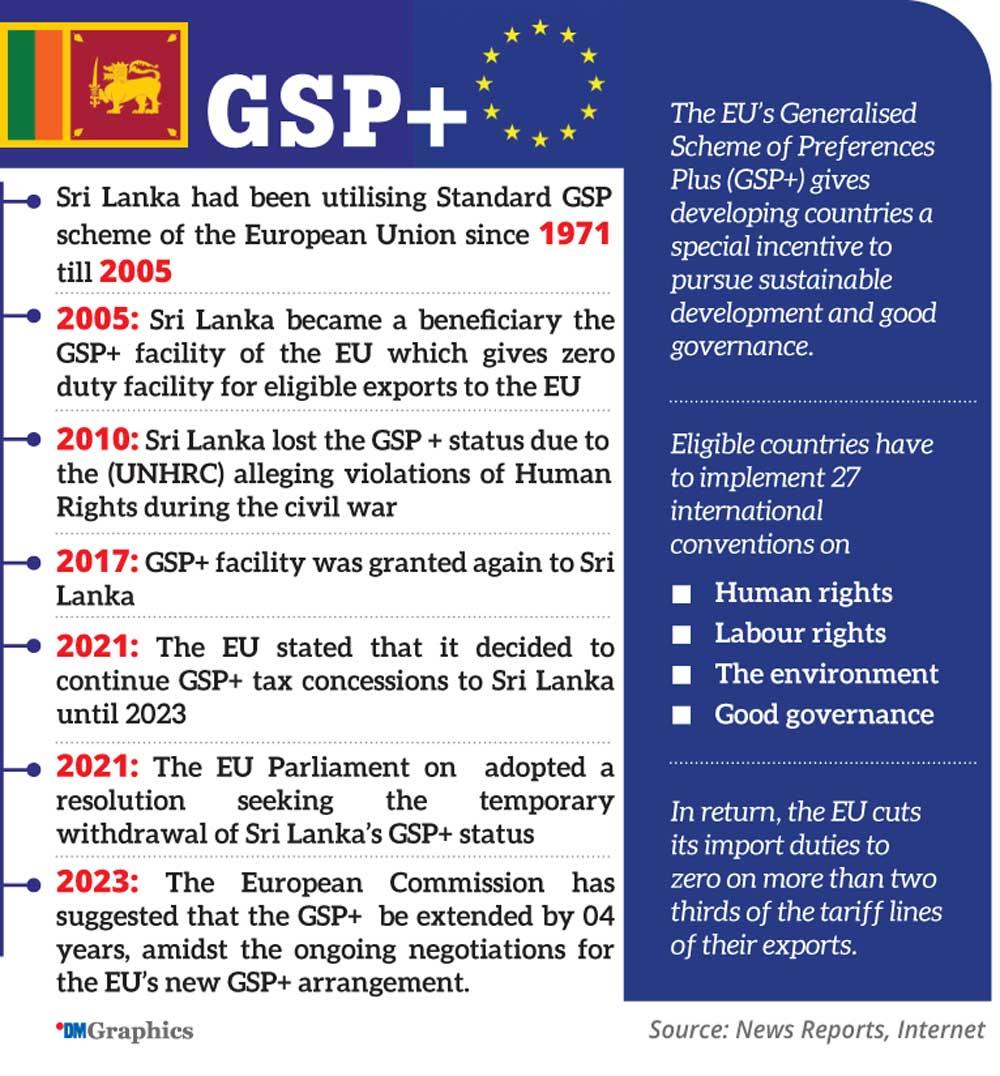
Sri Lanka’s trade relations with the European Union (EU) have been significantly shaped by the Generalised Scheme of Preferences Plus (GSP+), a trade concession that provides the country with preferential access to the EU market. As a GSP+ beneficiary, Sri Lanka must comply with 27 international conventions on human rights, labour rights, environmental protection, and good governance. In April 2025, the EU’s monitoring mission is scheduled to visit Sri Lanka to assess its compliance with GSP+ commitments for the period from 2022 to 2024. The EU engages in continuous dialogue with GSP+ countries through bilateral meetings, high-level diplomatic discussions, and technical cooperation, with biennial monitoring missions serving as a key oversight mechanism.
These missions focus on providing constructive feedback and recommendations rather than imposing immediate punitive measures, allowing beneficiary countries to address shortcomings and improve compliance. As a former head of Sri Lanka’s mission to the EU, I provide insights into the procedural aspects and objectives of the monitoring mission. This article examines Sri Lanka’s relations with the EU, the significance of the GSP+ trade facility, the proposed revisions to the GSP regulation, and Sri Lanka’s engagement with the EU to sustain GSP+ trade relations.
Sri Lanka-EU Relations
The EU and Sri Lanka share a long-standing partnership spanning political, economic, and development cooperation. Official relations date back to 1962 and were further strengthened with the establishment of the EU Delegation Office in Colombo in 1995. This partnership is governed by the Cooperation Agreement on Partnership and Development, which promotes collaboration in governance, human rights, and trade.
Sri Lanka was first granted GSP+ in 2005 to support its post-tsunami recovery but lost this preferential status in 2010 due to non-compliance with EU conditions. In 2017, Sri Lanka regained GSP+ status after demonstrating progress in implementing the required international conventions. This renewal has provided Sri Lanka with duty-free access to the EU market for key exports, particularly in textiles, garments, and seafood.
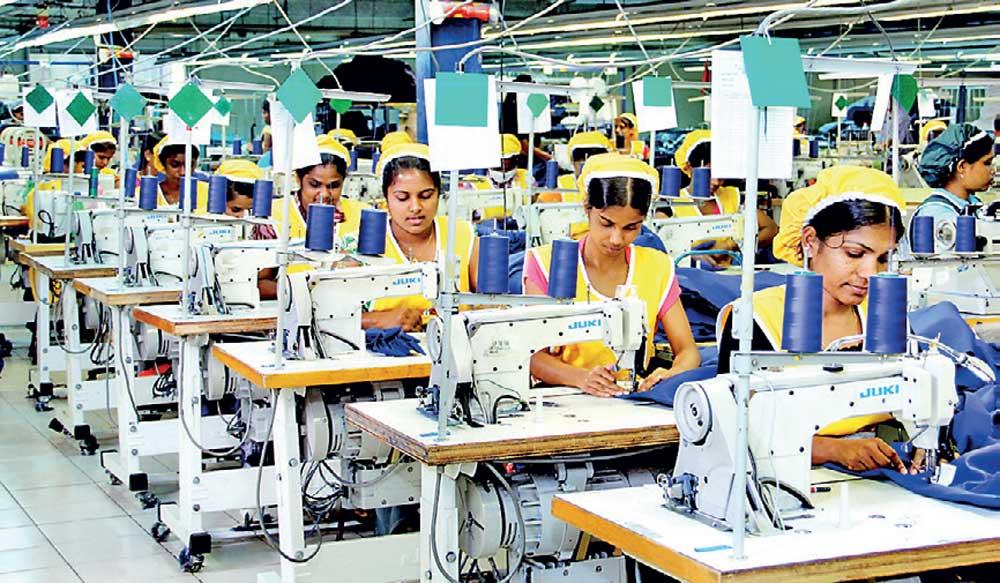
In 2023, Sri Lanka’s exports to the EU totalled approximately €2.6 billion, with textiles and garments constituting the largest share. These industries, which benefit significantly from GSP+ preferences, play a key role in Sri Lanka’s economy, accounting for nearly half of total exports to the EU. Other key exports include rubber products, tea, fish, spices, coconut products, food and beverages, and gems and jewellery. Sri Lanka was also the first country in South Asia to receive Geographical Indication (GI) status in the EU for a product, with “Ceylon Cinnamon” gaining this designation on February 2, 2022. This recognition strengthens Sri Lanka’s export potential by enhancing market distinction, ensuring product authenticity, and increasing demand for premium Ceylon Cinnamon in European markets. Meanwhile, the EU is also a major source of imports for Sri Lanka, supplying machinery, chemicals, pharmaceuticals, and vehicles that are vital to industrial development and healthcare systems.
The GSP+ scheme has played a vital role in Sri Lanka’s export growth, offering preferential access for over 6,000 product lines. However, continued access depends on compliance with governance and human rights standards. To ensure compliance, the EU facilitates structured dialogue including Joint Commission Meetings and Working Groups on Governance, Rule of Law, and Human Rights, which assess progress on democratic reforms and legal frameworks such as the Prevention of Terrorism Act (PTA).
Beyond trade, EU-Sri Lanka relations extend to development cooperation. The EU has been assisting Sri Lanka in green recovery, governance, and economic development under its Multi-Annual Indicative Programme (MIP) for 2021-2027. Key initiatives focus on promoting renewable energy, climate resilience, and sustainable agriculture while strengthening governance, human rights, and reconciliation. The EU delegation in Sri Lanka conducts regular reviews of these initiatives to ensure that EU assistance remains aligned with Sri Lanka’s development needs.
Revisions to the GSP Regulation
The EU reviews its regulations every ten years to ensure they remain effective and aligned with evolving global and internal priorities. The current EU GSP Regulation No. 978/2012 was initially set to expire on December 31, 2023. However, due to delays in finalising the new framework, it has been extended until December 31, 2027, ensuring continuity of the scheme.
While Sri Lanka remains under the extended GSP framework, it is important to understand the key features of the proposed revised regulation, expected to take effect in the next two years. The proposed revised GSP regulation aims to expand trade incentives for developing countries while reinforcing commitments to human rights, labour standards, environmental protection, and good governance. A key aspect of the proposed changes is the expansion of conditionality, requiring beneficiary countries to uphold international conventions beyond human and labour rights, covering environmental and governance standards.
The revision also introduces stricter compliance measures for existing GSP+ beneficiaries, including a mandatory reapplication process once the new regulation comes into force. Beneficiary countries will be granted a two-year transition period to reapply for GSP+, ensuring they have adequate time to meet the updated requirements. Furthermore, the monitoring period for compliance assessments will be extended from two to three years to better align with international evaluation frameworks.
Other notable updates include the inclusion of new international conventions that GSP+ beneficiaries must ratify, addressing issues such as disability rights, child rights, labour rights, transnational organised crime and climate change. With these additions, the number of required international conventions will increase from 27 to 32. These new requirements will not pose a challenge for Sri Lanka, as the country has already ratified all the newly added conventions.
The GSP+ Monitoring Mission
The EU’s GSP+ monitoring mission ensures that beneficiaries comply with the trade scheme’s requirements, particularly in human rights, labour standards, environmental protection, and governance. These assessments play a key role in determining a country’s continued eligibility. The EU compiles a detailed report following each mission, outlining findings and recommending necessary reforms. If deficiencies are identified, the beneficiary country must submit an action plan addressing these concerns, with progress monitored through follow-up reports and additional missions. The Joint Report to the European Parliament and the Council on the Generalised Scheme of Preferences for the period 2020-2022, released in November 2023, evaluated Sri Lanka’s progress. While acknowledging advancements in environmental protection and poverty reduction, the report flagged concerns regarding labour rights, media freedom, and legal safeguards for human rights. The EU has consistently called for further reforms in Sri Lanka’s counterterrorism laws, particularly the Prevention of Terrorism Act (PTA). On June 10, 2021, the European Parliament adopted a resolution titled “The situation in Sri Lanka, in particular the arrests under the Prevention of Terrorism Act,” highlighting concerns over human rights violations linked to the law. The EU has questioned the PTA’s compatibility with international human rights standards, citing provisions that allow prolonged detention without trial, the use of forced confessions, and inadequate judicial oversight.
In 2023, Sri Lanka proposed the Anti-Terrorism Bill (ATB) as a replacement for the PTA. While the EU acknowledged this effort, it raised concerns, stating that the ATB retained vague definitions of terrorism, broad executive powers, and provisions that could criminalize protests. Furthermore, it found the bill lacked adequate safeguards against torture and arbitrary detention. Through ongoing dialogue, the EU has urged Sri Lanka to reform its counterterrorism laws to align with international human rights and due process standards.
With a new President and government now at the helm in Sri Lanka, we can expect a shift in the approach to addressing these longstanding issues. The EU monitoring mission in April 2025 might closely monitor the perspective and actions of the new administration, focusing on their strategies and policies. While the mission will primarily assess Sri Lanka’s compliance with GSP+ conditions, it is also expected to scrutinise the steps taken by the government to address ongoing concerns. The success of these policy reforms, alongside their practical implementation, could be critical in determining Sri Lanka’s continued eligibility for GSP+ benefits.
(The author is a retired career ambassador who previously served as Sri Lanka’s Head of Mission to the European Union, Secretary to the State Ministry of Foreign Affairs, and Deputy Director-General of the OPCW).
11 Jun 2026 3 minute ago
11 Jun 2026 5 minute ago
11 Jun 2026 8 minute ago
11 Jun 2026 13 minute ago
11 Jun 2026 20 minute ago