16 Jan 2026 - {{hitsCtrl.values.hits}}
Mapped cancer cell data
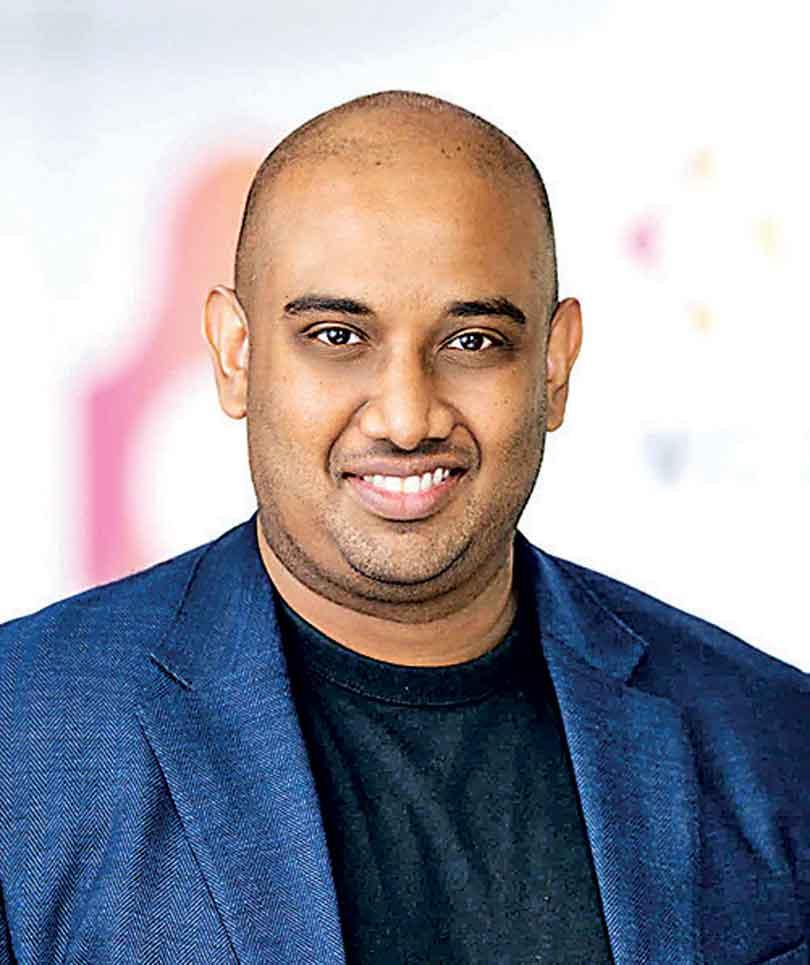
Associate Professor Arutha Kulasinghe
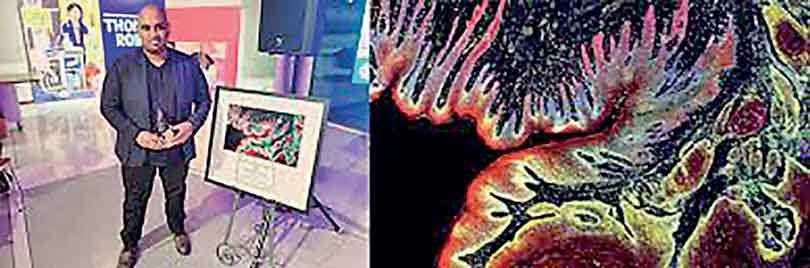
Mapping of a skin cancer
By Sugath Kulatunga Arachchi
A Sri Lankan-born scientist has made waves in the global medical community with groundbreaking research that could revolutionise cancer treatment. Dr. Arutha Kulasinghe, Associate Professor at the University of Queensland, has unveiled a pioneering method that promises faster, cheaper, and more personalised therapies for cancer patients worldwide.
A leap in personalised medicine
For decades, cancer treatment has relied on lengthy, expensive, and often uncertain protocols. Patients were subjected to standardised therapies that worked for some but failed for many. Kulasinghe’s research marks a decisive shift. Instead of ‘one-size-fits-all’ medicine (the same treatment method and path for every cancer), his approach identifies the unique molecular fingerprints of each patient’s cancer, enabling doctors to tailor treatments with precision.
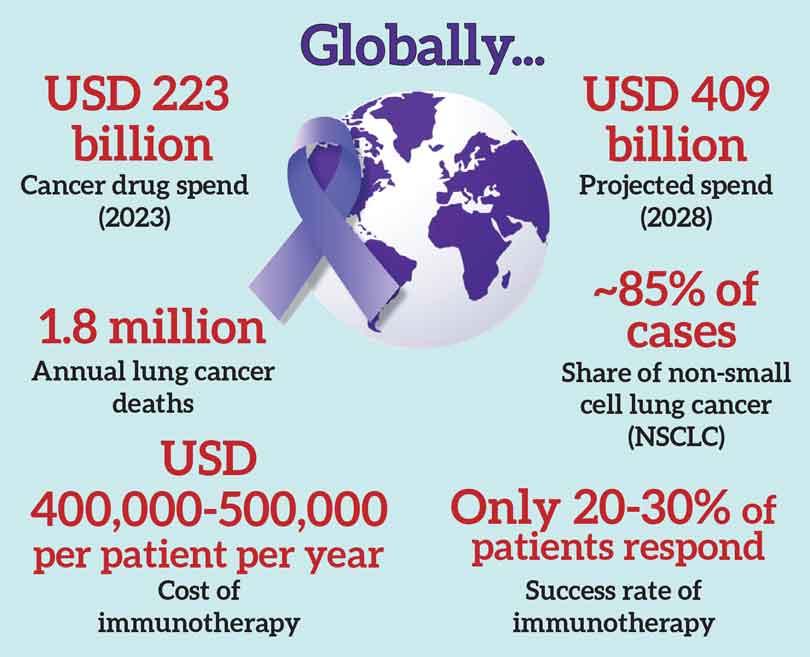
Published recently in Nature Genetics, his study demonstrates how spatial biology and artificial intelligence (AI) can predict whether lung cancer patients will respond to costly immunotherapy drugs -- treatments that currently succeed in only 20-30% of cases despite costing up to US$ 500,000 per patient annually.
How it works
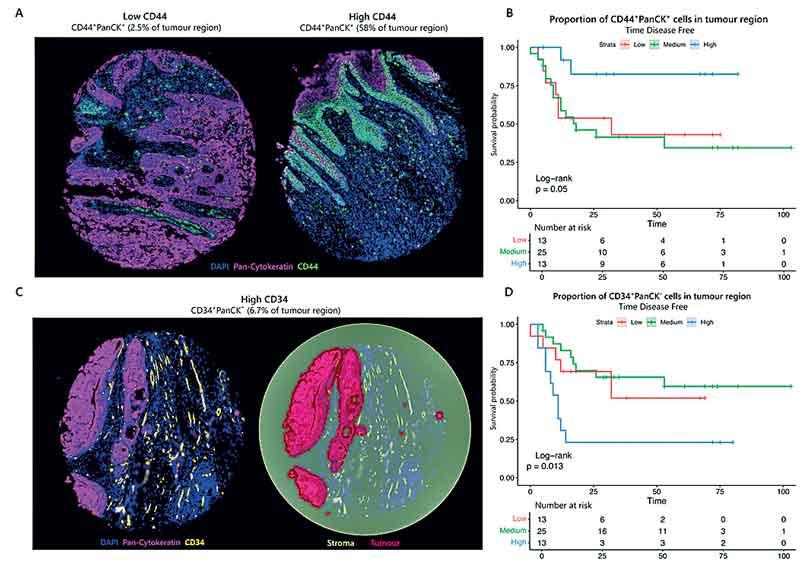
A single biopsy can now reveal hundreds of cellular clues about how a patient’s tumor interacts with immune cells.
Using advanced imaging and AI, Kulasinghe’s team mapped millions of cells in 250 patients across Australia, the US, and Europe. These ‘Google maps of cancer’ show which regions of a tumor are likely to resist or respond to treatment. This breakthrough allows doctors to avoid ineffective therapies, saving patients from unnecessary side effects and preserving valuable time.
Global impact
Cancer drugs cost the world US$ 223 billion in 2023, projected to soar to US$ 409 billion by 2028. Lung cancer remains the leading cause of cancer deaths globally, claiming 1.8 million lives annually. In Sri Lanka, lung cancer is the second most common cancer among men, with rising incidence rates.
Prof. Kulasinghe’s innovation offers hope, by predicting treatment success early, patients can be directed to the right therapy at the right time, potentially saving millions of lives and billions in healthcare costs.
The inspiration behind
Prof. Kulasinghe’s passion for cancer research was sparked in childhood, watching his grandfather battle the disease. His lifelong mission became clear: “Every patient deserves the right treatment at the right time.”
Opening doors for Sri Lanka
Speaking recently to the Sinhala Radio Service in Australia SBS, Prof. Kulasinghe expressed his willingness to share this cutting-edge hi-tech knowledge with Sri Lankan students. He is looking forward to joining PhD students on his team. His vision is to inspire the next generation of scientists to harness AI and spatial biology in tackling the nation’s growing cancer burden.
Why it matters
This discovery is a game-changer for worldwide oncology rather than merely another scholarly achievement. Prof. Arutha Kulasinghe has put Sri Lanka on the map of medical innovation and given humanity new hope in the fight against cancer by fusing world-class science with Sri Lankan tenacity.
Associate Professor Arutha Kulasinghe leads the Clinical-oMx Lab at the Frazer Institute, University of Queensland and is the Founding Scientific Director of the Queensland Spatial Biology Centre (QSBC) at the Wesley Research Institute. Prof. Kulasinghe has pioneered spatial transcriptomics, proteomics, and interact omics in the Asia-Pacific region, contributing to world-first studies in lung cancer, head and neck cancer, and tissue atlasing (mapping) studies of infectious diseases across pandemics.
He was born in Sri Lanka and, moved to South Africa during his infancy, where his parents were already residing.
04 Jun 2026 4 minute ago
04 Jun 2026 28 minute ago
04 Jun 2026 39 minute ago
04 Jun 2026 2 hours ago
04 Jun 2026 2 hours ago