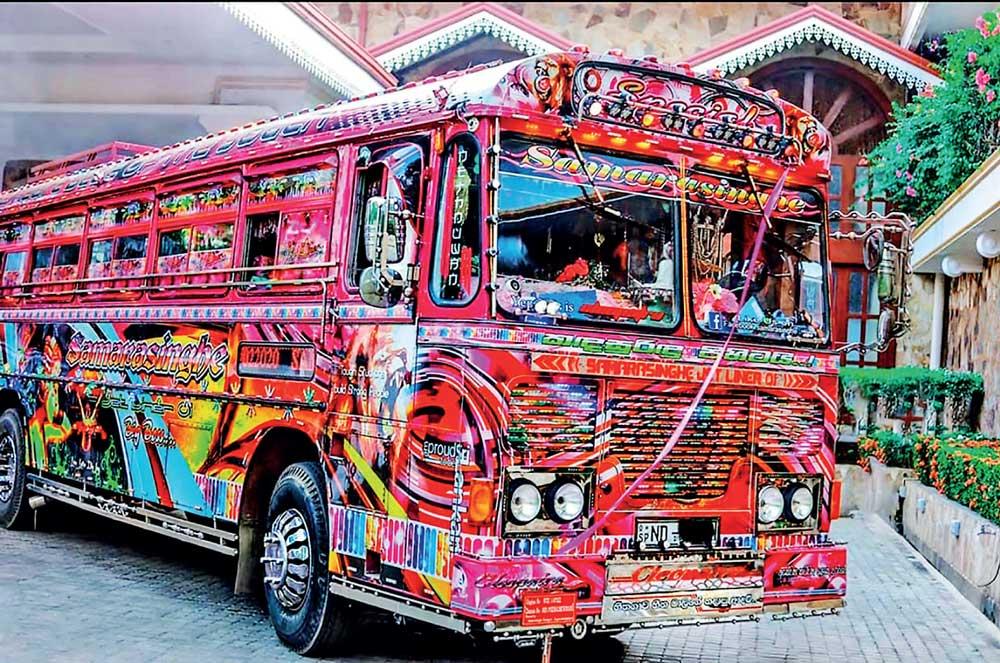
Despite government’s crackdown on buses with modifications, several buses continue to operate without restrictions
- Cabinet Spokesman Dr. Nalinda Jayatissa announced that the circular allowing vehicle modifications would be revoked in future
- The Cabinet of Ministers scrapped the previous decision to liquidate the Co-operative Wholesale Corporation
- Transport of minerals during school hours has been permitted near schools, despite the Govt. earlier imposing conditions for mineral transport
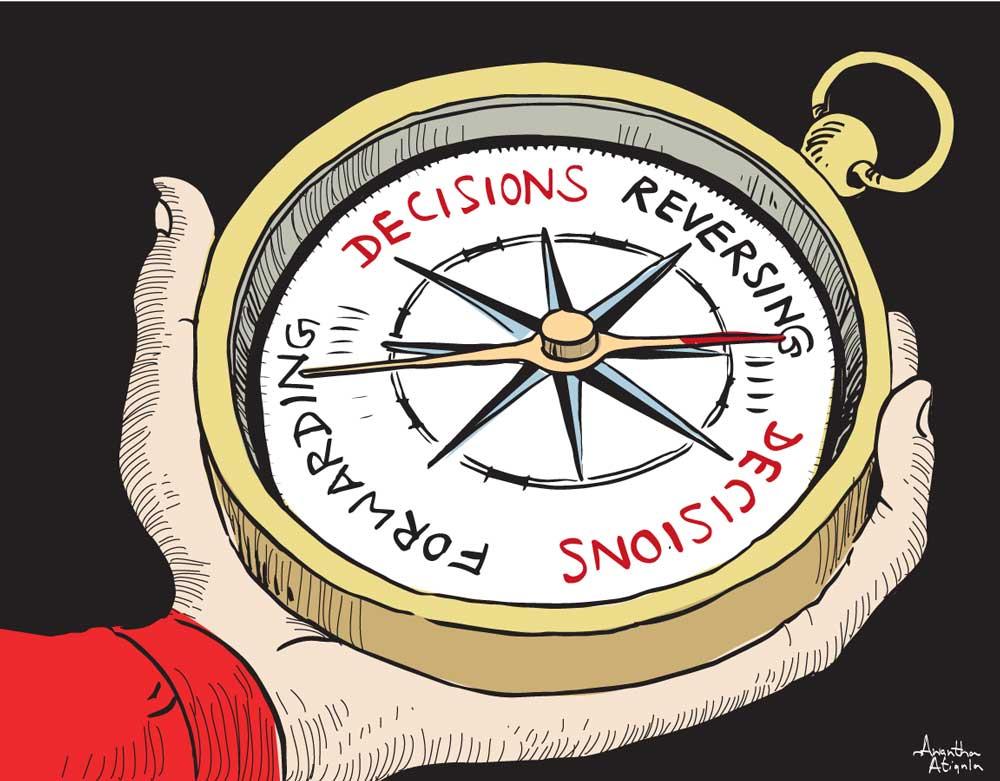
Over the past year, the incumbent Government had been criticised in numerous instances for not being able to walk the talk and deliver some of its promises. Despite fulfilling certain promises, there seems to be mixed reactions towards various decisions that had been taken so far. However, since it’s assumption to power, several decisions taken by the incumbent Government were reversed. This reversal of decisions had been perceived by certain factions as a weakness of the government owing to inexperience by elected officials while on the other hand, responsiveness to public opinion is sometimes perceived as an indicator of a democratic state.
Key decisions reversed/abruptly discontinued are as follows;
- A prominent reversal occurred in November 2024 when the National People’s Power (NPP) government reversed a key IMF bailout mandate for the state-owned electricity entity, scrapping the privatization programme for the Ceylon Electricity Board.
- As part of the Clean Sri Lanka programme, the Government announced a crackdown on vehicles that had various modifications. The Police was involved in removing all modifications in an attempt to reduce road accidents caused by three wheelers and buses. Despite the programme, there are numerous buses and three wheelers with such modifications. In June the Police announced that it would relaunch the crackdown on such vehicles. In early September, Cabinet Spokesman Dr. Nalinda Jayatissa announced that the circular allowing vehicle modifications would be revoked in future.
- In March 2025, the Cabinet of Ministers scrapped the previous decision to liquidate the Co-operative Wholesale Corporation (CWC), commonly known as Sathosa – opting instead to revive its operations based on a feasible business plan.
- In July 2025, The Government announced that the MBBS program at KDU would be limited to cadets and foreign students. Due to opposition the decision was reversed to allow fee-paying local scholars to apply again.
- Following the spate of school van and heavy vehicle collisions, the Government imposed conditions for mineral transport vehicles to avoid entering the city during school hours. However, on Friday (September 18) the Geological Survey and Mines Bureau (GSMB) has revoked the suspension of transporting minerals during school hours. The GSMB said the new condition was amended after considering the requests of those in the construction industry. Hence, the transport of minerals during school hours has been permitted near schools and in places where children cross roads under a speed limit and strict police supervision.
How unpopular decisions may affect ordinary citizens
According to Dr. Ramesh Ramasamy, Senior Lecturer in Political Science at the University of Peradeniya, politics and governance are two different things. “This government has reversed some of the popular decisions. You can do politics very easily. When you’re in the Opposition you can point fingers at the ruling party, speak about corruption and malpractices and so on. But when you’re in power it’s very challenging because you have to take crucial decisions and people may either support these decisions or criticize them. In the case of the NPP Government they were in the opposition for many years and this is the first time they assumed power. Governance includes managing institutions, resources, mobilising resources, maintaining foreign policy, diplomacy and many other aspects. But this Government assumed power with a lack of experience and some of the elected representatives are very new to politics. So they have to run a government with few people who have experience and expertise. This is where they are facing a lot of challenges when implementing decisions and promises. They made various promises before assuming power, but at one point they realised that if they fulfilled those promises it would seriously affect their popular support base. This is largely linked with the political support base because the government was brought to power by ordinary citizens as opposed to the country’s middle class. When you look at the previous local government election, it was quite evident as there was a significant setback to the government. At the end of the day people will measure the delivery of the government,” he observed.

When you’re in the Opposition you can point fingers at the ruling party, speak about corruption and malpractices and so on. But when you’re in power it’s very challenging because you have to take crucial decisions and people may either support these decisions or criticize them”
-Dr. Ramesh Ramasamy, Senior Lecturer in Political Science at the University of Peradeniya
 Reversing decisions is good because it shows that they are listening to what people say. I think that’s an important feature of a democratic government. They don’t want to impose their decisions when people protest. People speaking out and protesting government decisions is part of our democratic political culture. This is what the aragalaya taught us as well,”
Jayadeva Uyangoda, Emeritus Professor of Political Science at the University of Colombo
 We have seen the same set of people in power and the same political culture between 1994 and 2020. This government is trying to change this culture. Perhaps we need a different vocabulary and an analytical tool kit to describe this fresh political culture”
Dr. Pradeep Pieris, Senior Lecturer at the Department of Political Science and Public Policy at the University of Colombo
He further said that since this government is new to the governance process they should learn and develop competency and expertise in effectively managing institutions rather than focusing on unpopular policies and decisions. “Even within the government there are varied opinions about certain things and they should in fact prevent such issues. It would affect the Government and its legitimacy in future. People wanted the NPP Government to make a radical transformation in the governance system. In fact the Government seems to be more focused on economic reforms, but they should seriously consider bringing about governance reforms. I appreciate the Government’s anti-corruption initiatives and measures, but you can’t govern institutions by simply focusing on anti-corruption. So the Government cannot do regular politics anymore. If the Government continues to focus on unpopular decisions it will affect ordinary citizens in the country and it would have a different reflection. Just because they have a sweeping majority in parliament they shouldn’t take things lightly because the political climate can always change in a developing country,” Dr. Ramasamy underscored.
An important feature of a democratic Govt.
“Reversing decisions is good because it shows that they are listening to what people say,” said Jayadeva Uyangoda, Emeritus Professor of Political Science at the University of Colombo. “I think that’s an important feature of a democratic government. They don’t want to impose their decisions when people protest. People speaking out and protesting government decisions is part of our democratic political culture. This is what the aragalaya (Strike) taught us as well. The Government should respond positively to people’s criticisms. Some perceive it as a weakness of the Government, but that’s not how I would see it. This is the democratic spirit of the Government. People who claim that this is a weakness of the Government are not used to the norms of democratic governance. They are used to an authoritarian system of Governance since 1978. So when a Government withdraws its decisions it’s a news to them. For them this is a weakness of the Government. But in fact it’s the strength of the government,” he explained.
Prof. Uyangoda further said that in public policy making and in democratic governance there’s a principle called responsiveness. “What it means is that policymakers should respond to public opinion and public criticisms. Citizens have their own points of view and policymakers should listen to them. They change their decisions in response to public inputs. Responsiveness to the public is one of the major issues in democracy in countries like Sri Lanka. So governments have a tendency to not be responsive of public inputs. So by responding to public inputs it shows the strength of the democratic character of the government,” he underscored.
Honeymoon period
Adding his comments, Dr. Pradeep Pieris, Senior Lecturer at the Department of Political Science and Public Policy at the University of Colombo said that the incumbent is still in its honeymoon period. “The government brought a fresh set of faces and they are still gaining experience. In fact the government is in an experimental stage. It’s different to what we experienced over the past 70 years. We have seen the same set of people in power and the same political culture between 1994 and 2020. This government is trying to change this culture. Perhaps we need a different vocabulary and an analytical tool kit to describe this fresh political culture. But having said that it is too early to comment on whether it is right or wrong to have changed certain decisions. So we have to wait and see what they are trying to do,” he added.
Attempts to contact Media Minister failed
Several attempts made to contact Dr. Nalinda Jayatissa, Chief Government Whip and Cabinet Spokesman to inquire the reasons for the reversal of above decisions proved futile.