07 Aug 2025 - {{hitsCtrl.values.hits}}
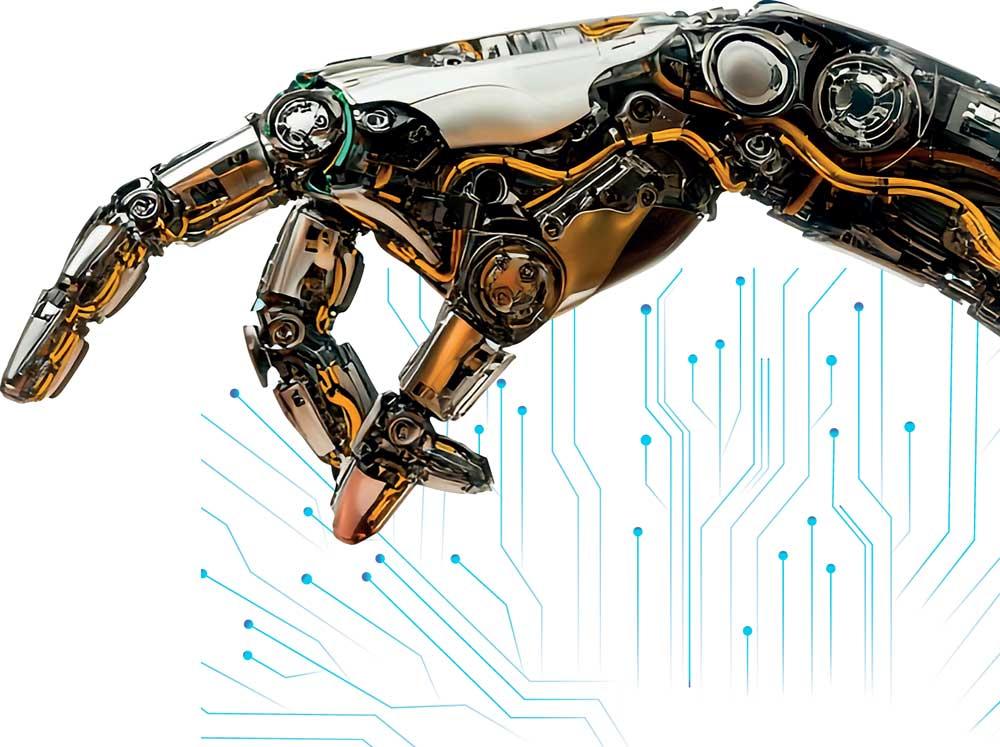
 While the Neolithic Revolution is often celebrated as an unequivocal triumph, its complex legacy of social hierarchies and unequal benefits offers a vital lens for our current era. This paradox suggests that the transformative power of AI is not guaranteed to be equitable. Understanding the unintended consequences of our first revolution is key to consciously shaping our second, and ensuring AI becomes a tool for empowerment rather than a new form of inequality.
“Today’s technology offers a second opportunity to shape civilisation, but only if we understand how the first one shaped us.”- Yuval Noah Harari
Two Revolutions, One Question
Human history is punctuated by revolutions- moments when our relationship to the world and to each other fundamentally shifts. Roughly 12,000 years ago, communities in several regions independently began cultivating plants and domesticating animals.
This transition, known as the Neolithic Revolution laid the foundations for villages, cities and states, along with writing, mathematics and monumental architecture. Now, as artificial intelligence (AI), quantum computing and the Internet of Things (IoT) transform economies and societies, many commentators speak of a ‘second genesis’. Before celebrating or fearing this future, we should reassess what the first revolution truly meant.
Agriculture
The traditional story depicts agriculture as an unequivocal triumph: a leap from precarious foraging to reliable surplus, enabling population growth, specialisation, bureaucracies and urban life.
Yet critics point out its darker consequences. Jared Diamond called farming humanity’s ‘worst mistake’, noting that skeletons of early farmers show decreased stature, higher disease rates and shorter life spans. Yuval Noah Harari goes further, dubbing agriculture ‘history’s biggest fraud’ because domesticated grains forced humans into longer work hours and poorer diets.
Anthropologist Marshall Sahlins described hunter‑gatherers as living on a ‘Zen road to affluence’ and archaeologist Mark Nathan Cohen emphasised that health deteriorated when societies shifted from diverse foraging to monoculture crops.

Political scientist James C. Scott argues that cereal crops enabled early states to fix populations in place, tax them and raise armies, creating domination structures that persist.
These critiques share a theme: the benefits of agriculture were unevenly distributed and often served emerging elites more than the majority.
Early Farming
Framing the agricultural revolution solely as a miracle or a mistake oversimplifies a complex transition. In some regions, agriculture eventually improved nutrition and life expectancy; surplus supported cultural and technological achievements from Sumerian cuneiform to Egyptian pyramids.
Importantly, hierarchy was not an inevitable outcome of cultivation. Excavations at Çatalhoyuk, a large Neolithic town in central Anatolia, reveal no central buildings or temples; residents accessed dwellings via rooftops and ladders, suggesting there were ‘no rich and poor nor ruler and subject’.
Houses were similar in size and layout, and there is little evidence of centralised authority or social stratification. Such examples show that early farmers experimented with communal land use and egalitarian social structures, countering the view that agriculture invariably produced kings and peasants.
Regional diversity further complicates the narrative. Farming appeared independently in the Fertile Crescent, China, Mesoamerica and the Andes, spreading patchily and interacting with persistent foraging economies.
Why did humans delay cultivation for tens of thousands of years despite possessing modern cognition? Climate, demography and ecology matter.
During the last Ice Age, unstable environments made cultivation risky, while foraging offered dietary diversity, mobility and social flexibility. Evidence suggests that knowledge of cultivation long preceded its widespread adoption.
At the Ohalo II site on the Sea of Galilee, dated to about 23,000 years ago, researchers found wild wheat and barley alongside dozens of other plant species. In Turkey’s Gobekli Tepe, hunter‑gatherers erected monumental stone circles over 11,000 years ago, yet no domesticated plants or animals have been recovered.
These sites imply that humans could build sophisticated monuments and harvest wild grains without committing to agriculture; farming was adopted under specific pressures - population growth, resource depletion or new social arrangements, not from ignorance.
Cognitive Continuity, Not Sudden Revolution
Rather than a sudden ‘cognitive revolution’, advances in symbolic thought and language evolved gradually across hominin species. Comparative genomics shows that Neanderthals and Denisovans shared the same functional version of the FOXP2 gene, once thought unique to modern humans.
Culture and environment shaped cognition as much as genes. Modern humans may not have begun farming earlier simply because they did not need to; many forager societies enjoyed balanced diets and abundant leisure.
AI Genesis, Danger or Opportunity
How should we view AI and its siblings in light of this complex history?
Advocates argue that AI, quantum computing and IoT amplify human capabilities just as language once did. Precision spraying systems use AI‑guided cameras to detect and spray weeds, enabling farmers to reduce herbicide use by up to 90 % and saving fuel and labour.
Mobile apps powered by AI and smartphone cameras provide small farmers with on‑the‑spot diagnoses of livestock health issues and tailor fertiliser recommendations. In education, adaptive learning platforms such as DreamBox and SmartSparrow analyse student responses in real time to adapt lessons dynamically.
Automated grading tools like Gradescope reduce educators’ workload, while AI scheduling software optimises timetables and resource allocation.
If ethically deployed, such tools could decentralise information, automate labour and expand access to knowledge, addressing some of the inequalities rooted in agriculture.
Yet technology is never neutral. Without deliberate governance, AI could entrench old hierarchies or create new ones.
However, the ACLU, a US-based non-profit rights organisation, warns that AI tools have already exhibited housing discrimination: Tenant‑screening algorithms trained on biased data have denied people housing despite their ability to pay, and lenders have overcharged people of colour by millions.
Employers increasingly use AI-driven hiring tools that discriminate against candidates with disabilities or those from marginalised communities. Because AI is designed and deployed within systems marked by racial and economic disparities, it can amplify existing inequities rather than reduce them.
Sri Lankan Lens
Sri Lanka’s experience illustrates why historical awareness and inclusive technology deployment are critical for shaping equitable futures.
While agriculture no longer forms the economic backbone in terms of gross domestic product, accounting for less than 10% of national output, it remains central to rural livelihoods, food security and socio-political stability.
A significant portion of the population is still directly or indirectly reliant on farming, particularly smallholder and subsistence agriculture.
The country has made notable progress in digital penetration; mobile phone usage is widespread, and e-government platforms have expanded.
However, disparities in internet access, affordability, and digital literacy persist, especially in rural and estate communities. These digital divides could deepen existing inequalities if left unaddressed.
AI-driven tools such as precision spraying systems, smartphone-based diagnostics, and real-time weather and soil analytics hold immense promise for enhancing productivity and climate resilience.
If made affordable and supported by training programs, such technologies could empower Sri Lankan farmers to conserve inputs, reduce crop loss, and access data-driven decision-making once limited to industrial-scale agriculture.
However, deploying AI without deliberate attention to inclusion risks replicating the very hierarchies and marginalisations that the Neolithic transition entrenched. For instance, farmers without formal land titles or credit histories may be penalised by data-driven lending algorithms.
Households with poor connectivity may find themselves excluded from digital marketplaces. Similarly, existing inequalities in land ownership and gender roles could be magnified if AI adoption is concentrated among larger or better-connected landholders.
Sri Lanka’s path forward, therefore, hinges on more than technological adoption; it demands strategic investment in rural infrastructure, public-private collaboration, education reform and equitable data governance.
Ensuring that AI serves as a tool of empowerment rather than enclosure will require conscious policy choices. The lessons of the first revolution warn us that unchecked innovation can concentrate power; the promise of the second lies in using that insight to design for justice.
Recognising both promise and peril, economists, historians and technologists offer different lenses through which to view our ‘second genesis’.
Joseph Stiglitz stresses that innovation does not automatically deliver shared prosperity; equitable outcomes depend on institutions, regulations and redistributive policies. Niall Ferguson highlights that technologies often reinforce existing power structures before they level them and that historical ‘revolutions’, are rarely linear.
Steve Jobs championed human‑centred design and warned against letting technology dictate values. Elon Musk warns of existential risks from uncontrolled AI even as he invests in space colonisation and autonomous vehicles. Jensen Huang of NVIDIA emphasises the democratizing potential of graphical processing units (GPU) and open‑source AI, arguing that accessible hardware and software can spread benefits widely. Their diverse views underscore that tools are only as transformative as the ecosystems and values into which they are released.
Evolution
The real challenge of our second genesis is not to celebrate AI as a panacea but to decide what kind of civilisation we want to build with it.
History shows that surpluses and technologies can both liberate and constrain. The Neolithic revolution enabled civilisation and exploitation simultaneously; the AI revolution could do the same.
Designing social, economic and ethical frameworks that harness technology for agency, dignity and ecological balance, not productivity alone, will determine whether AI becomes a new form of domestication or a path to greater freedom. The great irony is that only by embracing the very technologies that seem to threaten humanity do we stand to fully realise it.
If the first revolution made us civilised, perhaps the second can make us consciously aware of our capacity to choose which traps we fall into and which futures we create.
The writer -JSK Senevirathne-is a Senior Lecturer at the Department of Business Administration, Faculty of Management Studies & Commerce, University of Sri Jayewardenepura.
11 Jun 2026 7 hours ago
11 Jun 2026 7 hours ago
11 Jun 2026 7 hours ago
11 Jun 2026 7 hours ago
11 Jun 2026 8 hours ago