07 May 2025 - {{hitsCtrl.values.hits}}
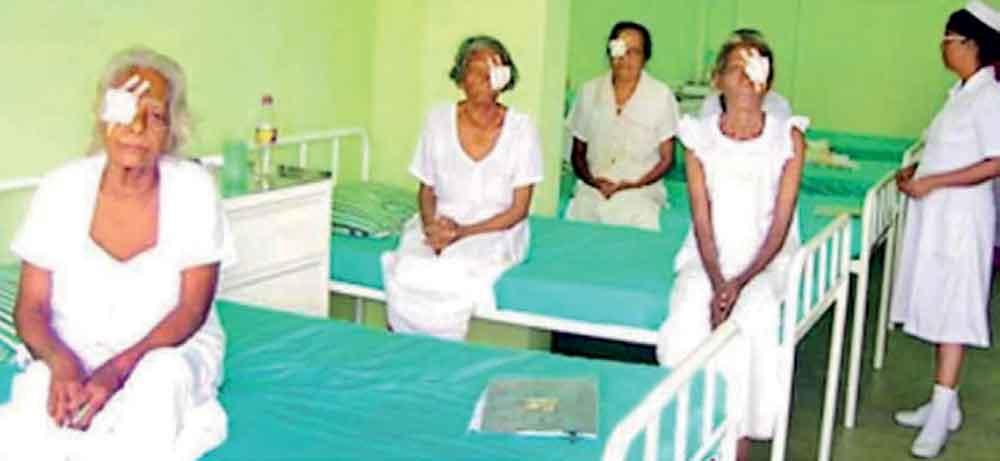
Cataract is considered to be the leading cause of blindness in Sri Lanka despite being entirely treatable with a simple surgery
By Zainab Hussein
Sri Lanka currently faces two parallel eye health crises— a backlog of cataract surgeries and a rise in unaddressed vision problems among schoolchildren. Despite ongoing efforts by dedicated professionals and initiatives by CSO’s, this remains a growing concern that requires immediate attention, particularly from the government.
|
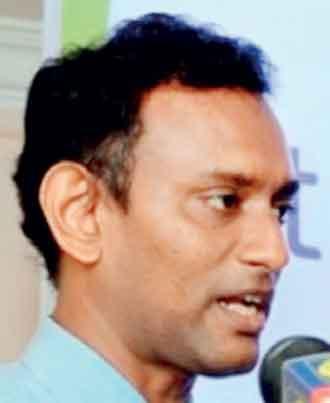
Dr. Asela Abeydeera |
Dr. Asela Abeydeera is a Community Ophthalmologist and President of the Association of Community Ophthalmologists of Sri Lanka (SLACO) who has been a leading advocate for equitable eye care access for years. During a discussion with Daily Mirror, Dr. Abeydeera spoke about the cataract surgery backlog and the concerns regarding children’s eye health, which are more prevalent in Sri Lanka when compared to visual impairments caused by glaucoma, diabetic retinopathy and other eye diseases.
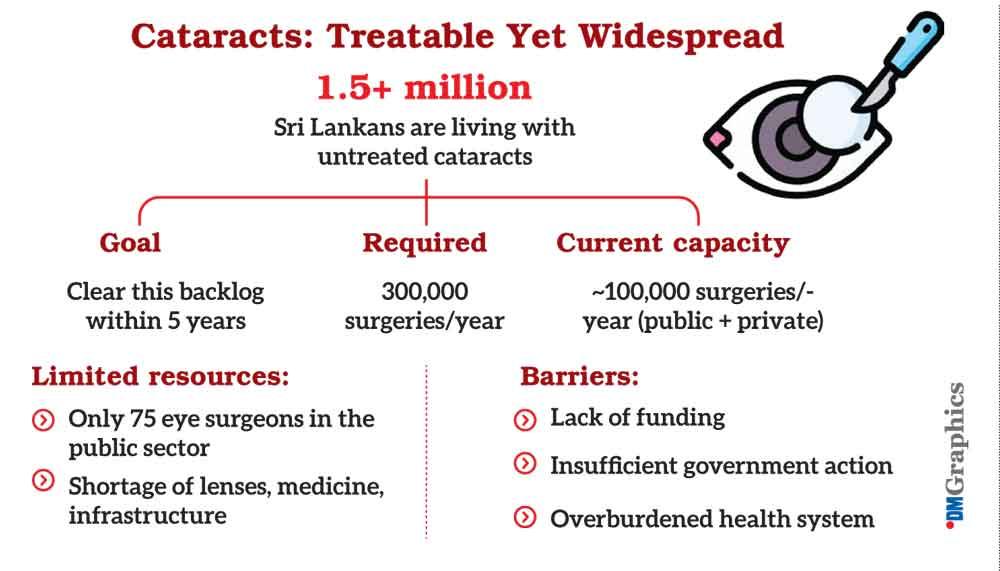
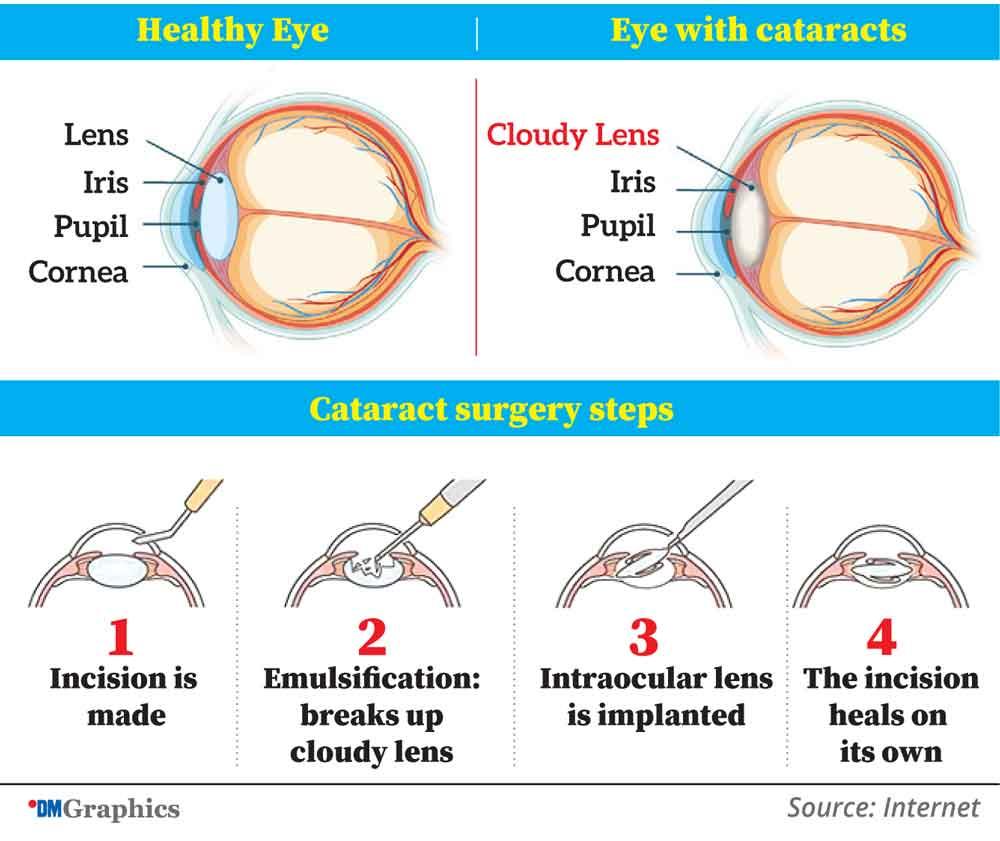
Cataract, the clouding of the eye’s natural lens, is considered to be the leading cause of blindness in Sri Lanka despite being entirely treatable with a simple surgery. Sri Lanka now faces a backlog exceeding 1.5 million untreated cataract cases to be operated over the next five years. Dr. Abeydeera stated, “This backlog (cataract cases) is not just a statistic; it represents millions of Sri Lankans living in needless darkness, cut off from economic and social life. The existing government eye care units and limited eye care professionals are unable to perform surgeries to the growing ageing population in the country”.
When asked about the systematic barriers preventing the increase in surgeries to be performed island-wide, he said “Under our curative health system, we have around 55 eye units and around 75 eye surgeons in the government sector. Overall, we conduct approximately 75,000 cataract surgeries a year and with the private sector, it would possibly extend to 100,000 surgeries in total. However, in order to clear the backlog of 1.5 million within the next five years, 300,000 cataract surgeries should be done annually. This is where the problem lies; we are short of eye care professionals, infrastructure, lenses and medicine as well as government support to address this national emergency. Organisations like the SLACO and Meth Netha Free Eye Clinic, have been conducting free cataract surgery camps, outreach programmes, and collaborating with local and international partners to sponsor surgeries. Yet, despite these efforts, the backlog continues to grow faster than it can be reduced. Without a coordinated national action plan, mass surgical campaigns, task-shifting strategies and increased funding, Sri Lanka will not meet the eye care needs of its growing population.”
Vision of Sri Lanka’s future at risk
Another equally serious, but often downplayed crisis is the rising prevalence of vision problems among children. Studies and field screenings have shown that around 5-10 % of Sri Lankan schoolchildren suffer from uncorrected refractive errors, such as short-sightedness, long-sightedness, and astigmatism.
Dr. Abeydeera remarked, “When left uncorrected, these seemingly minor vision problems can have tragic consequences — poor academic performance, increased dropout rates, and reduced future employment opportunities. Vision is fundamental to a child’s ability to learn and thrive, yet many children never undergo an eye check up until major problems have developed. The Ministry of Health through its school medical inspection programmes, identify children with vision defects and refer them to government eye units for further examination. Having no effective programme to provide eyeglasses free of charge, many who come from low-income families return empty handed without vision correction as they cannot afford a pair of glasses. This is truly devastating because there are countless children, especially from rural schools, who have so much potential, but are not performing well simply because they cannot see without eyeglasses, so giving them a pair would really help change their lives for the better. Recognising this urgent need, SLACO has expanded its focus to school vision screening programmes, partnering with government schools and local authorities. Yet, the scale of the crisis demands far more. The most crucial requirement in the present context is implementing a national eye care programme, similar to that of malaria, leprosy and other healthcare programmes.”
Common misconceptions and fears
Furthermore, many are unaware that cataracts are a natural part of ageing, and almost everyone will eventually require cataract surgery. Despite common fears, this procedure is simple, quick, painless and rather affordable— restoring vision in just five minutes. “It involves minimal post-operative care; just a week of basic care followed by a final check-up after a month,” Dr. Abeydeera said. He added that there are widespread misconceptions about childhood eye conditions as well. “Some believe that wearing glasses can reverse diseases like myopia (nearsightedness), but in reality, myopia inevitably worsens with age. In such cases, vision deteriorates as you grow older, thus, the power of glasses needs to be adjusted until around the age of 21. “To help maintain healthy vision in children, it is strongly encouraged that they engage in outdoor activities at least two hours a day. Additionally, it is important to follow the ‘20-20-20 rule’ which is a simple practice to reduce digital eye strain. Every 20 minutes, you should take a 20-second break and look at something 20 feet away,” Dr. Abeydeera recommended.
Collective national responsibility
The importance of passing a national bill to establish a national eye health programme within the Ministry of Health was underscored by Dr. Abeydeera. “Under this, different initiatives should be implemented to address the wide range of eye diseases and injuries affecting the population. We have one of the best preventive healthcare systems globally, especially with the MOH maintaining a presence in nearly every village through public health inspectors and midwives who conduct house-to-house visits. Eye care can be integrated into this existing primary healthcare framework. Moreover, there are significant gaps in eye care services, including the lack of research and intervention at a national level. It is important to have a state-managed national health database and tracking system, along with mandatory vision screening for all school entrants, government-supported spectacle programmes for children, teacher training to recognise early signs of vision impairment and public education campaigns,” the doctor explained.
Reflecting on his past work, Dr. Abeydeera shared his experience as the coordinator of the Vision 2020 national eye care programme from 2007 to 2017. “Unfortunately, the programme collapsed due to a misguided political decision by a Minister at the time, and the Health Ministry has not initiated any national eye care programmes since,” he said. During its active years, the programme successfully distributed 300,000 customised spectacles to schoolchildren and provided free cataract surgeries to over 1,000 people island-wide. A state-of-the-art mobile eye hospital was also launched in 2015, but it ceased operations once the programme ended, hence equipment worth approximately 20 million rupees were abandoned. Dr. Abeydeera expressed hope for the programme’s revival with the Health Ministry’s support, and voiced his concern over the increasing commercialisation of the healthcare system and the impact of political intervention in social welfare initiatives.
He concluded, “It is imperative that we, as a nation, recognise the gravity of the situation and act decisively. While organisations like SLACO, Meth Netha Clinic and other NGO’s are doing vital work, the scale of the crisis requires a national movement, involving strong leadership from the Ministry of Health and Ministry of Education, support from corporate partners and donors, expanded training and deployment of community eye health workers. This is a call to government authorities, policymakers, philanthropists and the private sector: we must unite behind a bold national initiative to eliminate avoidable blindness from cataract within the next five years, and help children see a future full of possibilities. The gift of sight is priceless. Together, let us ensure that no Sri Lankan is left in darkness when the solution is within our reach.”
11 Jun 2026 10 minute ago
11 Jun 2026 14 minute ago
11 Jun 2026 47 minute ago
11 Jun 2026 52 minute ago
11 Jun 2026 2 hours ago