20 Mar 2026 - {{hitsCtrl.values.hits}}
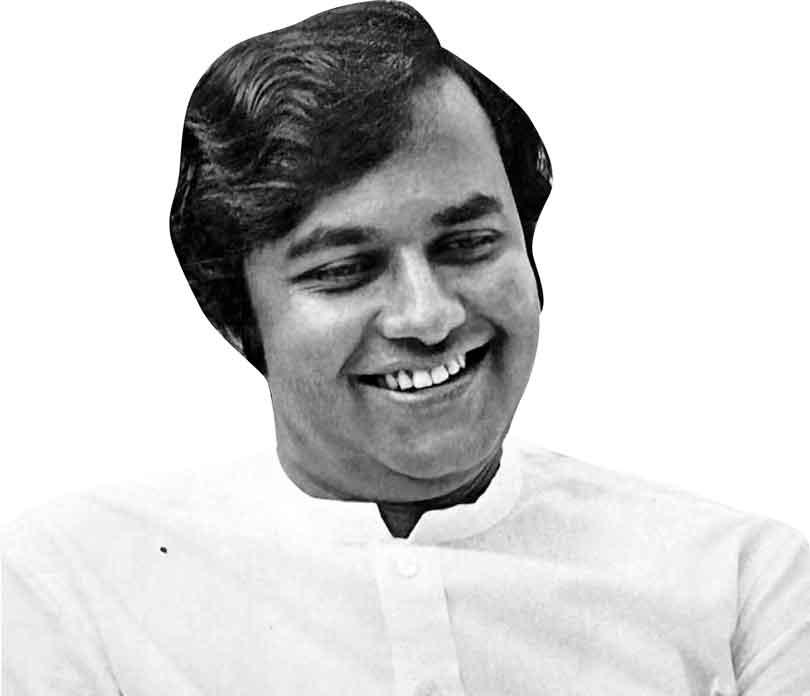
- Remembering Gamini Dissanayake should therefore not be an exercise in nostalgia. It should remind us that leadership must be guided by courage, integrity, and a belief in the potential of our people
- Remembrance is not only about history. It is also about reflection — particularly at a moment when both Sri Lanka and the wider world are navigating profound uncertainty
 Every year on March 20, my family and many Sri Lankans pause to remember my father, Gamini Dissanayake.
For many, he is remembered as a national leader who helped shape modern Sri Lanka — through initiatives such as the Mahaweli Development Programme and his efforts to strengthen democratic institutions and economic reform.
But remembrance is not only about history. It is also about reflection — particularly at a moment when both Sri Lanka and the wider world are navigating profound uncertainty.
Today, the global landscape is marked by conflict, economic volatility, and growing political polarisation. Democracies across the world are being tested. Trust in institutions is declining, and societies everywhere are searching for leadership that can restore confidence and stability.
Sri Lanka, too, has experienced its own difficult chapter in recent years. The economic crisis that shook our nation exposed deep structural weaknesses, but it also revealed something remarkable — the resilience of our people and their determination to demand accountability and better governance.
In moments like these, it is worth remembering that nations are not defined only by their challenges, but by their ability to unite and move forward together.
Few moments captured that spirit of unity more powerfully than Sri Lanka’s historic victory at the 1996 Cricket World Cup.
That triumph was not merely a sporting achievement. It was a moment when the entire nation — regardless of background, politics, or circumstance — celebrated together. Cricket reminded us that success is built on teamwork, belief, discipline, and the courage to challenge expectations.
My father believed deeply in the power of sport to bring people together. He understood that cricket in Sri Lanka was more than a game; it was a symbol of national identity and pride.
Thirty years later, that lesson feels particularly relevant.
The challenges facing Sri Lanka today cannot be solved by individuals acting alone. They require the same spirit that defines great teams — collaboration, shared responsibility, and leadership that places the collective good above personal ambition.
Leadership, in essence, is not so different from cricket.
A captain must guide the team, but victory belongs to everyone. Success depends on trust, discipline, and a shared vision of what is possible.
When my father spoke about national development, he often emphasised long-term thinking — building institutions and opportunities that would benefit future generations. The Mahaweli programme itself was an example of that belief: a national vision designed to transform rural livelihoods and strengthen the country’s economic foundations.
Today, Sri Lanka stands at another crossroads.
Economic recovery is slowly taking shape, but recovery alone will not define our future. The deeper task before us is rebuilding trust — between citizens and institutions, between communities, and between leaders and the people they serve.
Around the world, we see what happens when trust collapses: societies become divided, institutions weaken, and progress becomes harder to sustain.
The responsibility of leadership, therefore, is not simply to govern, but to unite.
As a father now, I think often about the world our children will inherit. The true measure of leadership is not what we achieve in the present moment, but the foundations we leave behind for those who come after us.
Remembering Gamini Dissanayake should therefore not be an exercise in nostalgia. It should remind us that leadership must be guided by courage, integrity, and a belief in the potential of our people.
Just as the spirit of 1996 showed what Sri Lanka can achieve when it moves forward together, the future of our nation will depend on our ability to rediscover that same sense of unity and purpose.
Nations are not shaped only by moments of crisis, but by the character of the leadership that follows.
04 Jun 2026 6 minute ago
04 Jun 2026 30 minute ago
04 Jun 2026 41 minute ago
04 Jun 2026 2 hours ago
04 Jun 2026 2 hours ago