31 May 2025 - {{hitsCtrl.values.hits}}
Communities of Practice (CoPs): Establish CoPs to enhance environmental, social, and economic sustainability across universities.
Hiruni Rathwatta, Lecturer, Rajarata University of Sri Lanka

 Universities must lead in sustainable development while improving global rankings through policy reform and institutional commitment
Sri Lankan universities are moving to embed sustainability at the heart of their operations, governance, and academic strategy, aligning with international benchmarks to improve global rankings. A workshop led by the Open University of Sri Lanka and the Institute of Environmental Professionals spotlighted critical gaps, shared global best practices, and proposed a unified roadmap to foster greener campuses.
Sri Lanka’s universities urgently need to prioritize sustainability as a key measure of progress. This shift is driven by two main factors: their responsibility to society and the need to align with global counterparts.
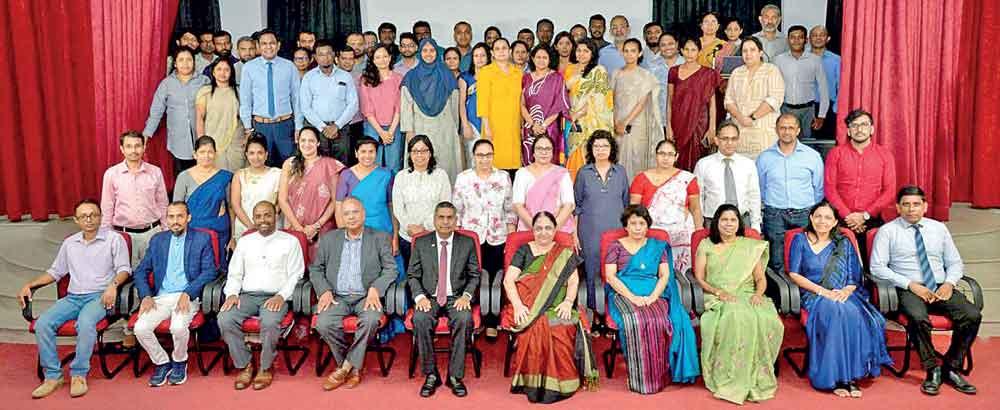
Acknowledging this, the Open University of Sri Lanka (OUSL) and the Institute of Environmental Professionals Sri Lanka (IEPSL) organized a two-day workshop on February 20–21, 2025, titled “Uplifting Environmental Sustainability Performance to Improve University Rankings.” The event aimed to promote sustainable practices in both state and non-state universities while enhancing their global rankings.
It built on a similar workshop held in May 2024, which focused on sustainability compliance and its links to global rankings like the Times Higher Education Impact Ranking and QS World University Rankings.
The recent workshop drew over seventy participants, fostering valuable knowledge-sharing among academics, professionals, and policymakers.
Call for leadership and governance
The workshop opened with an inaugural session featuring key figures from Sri Lanka’s academic and environmental sectors. Senior Professor P.M.C. Thilakarathne, Vice Chancellor of OUSL, underscored the urgent need for universities to take the lead in sustainable development.
He emphasised the importance of adopting environmentally friendly policies in higher education institutions to gain a competitive edge in global rankings while contributing to a more sustainable Sri Lanka, in line with the government-led ‘Clean Sri Lanka Project.’
Dr. Chalaka Fernando, Environmental Sustainability Manager at the Australian National University, delivered the keynote address, highlighting universities’ critical role in sustainability and its impact on improving global ranking schemes.
He stressed the need for strong governance structures, optimised social capital, and inter-university collaboration to achieve tangible progress in university sustainability rankings.
Identifying gaps, opportunities and global best practices
A key highlight of the workshop was a group exercise led by Dr Fernando, where participants assessed their universities’ current sustainability management structures.
The discussion exposed several gaps, including the absence of designated sustainability managers or officers, limited student involvement in sustainability projects, and a lack of a structured governance framework.
On a positive note, many universities have established sustainability committees and started applying for global rankings such as the Times Higher Education Impact Ranking and UI GreenMetric. However, professional staff participation in these initiatives remains low, underscoring the need for broader institutional engagement.
To share insights on international best practices, Ms. Clare de Castella, Associate Director of Environmental Sustainability at the Australian National University, joined the event virtually. She outlined key elements of a strong sustainability governance framework, including:
Strengthening Sustainability in Universities: Insights from Experts and Policymakers
Local and international experts shared key strategies for advancing sustainability in Sri Lankan higher education. Ms. Hiruni Rathwatta (Rajarata University) and Ms. Warunika Hettiarachchi (Sabaragamuwa University) analyzed publication trends and emerging research themes, offering valuable insights to enhance sustainability in teaching, research, operations, and governance.
Addressing operational challenges, Dr. Nuwan Gunarathne (University of Sri Jayewardenepura) highlighted significant energy wastage in universities due to poor monitoring, lack of key performance indicators (KPIs), and limited awareness.
He proposed solutions such as establishing facility management units, adopting Enterprise Resource Planning (ERP) systems, and launching a nationwide Green University campaign.
Prof. Mangala Yatawara (University of Kelaniya) outlined critical success factors for the Times Higher Education Impact Ranking, emphasising research output, sustainability initiatives, and community engagement.
Meanwhile, Dr Yohan Mahagamage demonstrated how OUSL effectively implemented UI GreenMetric, stressing that collaboration and existing resources are key drivers of sustainability.
Government and industry stakeholders also weighed in on the future of sustainability in higher education. Ms. Chamindry Saparamadu, Director General/CEO of the Sustainable Development Council of Sri Lanka, emphasized the need for universities to align with the United Nations Sustainable Development Goals (SDGs), particularly SDG 4 – Quality Education.
Dr. Ajith Gunawardene (Central Environmental Authority) underscored urgent challenges, including waste management, energy consumption, and pollution control, urging universities to adopt carbon footprint reduction strategies and ethical investments.
Chartered Environmental Professional Mr. Randeewa Malalasooriya (IEPSL) stressed the importance of inter-university collaboration, while Dr. Sampath Bandara Wahala (Sabaragamuwa University) called for embedding a systematic sustainability management approach into university governance frameworks, ensuring it becomes a core pillar of institutional reviews and long-term strategic planning.
A roadmap for the future
The workshop highlighted a clear path forward for strengthening sustainability in Sri Lankan universities, with experts emphasizing both opportunities and challenges in governance, teaching, research, and operations. One of the most transformative proposals was the establishment of a Community of Practice (CoP) for sustainability in universities.
Dr. Fernando suggested that such a network would facilitate knowledge exchange, promote best practices, and collectively drive sustainability initiatives, following successful international models like Australasian Campuses Towards Sustainability (ACTS).
Senior Professor P.M.C. Thilakarathne (OUSL) strongly endorsed this initiative, pledging institutional support, while participants recognised its potential to foster long-term sustainability improvements.
However, achieving sustainability in Sri Lankan universities is not without challenges. The workshop identified key barriers and strategies to overcome them across four core areas:
Teaching: Embedding sustainability for a greener future
Despite growing global emphasis on sustainability, Sri Lankan universities struggle to integrate sustainability-focused topics into curricula. The Sri Lanka Qualifications Framework (SLQF) does not explicitly recognize sustainability as a core learning outcome. To address this gap, the following recommendations were proposed:
Policy integration: The University Grants Commission (UGC) should incorporate sustainability criteria into academic program reviews, accreditations, and strategic frameworks.
Curriculum: Embed sustainability and the UN SDGs
Hands-on learning: Establish universities as “living labs,” engaging industry experts to implement real-world sustainability solutions.
Stakeholder awareness: Strengthen sustainability literacy among students, faculty, and administrative staff.
Student engagement: Encourage student-led sustainability clubs and campus initiatives.
Research: Driving Innovation for a Sustainable Future
A lack of funding, limited cross-disciplinary collaboration, and weak alignment with SDG research priorities have hindered sustainability research in Sri Lankan universities. Proposed solutions include:
Funding support: Allocate dedicated resources for sustainability-related research.
Multidisciplinary collaboration: Foster cross-disciplinary studies to enhance impact.
SDG integration: Display SDG relevance alongside research publications on university websites.
Recognition and awards: Establish excellence awards for sustainability-focused research.
External endorsement: Encourage institutional partners and governing bodies to recognize sustainability research.
Ranking enhancement: Align research efforts with sustainability metrics to improve global university rankings.
Operations: Strengthening sustainability in universities
Without strong operational implementation, sustainability remains merely a strategic goal. Sri Lankan universities face challenges such as poor data management, inadequate funding, and a weak sustainability-driven culture. The following strategies were proposed to address these issues:
Data management: Strengthen information systems for tracking sustainability metrics like energy consumption.
Dedicated leadership: Appoint sustainability managers/officers within university structures.
Regulatory flexibility: Revise rigid policies to facilitate sustainability-focused recruitment.
Alternative funding: Explore revenue generation through eco-friendly initiatives like sustainable farming and composting.
Framework adoption: Implement the UNEP Sustainable University Framework to institutionalize sustainability practices.
Governance: Empowering sustainability through strategic support
A lack of structured governance remains a significant barrier to sustainability in Sri Lankan universities. Although some institutions have included sustainability in their strategic plans, many efforts remain unaligned with international best practices and ranking systems. Recommendations for overcoming these challenges include:
Collaborative framework: Partner with national bodies like the Sustainable Development Council, IEPSL and the Central Environmental Authority to create a unified sustainability platform.
Ensuring university sustainability goals
Policy communication: Strengthen bottom-up communication of sustainability policies to improve implementation.
Sustainability reporting: Develop a Code of Best Practices for sustainability reporting, leading to mandatory disclosures.
Writers: Hiruni Rathwatta, Nuwan Gunarathne, Warunika Hettiarachchi
11 Jun 2026 10 minute ago
11 Jun 2026 27 minute ago
11 Jun 2026 52 minute ago
11 Jun 2026 57 minute ago
11 Jun 2026 1 hours ago