11 Aug 2025 - {{hitsCtrl.values.hits}}
 His name is mentioned with a reverence that transcends rank and branch of service
What truly set General Kobbekaduwa apart was his unimpeachable integrity
In the theatre of war, General Kobbekaduwa was a genius
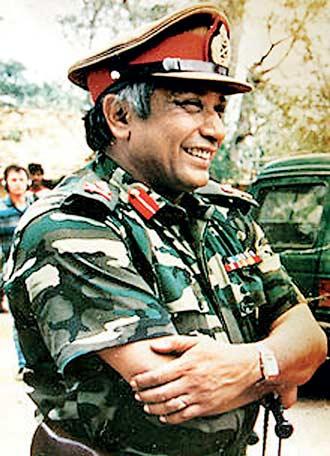
 If Sri Lanka has produced a true soldier of might, a man whose character, integrity, and tactical genius stands as an enduring beacon of national service, he is none other than General Denzil Lakshman Kobbekaduwa. In the annals of Sri Lankan military history, his name is mentioned with a reverence that transcends rank and branch of service. He was more than a decorated officer; he was a gentleman whose profound humanity and unwavering honesty set a standard that remains a classic example for armed forces, police, and state officers to this day. This is the story of a man whose legacy is not measured in medals or promotions, but in the lives of the soldiers he saved and the undying respect he earned.
Brutal phase of civil war
|
|
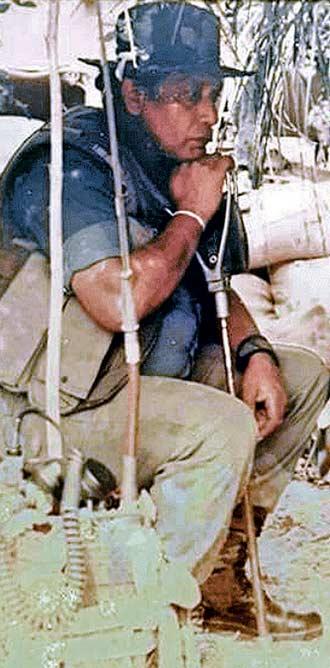 |
In the turbulent contemporary history of Sri Lanka, the 1990s marked a particularly brutal phase of the civil war. The Liberation Tigers of Tamil Eelam (LTTE), having consolidated their power after the withdrawal of the Indian Peace Keeping Force, had grown into a formidable fighting force. They were not merely a guerrilla outfit but a well-organised entity with a conventional military structure, sophisticated weaponry, and a strategy of surrounding and suffocating government military installations. During this period, the LTTE’s strength was at its peak, and key military camps such as Jaffna Fort, Elephant Pass, and Silawathura were under siege, with vast swathes of the Northern and Eastern Provinces falling under their control. It was into this crucible of conflict that General Kobbekaduwa stepped, a leader forged by both the finest military training and an innate sense of duty and compassion.
What truly set General Kobbekaduwa apart was his unimpeachable integrity, a quality that resonated deeply with those who knew him. He was a man of principle who believed that public service was a sacred trust, not a means for personal gain. A powerful anecdote that perfectly encapsulates this character involves an overseas course he was awarded. It was a standard practice at the time for officers attending such courses to be granted an overseas allowance to cover their expenses. Upon his return, General Kobbekaduwa, after carefully calculating his actual expenditure, took the extraordinary step of refunding the balance money to the government. This was an act of profound honesty that few, if any, have ever emulated. In a culture where some officers might have claimed extra allowances through fabricated bills, this one action alone stands as a testament to his incorruptible nature. He saw government funds not as a personal entitlement but as the nation’s resource, to be used with the utmost prudence and accountability. No other example is needed to justify his integrity and honesty; it was a core component of his very being.
In the theatre of war, General Kobbekaduwa was a genius. His strategic mind and tactical acumen were legendary, earning him not only the respect of his fellow army officers but also the complete trust and confidence of the Navy, Air Force, and even the Police. He possessed a rare ability to think beyond the confines of a single service, orchestrating complex, combined-arms operations that bewildered the enemy. Under his leadership, the beleaguered camps that had been encircled by the LTTE were successfully rescued, and significant portions of the Eastern Province were brought back under government control. He led from the front, inspiring his troops through his courage and his visible presence on the battlefield, creating a bond of faith so strong that soldiers were willing to sacrifice their lives for him. He was, to them, a true father figure.
This deep, paternal love for his soldiers was perhaps his most defining characteristic. It was a quality demonstrated not in grand gestures but in the small, heartbreaking moments of a brutal war. It is said that when he saw a dead or wounded soldier, a teardrop would fall from his eyes. He felt the loss of every single one of his men as if they were his own sons. This profound empathy guided his decisions, forcing him to weigh military objectives against the ultimate cost in human lives—a calculation that many others would have ignored.
I can recount a specific memory that brings this truth to life. During the Jaffna Fort rescue mission in 1990, I was a captain, a company commander in the 1st Battalion of the Sri Lanka Sinha Regiment. We were given the highly perilous task of reaching the fort by crossing the Jaffna lagoon in boats. The fighting was intense, and during the operation, an air force attack plane was shot down by the terrorists. Together with four of my soldiers, we managed to retrieve the body of the fighter pilot, Flight Lieutenant Priyadarshana Abegunawardena. When General Kobbekaduwa learned of our actions, he summoned me to his field command operations headquarters. He praised our heroism and then, in a moment that would forever define his leadership for me, he asked for my honest assessment of a potential breakthrough into Jaffna town.
I was a junior officer, but he listened with an open mind and a genuine desire to understand the reality on the ground. I told him it would be an extremely dangerous mission, particularly the capture of the hospital, and that we would have to sacrifice approximately 60% of our troops to achieve it. General Kobbekaduwa gave me a piece of paper and asked me to think carefully and write down all the problems our troops would face. I listed nine major obstacles:
The enemy was well dug in, with positions that were impossible to locate.
They possessed heavy mortars containing approximately 20 kg of explosives, which soldiers nicknamed the “Baba Mortar.”
We had a very narrow frontage for the breakthrough, meaning we could not deploy troops widely and would suffer heavy casualties at the forming-up place.
The enemy had deployed hundreds of snipers.
They were utilizing heavy machine guns, mainly 50-caliber, which were highly effective.
The entire frontage had been mined, with no safe way to clear the fields, leading to inevitable casualties.
The enemy had placed tires in front of their underground bunkers, rendering our fire ineffective.
All buildings were booby-trapped, and fighting through them would result in more casualties.
Lastly, our soldiers were tired, and morale was low after losing a fighter aircraft, while the enemy’s morale was high.
After reading my report, he accepted my assessment. Yet, he challenged me, asking how we could achieve the mission with all those problems. I replied, “I am ready to sacrifice my life for you, Sir, because I have the greatest respect for you. But we will have to write off 60% of our troops to achieve the mission.”
In that moment, General Kobbekaduwa realized the catastrophic human cost of the operation. Despite being ordered not to withdraw from Jaffna Fort, he informed the government that it was advisable to do so rather than hold it at such a heavy price. This act, to me, highlighted his unparalleled qualities and his true love and faith towards his troops. He never sought to climb the ranks or earn bravery medals through the blood of his soldiers. His primary concern was their welfare and their lives.
General Kobbekaduwa’s death was a tragic turning point. On August 8, 1992, he, along with several other senior officers, was killed in a landmine blast at Araly Point in Kayts. His demise was a massive bonus for the LTTE, as he had been a constant “headache” to them, a strategic obstacle to their ultimate objective of a separate state. They were unable to defeat him on the battlefield, but they managed to silence him through an act of brutal sabotage.
General Denzil Kobbekaduwa was the true father of the Sri Lanka Army. His legacy is a blueprint for leadership—one built on integrity, tactical brilliance, compassion, and a profound respect for human life. These are the characters the government must highlight and teach to all state officers, so they may serve the nation with the same sense of duty and honor. He was a true soldier of might, not because of the battles he won, but because of the men he saved, and the extraordinary example he set for generations to come.
“ REMEMBER THE LEADER, FOLLOW THE EXAMPLE”
(The writer is a battle hardened Infantry Officer who served the Sri Lanka Army for over 36 years, dedicating 20 of those to active combat. In addition to his military service, he is a respected International Researcher and Writer. He holds a PhD in economics and is an entrepreneur and International Analyst specialising in National Security, economics and politics. He can be reached at [email protected])
11 Jun 2026 7 hours ago
11 Jun 2026 7 hours ago
11 Jun 2026 7 hours ago
11 Jun 2026 7 hours ago
11 Jun 2026 8 hours ago