20 Jan 2026 - {{hitsCtrl.values.hits}}
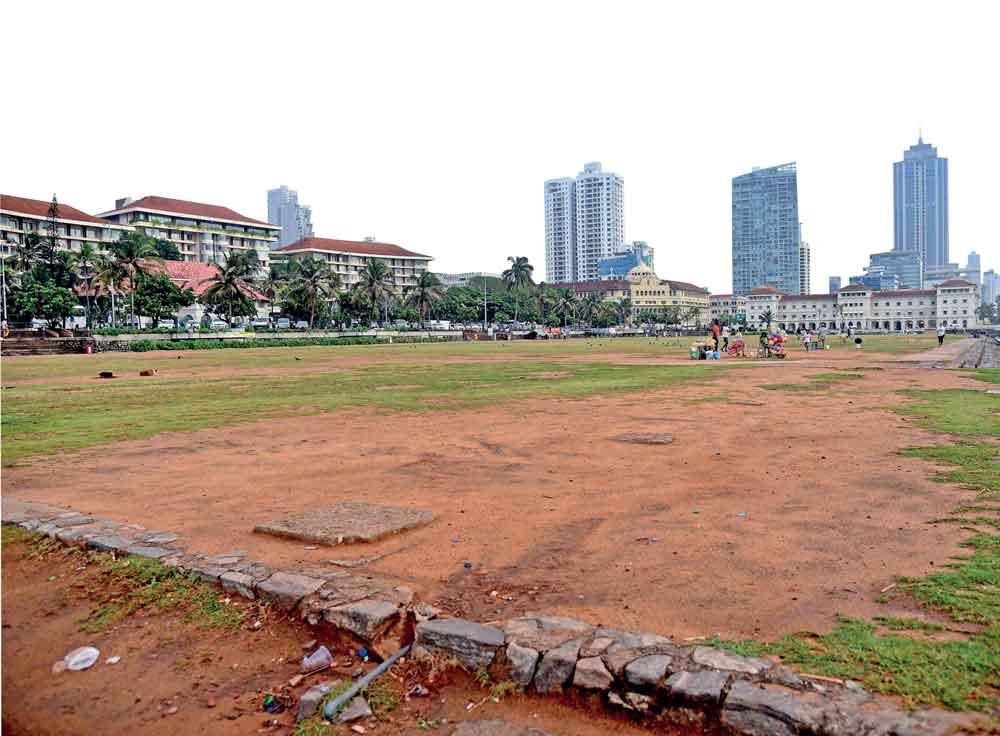
Brown patches remain at Galle Face Green, following the recent carnival
(Pics Kushan Pathiraja)
 “Since there was an objective of making sure that the sea was visible to people from the Galle Road, we took steps to remove illegal and makeshift kiosks that were obstructing the views. Back then there were around 37 temporary shops towards the sea side. So we removed all of them and constructed underground shops”
- Suraj Kathurusinghe, SLPMCS Managing Director
 “Some vendors have been here for many years and others are new comers. I got my shop through a tender. So while there’s a lot of competition, each one of us are trying to find an income to provide for our families”
- K. B Rajan from Peliyagoda had been a vendor at the Galle Face
The Galle Face Green isn’t always green, but it is sometimes the only open premises that provides some kind of recreation for people. On a given day, everybody from youth to elderly to couples to families would visit the Galle Face Green to enjoy the sea breeze and spend some time on their own. Occasionally, the premises gets packed during election rallies, carnivals and musical shows. However, many challenges persist in maintaining this five hectare expanse of land.
Recreational space
The Galle Face Green is a historic oceanfront promenade in Colombo, originated as a Dutch military defence line for cannons against the Portuguese. However, the history of Galle Face Green dates back to 1803 when the British Army invaded the Kandyan Kingdom in January 1803. With a large number of casualties and many British soldiers contracting Malaria, the Galle Face Green was used as a burial ground. However, in the 1920s, the graves were dug up and the remains were interred in the Colombo Cemetery. Later, in 1859 this premises was formalised by British Governor Sir Henry George Ward as a public park for strolling and sports such as cricket, polo and horse racing. One of the objectives of building this promenade was to allow women and children to walk around and enjoy the views. Another objective was to ensure that the sea was visible for any one passing by the Galle Face Green from the land side.
In 2004, an interim order was issued by the Supreme Court of Sri Lanka in a case where the Urban Development Authority entered into an agreement to lease out the Green to a private party. The Court declared that the Galle Face Green should be maintained as a public utility in continuance of the dedication made by Sir Henry Ward and necessary resources for this purpose should be made available by the Sri Lankan Government, being the successor to the Colonial Governor who made the dedication to the ‘Ladies and Children of Colombo’.
Current administration
However, the Galle Face Green now comes under the purview of the Sri Lanka Port Management and Consultancy Services (SLPMCS). Even though it is a private limited company, it functions under the purview of the Ministry of Ports and Civil Aviation. This Company was established in 1982 when the late Lalith Athulathmudali served as the Minister of Ports to support activities relating to ports. Since then the SLPMCS is directly involved in activities coming under the Ports Authority from recruiting workers over contract basis to obtaining services from officials post-retirement. In addition, this Company also manages several premises including Galle Face Green which comes under the purview of the Ports Authority.
Renovations and facelifts
In 2013, during President Mahinda Rajapaksa’s tenure, the management of Galle Face Green was transferred from Urban Development Authority to Ports Authority. Subsequently the Ports Authority handed over the management to this Company in 2016/2017 to oversee its administrative functions. Last year, when Vijitha Herath was appointed as the subject minister, the administrative power was transferred to SLPMCS through a cabinet paper.
Speaking to the Daily Mirror, SLPMCS Managing Director Suraj Kathurusinghe said that in 2020, the Ports Authority spent Rs. 220 million to renovate the Galle Face Green by reinstalling grass and constructed 20 underground shops towards the land side and 42 shops towards the sea. “One reason to make these changes was a request made by then President Gotabaya Rajapaksa based on the conditions of the Colonial Governor. Since there was an objective of making sure that the sea was visible to people from the Galle Road, we took steps to remove illegal and makeshift kiosks that were obstructing the views. Based on these requests, President Rajapaksa convened a meeting and explained the changes he wanted. Back then there were around 37 temporary shops towards the sea side. So we removed all of them and constructed underground shops. Our main objective was to preserve the beauty of this iconic premises and stick to the initial plan,” he added.
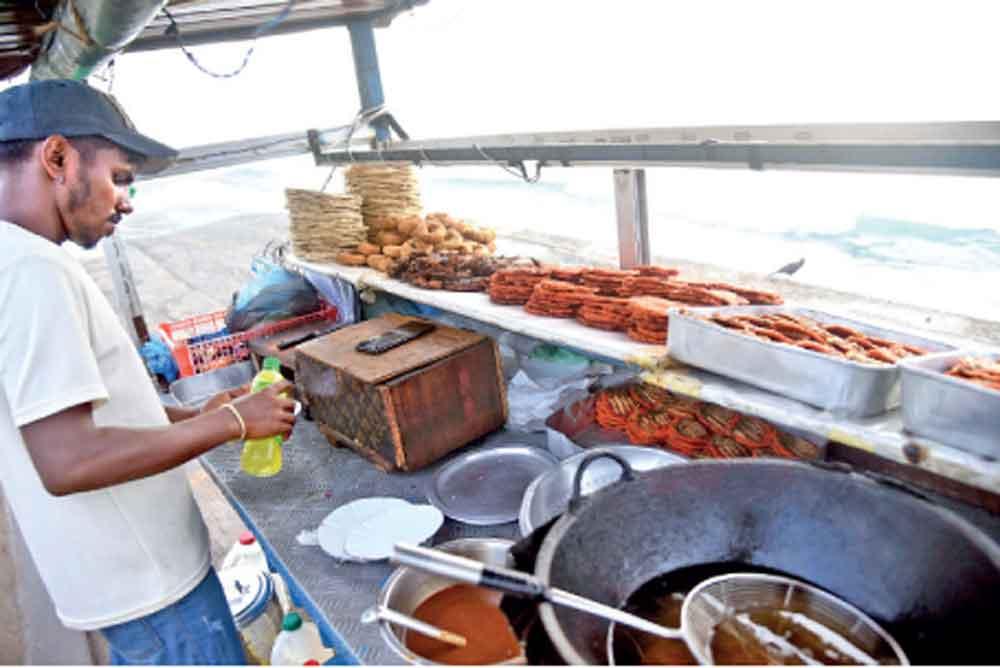
A makeshift wadey vendor at Galle Face Green
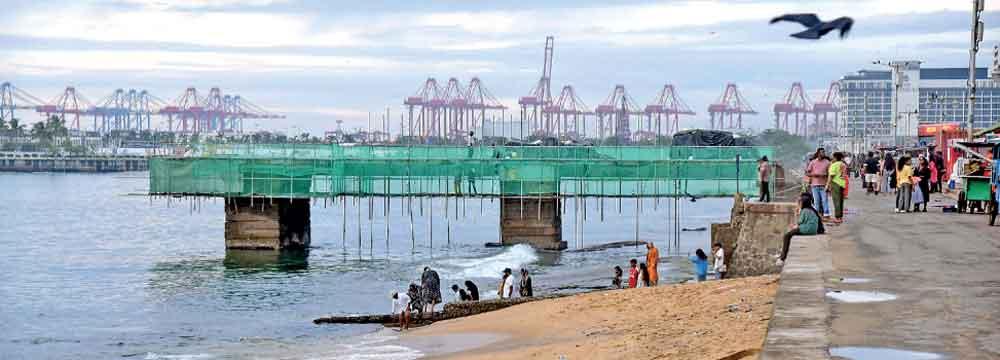
An observation deck under construction
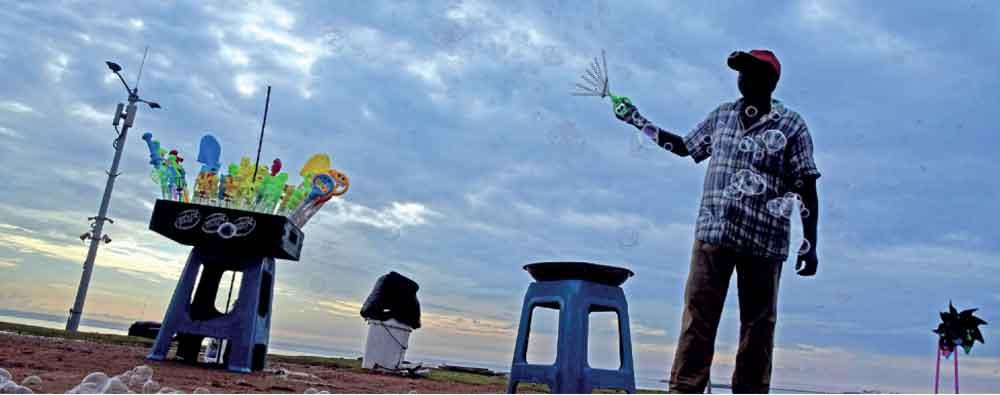
Vendors selling different items frequent the Galle Face Green, sometimes disturbing visitors
Competition among vendors
Galle Face Green is famous for its kiosks. Some vendors have been there for years and this is their only income. K. B Rajan from Peliyagoda had been a vendor at the Galle Face Green for 35 years. From selling soft drinks and snacks from a makeshift cart to becoming one of the permanent vendors, Rajan recalled the many hardships he had faced over the years. “During the season, we have good business, but it is always relative. During the Christmas carnival, it was concentrated towards the Port City end of Galle Face Green and all those shops managed to raise a good income. Some vendors have been here for many years and others are new comers. I got my shop through a tender. So while there’s a lot of competition, each one of us are trying to find an income to provide for our families,” he added.
Struggle to maintain standards
But Kathurusinghe said that some makeshift kiosks were operated by members of the same family network and they didn’t allow outsiders to do a business there. “One point these people have misunderstood is that this premises cannot operate like a Sunday fair. People go there to relax and for some kind of entertainment. But for vendors, the entire area should be filled with wadey, ice cream and other kiosks and basically make it look like a fair. So we rented out the shops in the land side to different vendors via a tender process. The shops on the sea side were given to 36 vendors who were initially running temporary shops,” he explained.
Kathurusinghe spoke about their plans to introduce a street food concept like that in Thailand where they would cook then and there, rather than having the same kind of food in every shop. “For that we conducted workshops under the purview of successive subject ministers to educate these people on food safety standards, hygiene and other aspects. Subsequently the Aragalaya (protest) began. Post-aragalaya most newly renovated shops, concrete benches and other equipment were vandalised and damaged. We don’t know whether it was done by those who staged the aragalaya or outsiders. So most of our plans were disrupted. Subsequently, many illegal vendors whom we removed initially, positioned themselves at the Galle Face Green once again,” he added.
Careless use and damages
Kathurusinghe said that even though most illegal vendors were removed prior to the Independence Day celebration held at Galle Face Green, they (authorities) faced a great deal of resistance from these people. “Then they (vendors) positioned themselves in front of One Galle Face. Some of them started doing business at the car park. So as soon as people entered they could purchase ice cream and all other items at the entrance and underground shops didn’t have much sales. As a result many vendors abandoned their shops. So now we are trying to rent out these shops again via a tender process. It is a challenge to manage temporary wadé kiosks and illegal vendors. For a month it costs around Rs. 25 lakhs to maintain the ground from reinstalling grass to watering the premises, renovating damages and other maintenance work because people use this premises very carelessly. Every day at 12.00am we start cleaning the premises and around 40 staffers do the cleaning work and they have bring the ground back to its normal condition by 5.00 am. In December, at least 12 tonnes of garbage was collected on one day which shows the amount of garbage dumped on this premises. So however much we remind people not to litter the place, they would still throw away plastic bottles, polythene wrappers and their attitudes haven’t changed,” he said.
The recent cabinet paper also provided SLPMCS with the power to host musical shows and carnivals. Kathurusinghe further said that they only rent out the premises and that maintenance is done by their company. “We usually install the grass while opening a section to the public. But now the grass has been damaged. We source grass locally and restoration comes under the purview of the premises manager. We are also aware of complaints regarding noise pollution. Event organisers have been permitted to hold musical shows and use loudspeakers until 10.30pm. This permission is obtained by the police,” he added. Kathurusinghe further said that it costs around Rs. 8 million annually to maintain the observation deck. “Since we cannot bear this cost, a private company has now undertaken its construction activities and to carry out maintenance work,” he added.
He also maintained that rather than vendors walking up to people, people should have the freedom to walk into any shop and purchase food, snacks and other items they need. Kathurusinghe further said that none of these food vendors has obtained health certificates from public health inspectors (PHIs). “In order to obtain approval these vendors should process food at the premises. PHI officers have revealed how unhygienic the food at Galle Face Green are. Therefore all activities at the Galle Face Green should be regulated,” he added. Another one of the least regulated aspects is the parking ticket mafia which comes under the purview of the Colombo Municipal Council. Visitors are charged anything between Rs. 20-100 depending on the type of vehicle. Sometimes those arriving on bikes are also charged Rs. 100 irrespective of whether they remain for 10 minutes or 1 hour.
An urgent appeal
In conclusion, Kathurusinghe urged the public to maintain the beauty of this premises without littering it and to use it responsibly. He said that in future it is important to look at providing quality food, water and other items to the public to ensure their health. “Some people throw away used oil to the grass and as a result the grass would burn. These vendors only think about their business and themselves. It is a daily challenge because we have to deal with people with different attitudes. We have made various attempts to communicate our concerns to these people. It is not easy, but we will not give up,” he concluded.
07 Jun 2026 1 hours ago
07 Jun 2026 3 hours ago
07 Jun 2026 3 hours ago
07 Jun 2026 3 hours ago
07 Jun 2026 4 hours ago