10 Sep 2025 - {{hitsCtrl.values.hits}}
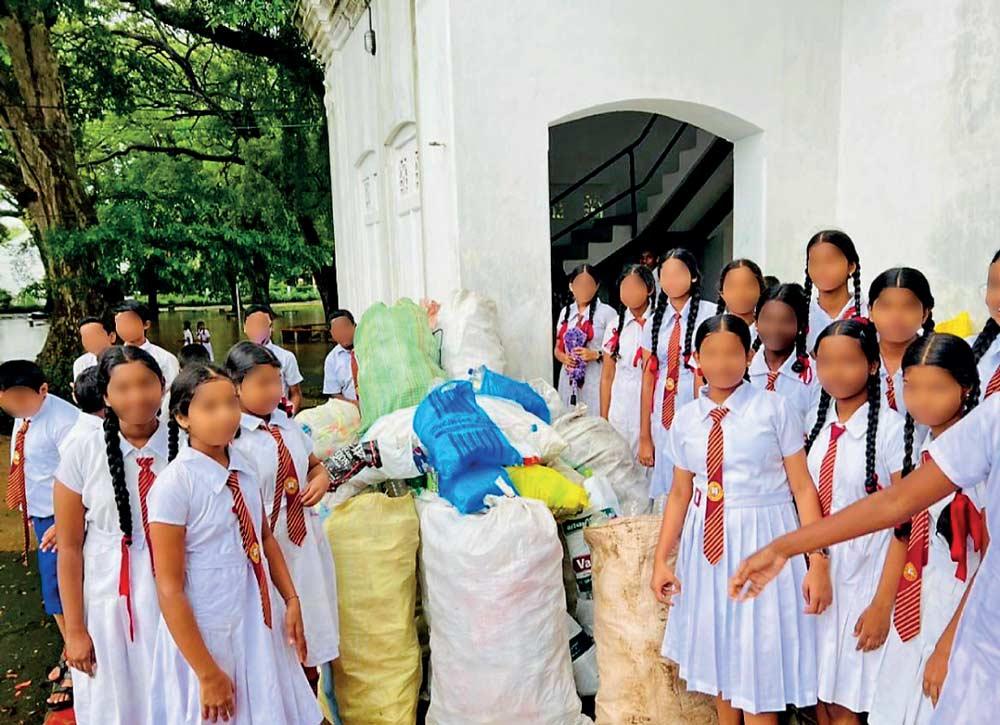
The students Jaffna College, Vaddukoddai are seen engaging in a Plastic Waste Bank Pilot programme, setting a precedent for environmental education across the country
 Jaffna College, Vaddukoddai, is the first school in Sri Lanka to implement a Plastic Waste Bank Pilot programme
This youth-focused initiative has resulted in the collection of over 14,000 plastic bottles
By Anu Rakavan
In a historic achievement for sustainability and youth empowerment, Jaffna College, Vaddukoddai, has become the first school in Sri Lanka to implement a Plastic Waste Bank Pilot programme, setting a precedent for environmental education across the country. Held over five days from December 18-22 last year, this initiative engaged students in a transformative effort to collect and recycle plastic waste, resulting in the collection of over 14,000 plastic bottles.
The Waste Bank programme was designed to raise environmental awareness, promote responsible waste management, and encourage student participation through a reward-based system. Students were encouraged to bring plastic waste from home and the surrounding areas and submit it for daily recording. The response was positive, according to the organisers. What started as an awareness campaign quickly turned into a school-wide movement, with students demonstrating exceptional enthusiasm and commitment. Some divisions saw exponential growth in contributions—Grade 8 Gold, for example, recorded an 8,350% increase in submissions from Day 1 to Day 3.
To celebrate these efforts, the top 10 classrooms with the highest number of collected bottles were rewarded, creating excitement and healthy competition among students. Rewards for students included items such as cricket bats and balls, footballs, badminton sets, volleyballs, chess boards, cakes, chocolates, basketballs, ice cream, and yoghurt—chosen on a first-come, first-pick basis. These gifts served both as incentives and tokens of appreciation, encouraging teamwork and sustained engagement.
Classrooms also received practical and educational resources, such as dustbins, brooms, clocks, whiteboard markers, inspirational posters, maps, notice boards, doormats, and school song posters. These items aimed to improve classroom cleanliness and learning spaces, reinforcing the programme’s broader goals. Teachers of the winning classes were also recognised for their leadership and encouragement, highlighting the essential role of educators in fostering change.
More than just a plastic collection drive, Organisers say the programme helped foster a stronger sense of responsibility and community among students. It united students across grade levels, nurtured a spirit of environmental responsibility, and empowered young people to take ownership of their actions. Students reported greater awareness of their plastic usage and expressed a desire to continue sustainable practices beyond the programme. It also fostered a strong sense of community, with teachers, students, and even parents contributing to the cause.
A key partner was Idea Factory – The Social Innovations Lab, the first of its kind in Jaffna. Established as a hub for experimentation and collaboration, Idea Factory has been pioneering creative approaches to local challenges. The Lab has already conducted several successful pilots in gamifying the plastic waste management experience, making environmental responsibility more engaging and rewarding for participants. Its expertise and innovative methods played a vital role in shaping the Waste Bank initiative, turning what could have been a simple recycling programme into an inspiring, student-driven movement.
What makes this initiative especially significant is its status as the first school-based Waste Bank programme in Sri Lanka, with Jaffna College, Vaddukoddai, serving as a model for replication. Its success proves that school communities can lead the way in environmental action, starting small but achieving large-scale impact. By partnering with platforms like Idea Factory, schools can combine education, innovation, and action to tackle some of the country’s most urgent environmental challenges.
This pilot programme has shown that when students are inspired and engaged, they can become powerful agents of change. Five days of focused effort, Jaffna College, Vaddukoddai, has turned plastic waste into a symbol of hope and leadership, laying the foundation for a greener, cleaner, and more responsible Sri Lanka, according to the organisers. The organisers also say that the programme’s legacy is clear: change starts In the classroom—and the future belongs to those who care for it.
(The writer is the Chief of Innovation at the Idea Factory, The Social Innovations Lab)
08 Jun 2026 12 minute ago
08 Jun 2026 28 minute ago
08 Jun 2026 33 minute ago
08 Jun 2026 35 minute ago
08 Jun 2026 50 minute ago