26 Feb 2025 - {{hitsCtrl.values.hits}}
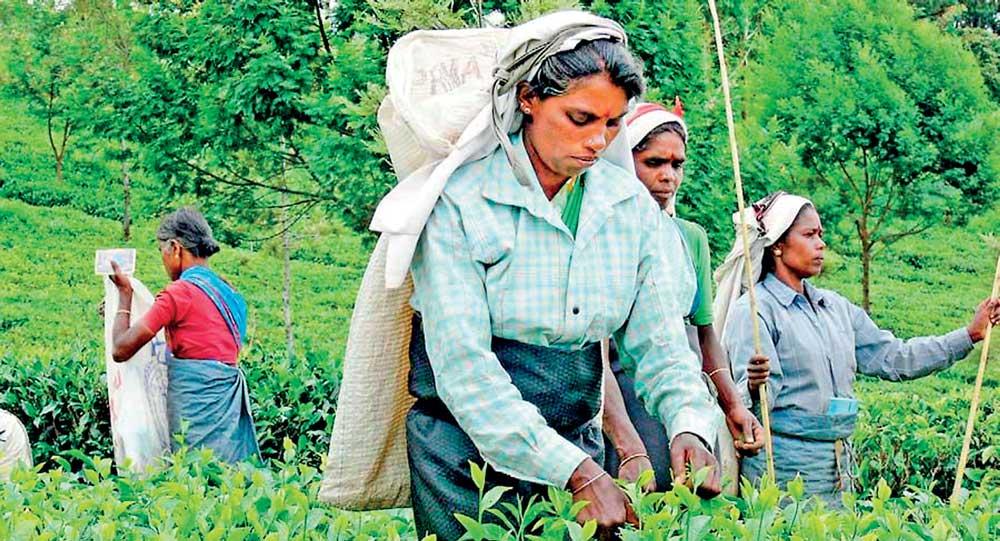
The fifth or sixth generation of this community now wants to move away from the ‘Indian Tamil’ identity and fully embrace the ‘Malaiyaha Tamil’ identity
 For over two centuries, the Hill Country Tamil community has played a vital role in Sri Lanka’s social and economic landscape and has called the island home, yet their identity remains tied to their ancestral roots in India. With the fourth, fifth and even sixth generations of this community now living in Sri Lanka, there is a growing need to move away from the “Indian Tamil” identity and fully embrace the “Malaiyaha Tamil” identity. Advocates argue that while there have been small steps—such as partial recognition in census classifications—the absence of a formal directive still denies them the right to define their own identity.
An obsolete identity
Malai means “hill” in Tamil, while Malaiyaha or Malaiyagam refers to “hill country.” In Sri Lanka, the “Malaiyaha Thamilar” or “Malaiyaha Tamils” are the Hill Country Tamils who were brought from India by British planters to work on coffee and tea plantations. The 200th anniversary of their arrival in Sri Lanka was commemorated by the Malaiyaha Tamils in 2023. It must be underscored that although over 200 years have passed, the squalid living conditions, discrimination, and slave-like treatment of this ethnic group remain largely unchanged.
While this disadvantaged community makes the news from time to time predominantly due to the issue of their daily wages, they have been making numerous appeals to the government to improve their overall living conditions. One of their most recent appeals is to be recognised as the ‘Malaiyaha Tamils’.
“‘The Malaiyaha Tamils’ identity was originally given by the British and continues to be classified as ‘Indian Tamil’ to this day. However, the fifth or sixth generation of this community now wants to identify themselves as the ‘Malaiyaha Thamilar’ community,” said Muthulingam Periyasamy, Executive Director of the Institute of Social Development (ISD). He made these remarks at a media briefing held on February 7.
Periyasamy noted that while some prefer to retain the ‘Indian Tamil’ identity, the majority of the younger generation wishes to be recognised as Malaiyaha Tamils. He urged the government— just as they had urged previous administrations—to officially acknowledge this identity.
He further explained that while the Department of Census and Statistics has begun using the classification “Indian Tamil/Malaiyaha Tamil” for Hill Country Tamils, there is a need to remove the reference to India and recognise them solely as “Malaiyaha Tamil”.
“Now, we ask the government: why can’t you issue a circular to all government departments? Even today, when a baby is born, if the parents wish to register the child’s race as Malaiyaha Tamil on the birth certificate, officials refuse, citing the absence of an official directive. Instead, they record it as ‘Indian Tamil.’ So we ask the government—why not issue a circular permitting those who wish to register as Malaiyaha Tamils to do so?” Periyasamy said.
“When it comes to Tamils in Sri Lanka, they belong to two distinct groups: Sri Lankan Tamils and Indian Tamils, and these two groups cannot be viewed as a homogenous community,”
- Gowry Palaniappan,
former lecturer of Sociology at the University of Colombo
What is the need to detach from the Indian identity?
“While all citizens share a common Sri Lankan identity, individuals also have distinct ethnic identities—such as Sinhalese, Muslims, Burghers, and Tamils. When it comes to Tamils in Sri Lanka, they belong to two distinct groups: Sri Lankan Tamils and Indian Tamils, and these two groups cannot be viewed as a homogenous community for several reasons,” Gowry Palaniappan, freelance consultant and resource person for national and international organisations, and former lecturer of Sociology at the University of Colombo, explained to Daily Mirror.
Going back 200 years to the arrival of Indian Tamils, Palaniappan explained, “During the British period, people from India were brought for various purposes. A structured migration took place under the supervision of a headman called ‘Kangany,’ initially supplying workers for road and harbour construction, followed by plantation labour. Those recruited for plantations were exclusively settled in coffee, tea, and rubber estates, while construction workers were placed both within and outside plantation areas based on demand. Additionally, independent migrants —including traders, money lenders, and craftsmen—settled in both plantation regions and urban centres. However, the majority were plantation workers,” she said.
When a group of people resides in a particular geographic area over an extended period, adopting a shared social system, livelihood patterns, cultural practices, and values, they naturally evolve into a distinct community with a unique identity and a sense of belonging to their environment. “The Indian Tamils—particularly those brought for plantation work—have lived in Sri Lanka for over 200 years, losing most of their ties to India. Today, they consider Sri Lanka their home and deserve an identity that reflects their reality. From a sociological perspective, the Indian Tamil community’s identification with Sri Lanka is crucial for their future,” she stated.
Retaining the Indian identity may also place this community in a vulnerable position, Palaniappan explained, “It creates a psychological barrier to being on par with other communities and fosters an underlying sense of suspicion, especially among neighbouring groups.”
The decision to embrace the term Malaiyaha Tamils instead of Indian Tamils emerged after extensive discussions. As mentioned before, the third, fourth, and even fifth generations of these Tamils now live and work in Sri Lanka’s tea, coffee, and rubber plantations, with little to no connection to India. “While no one can deny their origins in southern India, a significant amount of time has passed. Malaiyaha Tamil is a geographical identity that reflects their lived reality,” she said.
At the same time, she acknowledged that a small segment of the community—those who reside outside estates, in towns, or have migrated from plantations—may still maintain some ties to India, but emphasised that this group is a minority.
 “It is mostly estate youth working in Colombo’s small hotels. It’s a tragic reality. We speak of industrial revolutions, but do you know that while there are technical colleges across the country, the students who wish to learn in the Tamil language are unable to do so as these colleges have no such facilities?”
- Nandajith Hewage,
Executive Director of Asia Lanka Social Development Cooperation
Slaves under estate managers
When discussing Malaiyaha Tamils, many assume they primarily reside in the Nuwara Eliya, Kandy, Badulla, and Matale districts. However, significant communities also live in Kegalle, Ratnapura, Deniyaya, and Matara, noted Nandajith Hewage, Executive Director of AsiaLanka Social Development Cooperation.
He emphasised that, even in the 21st century, these communities continue to live under estate managers in conditions akin to servitude. “Although we speak of a 200-year history, the question remains—do these people enjoy the same facilities and opportunities as other communities in Sri Lanka?” Hewage asked.
Periyasamy pointed out that even basic administrative procedures, such as obtaining a certificate or letter from the Grama Sewaka (GS), remain a struggle for those from the plantation sector as oftentimes the GS requests a letter from the relevant estate manager. With some estate managers refusing to issue letters due to various reasons, youth who are eager to move away from the plantation sector are being deprived of valuable employment opportunities.
“If a person from a plantation approaches the GS for a certificate, they are often asked to provide a letter from the estate manager. Many young people move to Colombo for education and work, only to return when they need such documents. However, estate managers frequently refuse to issue letters, claiming they do not know or have never seen the individual. As a result, these youth miss out on job opportunities, and some are even unable to migrate due to difficulties in obtaining police clearance, which requires GS certification,” he explained.
Periyasamy urged the government to issue a directive requiring GS officers and other government departments to verify identities using the voter list instead of relying on estate managers.
Fewer educational opportunities
 |
| Muthulingam Periyasamy, Executive Director of the ISD |
While Sri Lankan citizens have benefited from free education from grade one to university since the 1940s, the plantation community was excluded until the 1970s. Despite some improvements in school and tertiary education within plantations, significant gaps remain to this day.
According to Hewage, multiple factors contribute to this disparity. “It is questionable whether these children receive the same educational facilities as others. They don’t have the opportunity to study subjects of their choice. If a child from the plantations prefers the mathematics or science stream for their A/Ls, they are often unable to pursue it due to a lack of teachers and educational resources. Their only option is Arts. The situation is similar in the Kalutara district,” he explained.
Hewage further noted that many plantation children drop out after Grade 6 or 7, with only a small number reaching Ordinary Level (O/L) examinations. Many who do complete O/Ls often migrate to Colombo to work in small hotels. “It is mostly estate youth working in these hotels. It’s a tragic reality. We speak of industrial revolutions, but do you know that while there are technical colleges across the country, the students who wish to learn in the Tamil language are unable to do so as these colleges have no such facilities?” he questioned.
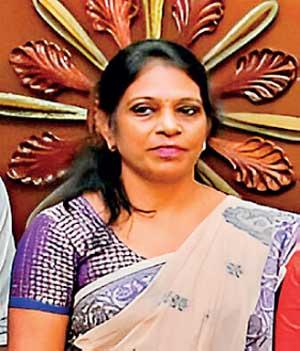 |
| Yogeshwari Krishnan, Project Manager of ISD |
He emphasised that children in plantations should have access to the same opportunities and facilities as those in Colombo. “Every child born in this country—regardless of whether they are Sinhala, Tamil, Muslim, or from the estate—should have equal educational opportunities,” Hewage asserted.
He also pointed out that while NGOs make active efforts to implement projects aimed at alleviating the economic conditions of plantation families, they are met with resistance from the estate managers.
Noting that the newly elected government has a few representatives from the estates in comparison to previous governments, Hewage stated that these representatives should speak of these issues in parliament and give them more attention. “There’s no point if they are just seated there just to represent the Tamils, they should be made to speak for their people too,” he stressed.
Issues faced by women
Victims of domestic violence in plantation areas face significant challenges when reporting their cases to the Women and Children’s Desk at police stations due to a clear language barrier. Addressing this issue, Yogeshwari Krishnan, Project Manager of ISD, told Daily Mirror that there are no Tamil-speaking officials at these desks or the Divisional Secretariat Unit.
“Victims of gender-based violence and harassment in public spaces, as well as children experiencing abuse in schools, are left helpless. We request the government to take necessary steps to address this issue,” she said.
Speaking on the inadequate facilities in schools in plantation regions, Krishnan pointed out that many schools lack access to water. “Girls are particularly affected, especially during their menstrual cycle, as there is no proper disposal system for menstrual products in addition to the lack of water. The school system is failing female students. When allocating resources, these issues need to be taken into serious consideration,” she added.
According to Krishnan, a clear gender wage gap exists, where women in the same roles and performing the same tasks as men, receive lower wages. While this issue is evident within the plantation sector, it is also prevalent among garment and retail workers.
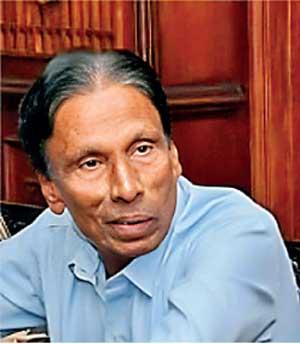 |
| S. Murugaiah, Secretary of the All Ceylon United Congress |
Meanwhile, she also emphasised the importance of the government ratifying International Labour Organization (ILO) Convention No. 190 (C190)—the first international treaty recognising the right to a workplace free from violence and harassment, including gender-based violence.
Other pressing issues
At the same event, S. Murugaiah, Secretary of the All Ceylon United Congress, raised concerns regarding the daily wages of plantation workers.
While the previous government led by Ranil Wickremesinghe issued a gazette setting the daily wage at Rs. 1,700 this amount was later reduced to a minimum of Rs. 1,350 in September 2024 after multiple disagreements between trade unions and estate owners.
Murugaiah noted that during this time, the incumbent President Anura Kumara Dissanayake had made a statement noting that the remaining Rs. 350 would be given to the plantation workers in the event he was elected as president. During Dissanayake’s budget speech in Parliament last week, he guaranteed a daily wage of Rs. 1,700 for estate workers. Trade unions are now bracing for more rounds of talks with estate management regarding the implementation of this promised wage.
Meanwhile, Palaniappan also highlighted several pressing issues, including alcoholism among plantation workers. While alcoholism is prevalent in many areas, Palaniappan noted that it is particularly concerning in the plantations due to their low wages. “The workers’ lack of awareness about the severity of the issue, coupled with their vulnerability, leads them to spend their wages on alcohol. The availability of alcohol in the plantations is high, and illegal alcohol is easily accessible,” she explained.
Additionally, Palaniappan expressed concern about a rising drug use trend among plantation schoolchildren. “In meetings with youth, teachers, and parents in Ratnapura, Nuwara Eliya, and Hatton, I was informed that drugs are being introduced to students in the form of sweets,” she shared.
A comprehensive document outlining the issues faced by plantation workers and their families, along with recommendations and policy proposals, was handed over to Prime Minister Dr. Harini Amarasuriya on January 30, and to Minister of Plantation and Community Infrastructure K. V. Samantha Vidyarathna and Deputy Minister Sundaralingam Pradeep on February 6.
11 Jun 2026 17 minute ago
11 Jun 2026 21 minute ago
11 Jun 2026 26 minute ago
11 Jun 2026 28 minute ago
11 Jun 2026 32 minute ago