18 Mar 2026 - {{hitsCtrl.values.hits}}
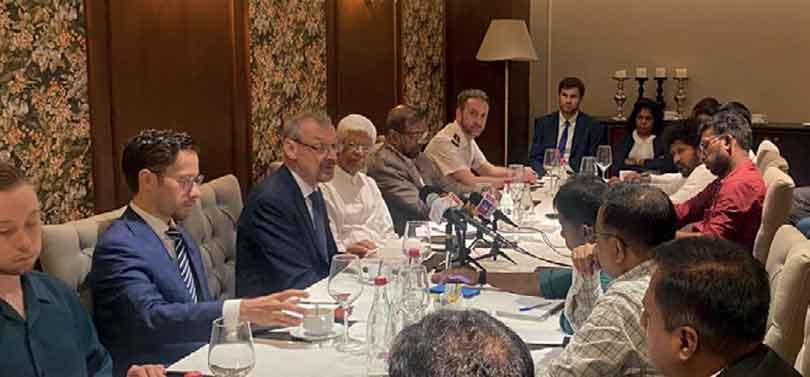
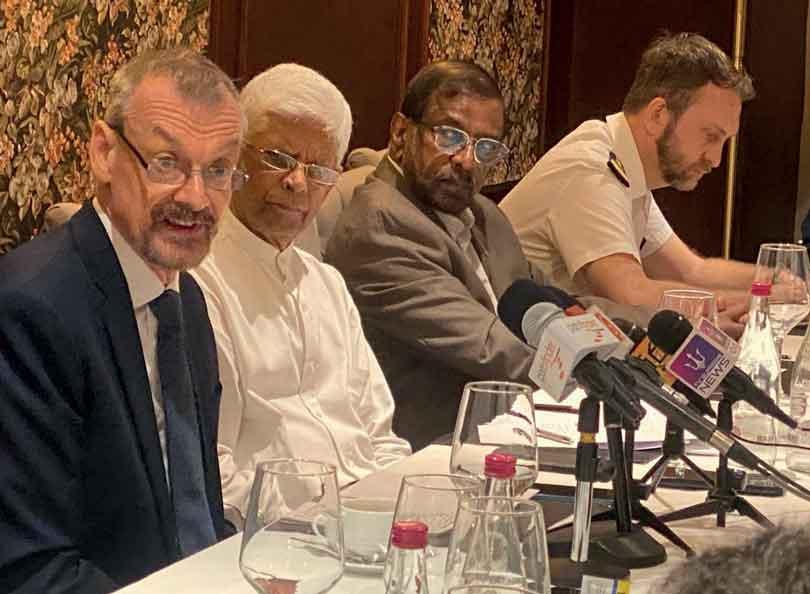
 France, as a resident power in the region with territories like Mayotte and Réunion, is advocating de-escalation through diplomacy
France clarifies it is not participating in military actions by the United States and Israel but is not a passive observer
China is viewed as a key stakeholder in Indian Ocean security due to its dependence on Middle Eastern energy and global trade routes
 The Middle East war is flaring up, with the world economy reeling under its impact in terms of surging fuel prices, disruption to navigation and air travel, etc. Sri Lanka, a country still with a fragile economy, has taken a major hit, with tourism revenue amounting to US$ 500,000 at risk. The spike in global fuel prices has resulted in the reintroduction of QR codes for the rationalisation of retail sales. Work from home is being reintroduced, reminiscent of life during the pandemic.
Likewise, the war has spilled over into the theatre of the Indian Ocean after a U.S. submarine reportedly torpedoed the Iranian ship *IRIS Dena* in Sri Lanka’s Exclusive Economic Zone. The importance of keeping the sea lanes of the Indian Ocean free of conflict is now being discussed with renewed vigour.
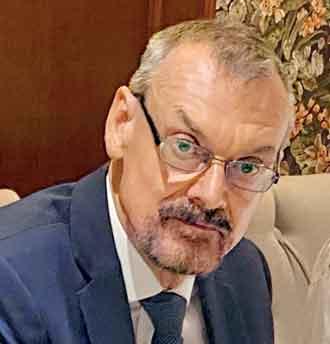
France, a European country with a territorial presence in the Indian Ocean, is now vocal about it. A permanent member of the United Nations Security Council, France does not participate in attacks undertaken by the United States and Israel, according to French Ambassador in Colombo Remi Lambert.
Delivering his remarks during the monthly roundtable discussion organised by the Pathfinder Foundation, the Ambassador said, “I say clearly here, France does not participate in the attacks undertaken by the United States and Israel, whose decision was taken without consulting us. But France is not a spectator to what is happening. It cannot remain without reacting in support of the countries of the region with which we have defence agreements,” he said.
The Ambassador dealt with a wide range of global issues from the French perspective and took questions from participants representing the media and think tanks.
China’s role essential
Asked about the role of China in ensuring maritime security in the Indian Ocean, he said it is essential. Referring to the fact that the Chinese recall the voyages of Zheng He during the 15th century, he said China is one of the main importers of fuel from the Middle East.
“We know international trade. China is the first exporter. These exports are crossing the Indian Ocean. It is normal that China is an important actor in this part of the world. We have a dialogue. We have a strategic relationship and partnership with China. We are working with them on global issues, including climate change,” he said.
France welcomes Sri Lanka’s response to IRIS Dena
Responding to a question about the failure on the part of European strategists to foresee the submarine attack and to condemn it after it happened, he said France commends the response of the Sri Lankan government to the distress call by IRIS Dena .
“In this regard, the Sri Lankan government’s compliance with humanitarian obligations in its treatment of *IRIS Dena* sailors is to be welcomed and commended. Beyond that, Iran’s blockade of the Strait of Hormuz, contrary to the law of the sea, raises the question of the security of maritime routes and the energy supply of our countries. France is taking its share of responsibility to restore freedom of navigation. Since 2024, we have been contributing with our European partners,” he said.
France has made it clear that it is not a participant in the ongoing conflict. However, it acknowledges that the consequences of the crisis are far-reaching, with tangible impacts not only on its own citizens but also across neighbouring regions, including the Gulf and countries such as Sri Lanka, the Ambassador said.
In this context, France views its role as a resident power in the Indian Ocean with a sense of responsibility. It is actively seeking to respond through diplomatic engagement, particularly by advocating against further escalation. Paris has been consistently conveying this message to all relevant parties, emphasising the urgent need for restraint, according to him.
Commenting on the closure of the Strait of Hormuz by Iran, he said it was having very strong consequences. He said that the move is not acceptable and is also a breach of international law.
The fallout from the crisis is also being felt in key economic sectors such as tourism and exports, raising concerns for countries like Sri Lanka that remain vulnerable to external shocks. In response, France, together with the European Union, says its primary contribution at this juncture is to support de-escalation through sustained diplomatic engagement, according to the Ambassador.
He said that the European market remains open to Sri Lankan exports, offering a critical buffer to help sustain the country’s economy during this turbulent period.
At the same time, the tourism sector has already begun to feel the strain, with a noticeable drop in arrivals from Europe. However, there is cautious optimism that tourist flows will recover once the most intense phase of the crisis subsides, restoring confidence among travellers and stabilising a key source of foreign exchange for Sri Lanka, according to him.
Asked whether France would recognise Sri Lanka’s historic position that the Indian Ocean region should be a zone of peace, he said the French Navy is contributing to peace in the region.
“We have territories here in the Indian Ocean. As Sri Lanka, we need peace for the security of our people in the region, for the security of international routes, and for the prosperity of the region. We are taking our share of responsibility to contribute to it,” he said.
The Ambassador, who also commented on Sri Lanka’s apparel industry being hit by U.S. tariffs, said that the treatment given to Sri Lanka by the European Union under the Generalised System of Preferences (GSP+) has made a difference in this respect.
“It grants Sri Lanka free access to the world’s largest domestic market, the European Union, and Sri Lanka’s second-largest export market, under the simple condition of compliance with a corpus of international conventions guaranteeing respect for social, labour, environmental, and good governance standards. In addition to the multiplication of crises, new issues are emerging that are profoundly destabilising in the long term if we do not prepare to prevent and deal with them,” he said.
Climate change having devastating effects
Drawing attention to climate change, he said Sri Lanka has experienced the recent devastation caused by Cyclone Ditwah, and France, alongside EU member states, has helped respond with emergency aid and support.
This crisis has shown the profoundly devastating effects of climate change. Such exceptional events will unfortunately be repeated. The French territory in the Indian Ocean was also hit last year by a similar cyclone that ravaged Mayotte, and another cyclone caused significant damage to Réunion Island, he said.
The Ambassador said these can only be warnings to encourage collective action for sustainable and decarbonised solutions to reduce the impact of human activities.
While the current crisis in the Middle East underlines dependence on fossil fuels, disasters such as Ditwah also show the impact of fossil fuel production on the ecological environment. France, where more than 90 percent of electricity is decarbonised, remains, alongside its European partners, at Sri Lanka’s disposal to support its path towards decarbonisation, he said.
“Another issue that is still vivid in our memories is that of epidemics. Sri Lanka, like France and other nations, has experienced the impact of the COVID crisis. Other epidemics will arise as the interconnectedness of the world facilitates their spread.
That is not inevitable if we prepare together to strengthen international health governance mechanisms. In this regard, France stands shoulder to shoulder with the World Health Organization (WHO), and has established an academy in Lyon. In April 2026, France will host the next One Health Summit, which, by highlighting the interaction between human, animal, and environmental health, will support a holistic approach to better prevent future pandemics,” he said.
Drug trafficking a threat; Sri Lanka can count on France for cooperation
He said that, like health threats, the spread of drug trafficking is also a challenge that affects all countries and profoundly destabilises societies.
“The legitimate fight in Sri Lanka is also ours, and we know that in the face of the internationalisation of criminal networks, the solution can only be through international cooperation and collaboration. You can count on France in this regard and its mobilisation on this subject, particularly in the context of the presidency of the G7,” he said.
Emerging technologies are increasingly shaping a complex global landscape, offering both opportunities and serious risks. While advancements can significantly enhance knowledge and societal progress, they also carry the potential to undermine stability if left unchecked.
France has highlighted the dual nature of technologies such as artificial intelligence. Alongside like-minded countries, it advocates a balanced and responsible approach that safeguards individual rights while enabling innovation. This position was reiterated when President Emmanuel Macron engaged in discussions with his Sri Lankan counterpart on the sidelines of the Artificial Intelligence Action Summit held in New Delhi earlier this year.
European security architecture transforming
He said that in Europe, the pressure of events is accelerating the transformation of the security architecture. France was the first European country to advocate and implement the strengthening of the European defence pillar.
“We advocated it long before our American allies urged us to do so, under the pressure of what was initially the American pivot to the Indo-Pacific and is now part of their new security strategy. The French President announced on March 2 a substantial evolution of the doctrine of nuclear deterrence, moving towards advanced deterrence involving a number of European partners, starting with Germany, but also including partners outside the European Union such as the United Kingdom. This evolution opens the possibility for joint exercises and deployments on the territory of our partners,” he said.
Progress in European integration has also changed the concept of vital interests. This development is intended to strengthen the defensive posture and in no way contribute to an arms race. France remains a staunch defender of the Non-Proliferation Treaty (NPT), working to maintain a balance between the defence of this instrument and the credibility of its defensive posture at the European level.
The keystone of the entire system of international governance, the United Nations system, remains the central architecture that must be defended globally, including here in Colombo.
08 Jun 2026 19 minute ago
08 Jun 2026 54 minute ago
08 Jun 2026 1 hours ago
08 Jun 2026 2 hours ago
08 Jun 2026 2 hours ago