23 Jul 2025 - {{hitsCtrl.values.hits}}

Psychiatrist says many young girls are not aware that cessation of menstruation is a sign of pregnancy
The knowledge on comprehensive sexual health in our adolescents is completely inadequate
In most instances, victimisation of child sexual abuse happens in known environments by known people
By Tahaan Jayewardene
|
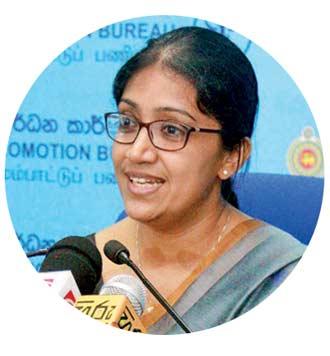
Dr. Darshani Hettiarachchi, Consultant Child and Adolescent Psychiatrist |
In Sri Lanka conversations around sexual health are often met with silence, stigma and embarrassment, and the consequences of not educating our young people are becoming tragically clear.
A medical expert warns that Sri Lankan adolescents are dangerously ill-informed and unprepared to face the realities and risks of sexual health. From cases of teenage pregnancy to children getting caught in cycles of sexual abuse, the silent suffrage of children is going unnoticed and neglected by most of society.
Dr. Darshani Hettiarachchi, Consultant Child and Adolescent Psychiatrist at Lady Ridgeway Hospital for Children, raises concerns about the gaps in sexual health education in homes and schools. Drawing from her own clinical experience and knowledge, Dr. Hettiarachchi explains how the lack of comprehensive, age-appropriate sexual health education leaves children alarmingly vulnerable.
She explains the lack of awareness in Sri Lanka.
“There are many young girls who are not aware that the cessation of menstruation is a sign of pregnancy.” She adds that “the knowledge on comprehensive sexual health in our adolescents is completely inadequate” in both school and home environments.
According to a 2024 study in the Journal of Psychosexual Health titled, ‘Uncovering the Knowledge Gap: Sexual and Reproductive Health Education and Knowledge Among Unmarried Sri Lankan Youth,’ a sizable proportion of our youth (males and females between the ages 15-24 in three districts) demonstrated low access to sexual and reproductive health education and a low level of knowledge on pregnancy, contraception, and STIs.
It shows a significant knowledge gap on Sexual and reproductive health among unmarried youth. It adds that introducing age-specific and gender-sensitive sexual and reproductive education is important to address the current gap.
Dr. Hettiarachchi mentions that because of adults’ reluctance to discuss sexual health with children, they may “seek information from other resources where they can get trapped in fake information.”
These alternative recourses can lead to being exposed to unnecessary and incorrect information. She mentions that because children don’t know how to seek knowledge, they can get into trouble (when using media and certain websites). She emphasises that if proper information at schools and homes are not given, then children out of curiosity, will find other means.
She highlights the three main negative consequences of having poor knowledge of sexual health.
One, it can lead to child sexual abuse, because when children don’t know what’s happening to them, they don’t know how to protect themselves. Two, they don’t know how to report it or speak up and are not aware what they’re experiencing is wrong. Three, repeated victimisation and even teenage pregnancy can occur (when they don’t speak up and are unaware it’s wrong) and end up living amongst their perpetrators.
“In most instances, victimisation of child sexual abuse happens in known environments by known people.” She says most perpetrators use a method called grooming, where the perpetrator gradually approaches the child.
According to the National Crime Agency’s CEOP Education team (NCA-CEOP), “Grooming can happen in online spaces as well as in person, by a stranger or someone known. It involves the offender building a relationship with a child, and sometimes with their wider family, gaining their trust and a position of power over the child, in preparation for abuse.”
Dr. Hettiarachchi mentions that when it comes to the prevention of child sexual abuse, there is the first-time victimisation, then repeated victimisation of child sexual abuse. The third, is teenage pregnancies and other negative health consequences like sexually transmitted diseases. All of which “can be prevented by improving sexual health knowledge in children and adolescents.”
The risk factors for teenage pregnancy, she clarifies are multifactorial. The child related risks include, poor knowledge of sexual health, and the child’s intelligence level or IQ.
This leads to greater vulnerability since they may not understand what’s happening. Other risks included children being vulnerable due to mental health issues, and psychiatric conditions such as autism spectrum disorder.
In addition, she mentions, learning disabilities and communication problems can also create greater risks, since they may find it difficult to express themselves.
The family related risk factors include disrupted and unsupervised family situations. “When the parents are having mental health issues, [and] substance related issues, these can also lead to poor parenting and unsupervised children.” She adds that financial stressors and poor socio-economic background can also act as risk factors.
The community related risk factors mainly include the poor sexual health knowledge in the community. She mentions that the “overall self-knowledge in sexual health is low, which leads children to be at risk.” she notes that if there are no adequate protective mechanisms and proper reporting systems, this can also lead to an increased risk for children in their communities.
When it comes to education, she says, “the comprehensive sexual health knowledge is not properly integrated into the current curriculum.” Additionally, that there is a lack of trained human recourses in this area and that we need to train teachers. She mentions how it’s important to educate and empower parents to openly discuss sexual health with their children. She highlights the importance of making “reliable, correct, evidence-based information on comprehensive sexual health resources freely available.” She strongly emphasizes, that they need to be age appropriate.
Dr. Hettiarachchi mentions that sex education in Sri Lanka is not included in our schools in a comprehensive manner but is rather quite basic.
“In Sri Lanka, people only focus on this small area of reproductive health. They only teach about the reproductive system.” She mentions other components of sexual health; biological development, interpersonal relationships, safe sex, how to prevent teenage pregnancies, family planning, as well as how to prevent sexually transmitted diseases. Within interpersonal relationships, she adds that sexual health includes how to be safe and protect yourself from being abused in a relationship.
Highlighting this, an article by UNICEF titled, ‘12 questions and answers about sexual and reproductive health and rights,’ says, “access to quality sexual and reproductive health information and services plays a crucial role in safeguarding the well-being of each adolescent, preparing them for a safe, productive and satisfying life, and also in protecting them from diseases, unwanted pregnancies, and human rights abuses, including gender-based violence and discrimination.”
Dr. Hettiarachchi explains how the emotionality regarding sexual health, and the resulting shyness and awkwardness it creates, acts as another barrier for educating our children properly. The serious concern in this area and the alarming risks to children, underscore the need for society to improve sexual health education and protect our youth.
11 Jun 2026 5 hours ago
11 Jun 2026 5 hours ago
11 Jun 2026 5 hours ago
11 Jun 2026 6 hours ago
11 Jun 2026 6 hours ago