08 Jan 2026 - {{hitsCtrl.values.hits}}
Every morning, buses are packed to the brim. Most buses are slow and poorly maintained, with damaged seats and weak engines, making commuting a major inconvenience”
- Manel Wijesekara, from Ratmalana
There is still a considerable number of working commuters waiting for the bus who are forced to seek more expensive alternatives. Some have no option, but to walk long distances, since taxi fares are very high
- S. Kamila from Kaduwela
I work in digital marketing and graphic design. I plan to create an updated app where people can easily check bus routes, schedules, and the locations of bus stops. It will show when and where a specific bus will arrive, taking into account both SLTB and private buses
- Himas Naseem from Matara
I have encountered countless people waiting for long periods for a bus, worrying that they might not be able to get home at all. If this is the situation on main roads, how much worse must it be on the less frequently serviced routes in outstations
- A regular bus commuter
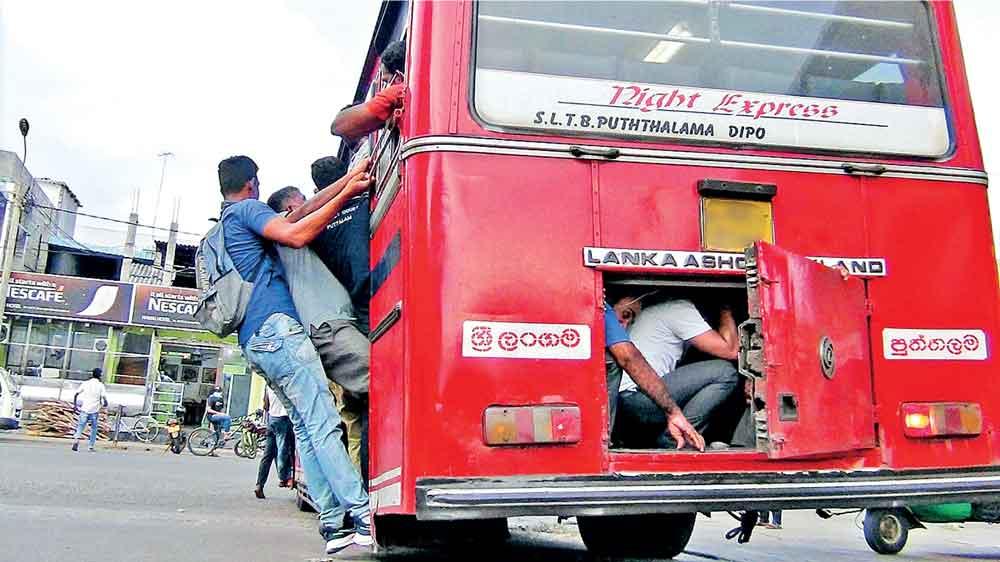
For many who depend on public transport, commuting is no longer a routine part of daily life, but a persistent struggle marked by frustration and discomfort
 Sri Lanka’s public transport sector has become one of the clearest reflections of the country’s deteriorating public systems. At the heart of this decline, particularly within the bus network, are decades of neglect, weak regulation, and prolonged mismanagement. Experts argue that the absence of a comprehensive national policy has hindered efforts to strengthen this essential sector.
For many Sri Lankans who rely on buses and trains, commuting is no longer a routine part of daily life, but a persistent struggle marked by frustration and discomfort.
Manel Wijesekara, from Ratmalana, commented: “Every morning and evening, buses are packed to the brim. Most buses are slow and poorly maintained, with damaged seats and weak engines, making commuting a major inconvenience. My workplace is in Bambalapitiya, so catching a bus even at night isn’t much of an issue, since buses on Galle Road run more frequently compared to other routes, where I need two or three buses to reach my destination because no direct buses are available after a certain time. If the situation is like this in Colombo, I can only imagine how difficult it must be in the outstations. Moreover, some buses are extremely slow, stopping for about ten minutes at each halt, while there are also buses that speed and race each other. At times, I hear conductors calling drivers to inform them that another bus is behind and urging them to go faster. They drive so recklessly, racing to collect passengers, cutting across lanes and ignoring traffic rules. Passengers are yelled at, exploited, and thrown from one end of the bus to the other during sudden brakes. Unfortunately, we are treated like commodities rather than individuals. I strongly urge the government to look into this issue, and deploy more buses, especially after 5 p.m., to accommodate the growing number of commuters,” she explained. Manel added that Colombo’s streets are now congested with private vehicles because people have lost faith in buses and trains. “Owning a motorcycle or car has become a necessity rather than a luxury. For decades, successive governments have regarded transport more as a political tool than as a national priority,” she concluded.
Plea to have more SLTB buses at night
An author and researcher who wishes to remain anonymous told us that much of his work involves travel, and he has often faced difficulties with public transport when returning home at night. He noted that very few buses operate on even major routes, such as Galle Road, after 8:00 p.m., particularly on weekends and public holidays. “On one occasion, if I had missed the last bus, I would have had nowhere to stay except the bus stand, exposed as it was to its own dangers. Although three-wheelers are available, a return trip home costing between Rs. 2,000 and Rs. 3,000 is prohibitively expensive. I have encountered countless people waiting for long periods for a bus, worrying that they might not be able to get home at all. If this is the situation on main roads, how much worse must it be on the less frequently serviced routes in outstations,” he asked and urged the government to deploy more SLTB buses at night to ensure that employed people who have no choice, but to work late can return home safely. “One cannot expect private operators to do this, as they are driven solely by profit. It is the government’s duty to serve the underserved,” he emphasised.
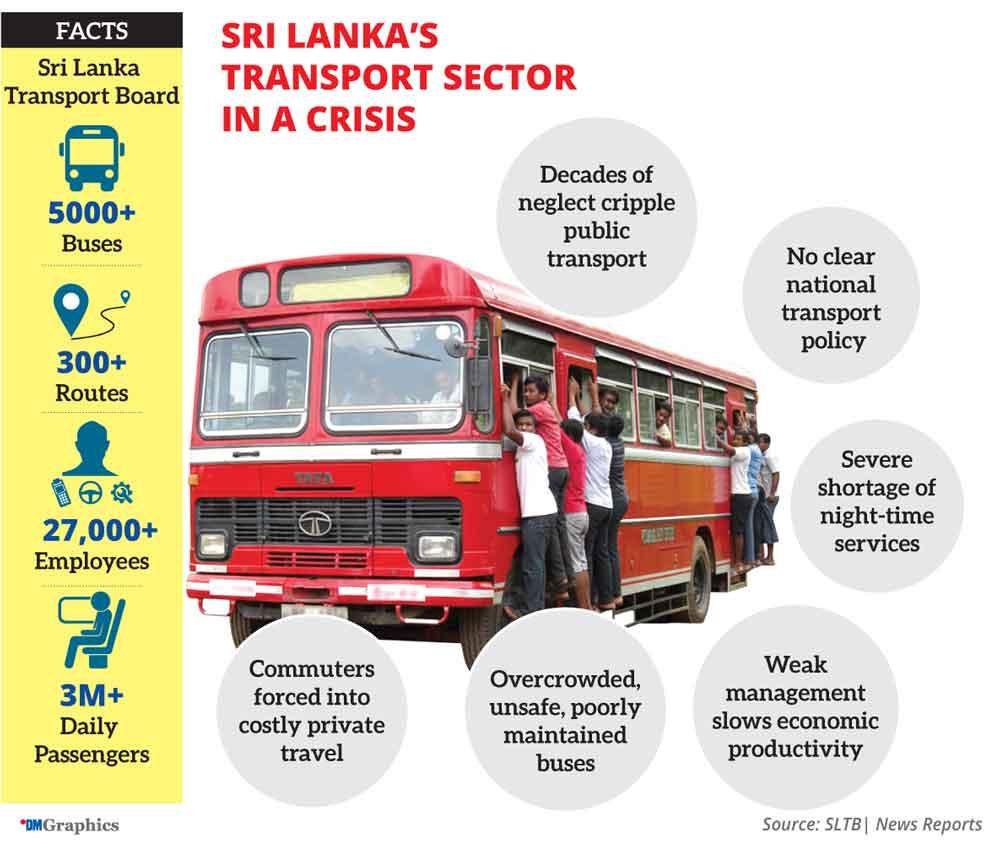
S. Kamila from Kaduwela shared her experience of travelling on the 176 Hettiyawatta–Karagampitiya–Nugegoda bus route while she was residing in Rajagiriya. “This is one of the busiest routes during the day, with buses constantly racing each other. However, at night there are no buses after 7.45 p.m. Conductors say that this is because the number of passengers drop, making it unprofitable for them. Despite this, there is still a considerable number of working commuters waiting for the bus who are forced to seek more expensive alternatives. Some have no option, but to walk long distances, since taxi fares are very high. After moving to Kaduwela, I now mostly use the 177 Kolpity–Kaduwela bus. I travel almost every day to pick up my daughter from tuition classes. Unfortunately, the 177 service is also unavailable after 8.30 p.m. If we miss the last bus, we are forced to take the 190 Malabe–Fort bus and get off at Malabe, from where we have to hire an Uber to get home. While the 190 operates until around midnight, there are very few other buses available at night,” she remarked. Kamila added that it is rare to find a direct bus to most destinations at night, which is extremely inconvenient for ordinary people who depend on public transport. “Students struggle to board buses - even during exam periods, while office workers arrive late or exhausted, leading to reduced productivity and hours wasted in traffic. Poor transport does not only affect individuals; it slows down the entire economy. Yet, year after year, there is little sign of improvement,” she said disheartened.
Himas Naseem, from Matara, said that Sri Lanka’s public transportation system is a serious problem that needs urgent attention and revival by the government. “I have personally experienced this while traveling to university or work. There have been times when I was forced to wait for almost an hour just to catch a bus home at night. This has become a constant struggle for me and many people I know, which inspired me to think of a solution, especially since I work in digital marketing and graphic design. I plan to create an updated app where people can easily check bus routes, schedules, and the locations of bus stops. It will show when and where a specific bus will arrive, taking into account both SLTB and private buses. This will allow people to plan their daily travel more efficiently and avoid wasting so much time on the road. I hope to develop this app in the future if I receive sufficient funding and support,” he said and added, “Overall, the government should focus on improving this sector. More public-private partnerships should be encouraged to help expand bus services, especially at night and on outstation routes.”
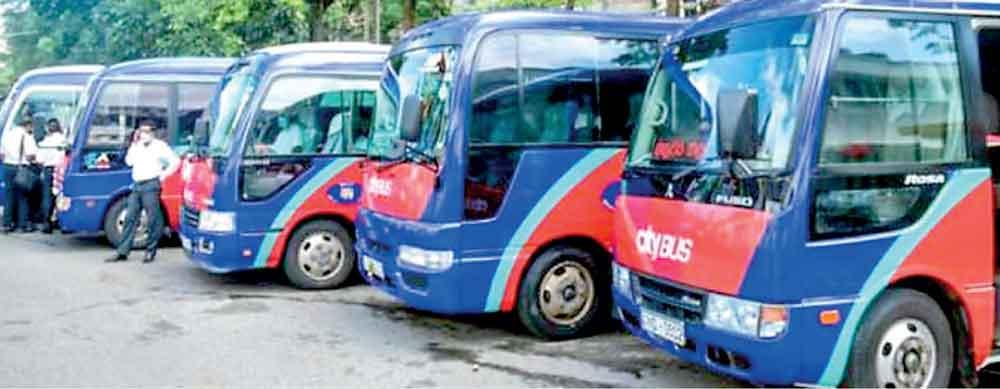
The government plans to purchase more buses and establish a Metro Bus Company to operate them within city limits, particularly in the Western Province
Daily Mirror spoke to the Director General of the National Transport Commission (NTC), Dr. Nilan Miranda, who explained that the NTC only regulates inter-provincial buses across the country. “For example, we have buses running at night from Colombo to Jaffna or Colombo to Galle. However, within each province, regulation falls under the respective provincial public transport authority. In Colombo, this responsibility lies with the Western Province Public Transport Authority. It is important to note that the NTC does not provide buses directly, our role is to conduct surveys and collect data to identify bus requirements in each region. We then invite private operators for service allocation. Essentially, we act as a regulatory body for SLTB buses and inter-provincial private buses, overseeing their operations. SLTB buses follow NTC rules and schedules, but their administration is handled separately,” said Dr. Miranda.
Dr. Miranda remarked, “Our Nisi Sariya programme focuses on providing late-night and early-morning bus services. Since operating busses during these hours is often unprofitable for drivers, we provide them with a government-approved subsidy to cover potential losses and incentivise night services.” he further stated that the government plans to purchase more buses and establish a Metro Bus Company to operate them within city limits, particularly in the Western Province. He explained that the routes and modern metro bus units have already been planned, but implementation has not begun since the buses are yet to be brought to Sri Lanka.
While the Government has been taking necessary steps to improve the public transport sector and ongoing programmes show promise, long-term reforms and effective management are essential to ensure safe, reliable, and efficient travel for all commuters.
07 Jun 2026 7 minute ago
07 Jun 2026 10 minute ago
07 Jun 2026 15 minute ago
07 Jun 2026 34 minute ago
07 Jun 2026 44 minute ago