10 Sep 2025 - {{hitsCtrl.values.hits}}
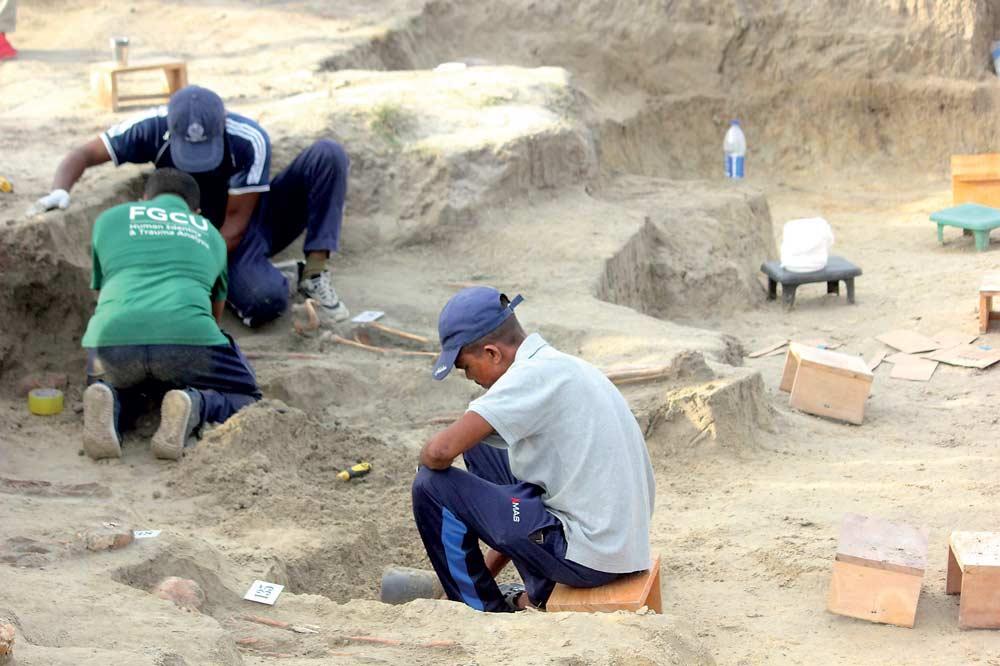
Phase 2 excavations at the Chemmani mass grave site concluded recently after 45 long days. Image courtesy
(Images of excavations courtesy Sakuna M. Gamage)
 The 60th UNHRC session takes place in Geneva at a time when Sri Lanka is engaged in exhuming several mass grave sites in the island
Vijitha Herath underscores that independent investigations on mass grave sites are being conducted with judicial oversight
Critics underscore that what’s important is the regime’s will to expedite cases and bring about a closure to families of victims being subject to enforced disappearances
Legal experts and observers with experience in mass grave exhumations opine that international expertise should be sought to determine the perpetrators
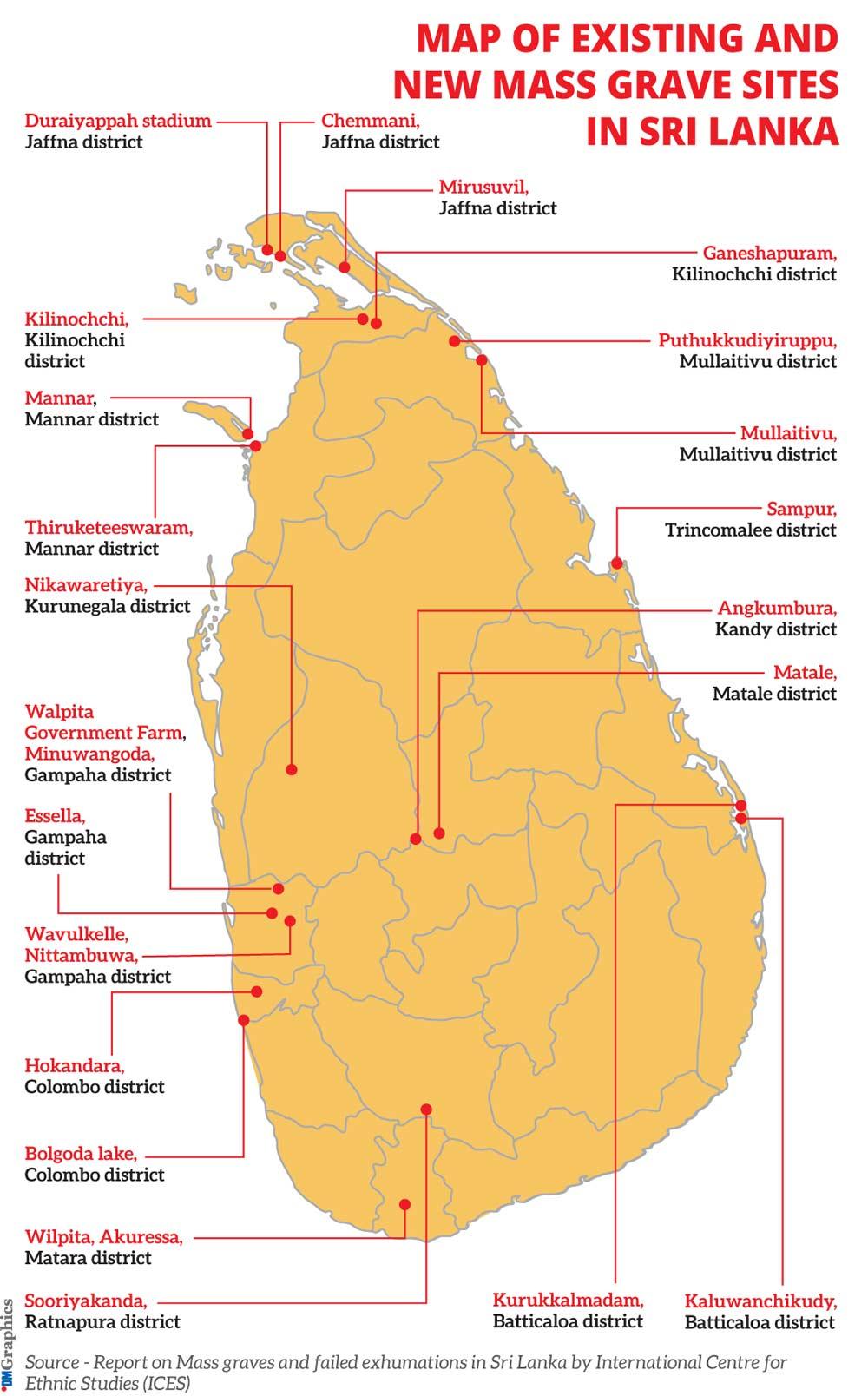
Foreign Minister Vijitha Herath’s speech at the 60th United Nations Human Rights Council (UNHRC) session, currently underway in Geneva, reiterated the fact that Sri Lanka is committed to the accountability process only through a domestic mechanism. He made these remarks in the backdrop of exhuming several mass grave sites in the country, some which have been unearthed over the recent past. He underscored the fact that independent investigations on mass grave sites such as Chemmani are being conducted with judicial oversight sans any government interference. However, legal experts and observers who have experience in mass grave exhumations opine that international expertise should be sought to determine the victims and perpetrators of these atrocities.
Recent mass grave exhumations
After 45 days, the second phase of the Chemmani mass grave excavation ended based on the financial provision allocated by the Ministry of Justice and National Integration through the Jaffna Magistrate Court. So far 239 skeletons have been exhumed out of a total of 240 skeletal remains. At the mass grave site at Colombo Port, 88 skeletal remains were exhumed in August. On August 25, the Kalawanchikudy Magistrate Court ordered the exhumation of the Kurukkalmadam mass grave site. In July, workers from the British demining Organisation Mine Action Group (MAG) discovered skeletal remains near the Sampur Children’s Park during mine clearance operations. Following this discovery, the Muthur Magistrate Court authorised the excavation of what is possibly another mass grave site.
The need for international expertise
Exhuming mass graves is a tedious task given the sensitivity of the circumstances. Forensic anthropologists, pathologists and everyone working at each one of these sites have taken painstaking efforts to carefully extract the remains and send them for further analyses. But what is important is the government’s will to expedite these cases and bring about a closure to families of victims ‘being’ subject to enforced disappearances.
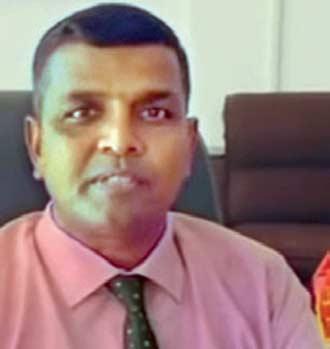
 Even though the OMP has made strategic moves to get people involved, still there are so many bottlenecks when building trust among people. People want a solution without further delay and for this we need human resources and the capacity to expedite hearings and cases
Dr. J. Thatparan OMP Executive Director
Senior Counsel and Executive Director at the Centre for Human Rights and Development K. S. Ratnavale said that the government should tread a very careful and measured path in this regard. “Not only people in the North, but people in the South are also watching the progress of these exhumations. What began with several skeletal remains is now turning out to be a massive mass grave. The first thing that the government should do is to give a freehand to those who are working on it. The most important thing is the budget for the next phase which has already been prepared. This should be handed over to the authorities without much delay and there shouldn’t be any government intervention. Any sort of interference at the bureaucratic level needs to be avoided,” he said.
Ratnavale further said that the government should obtain international expertise from organisations that have previous experience in similar cases. “Some of these include Forensic Anthropology Foundation of Guatemala (FAFG), Peruvian Anthropology Group (EPPA) and Medicines sans Frontiers (MSF). Sri Lanka could obtain international expertise from Latin American countries such as Chile, who at the time had to bear the brunt of large scale enforced disappearances and killings, and even some African countries such as Rwanda. There’s no harm in getting their experience and expertise. We have forensic experts who have been trained in these areas. Our judicial medical officers (JMOs) are efficient, but they should be exposed to modern trends and equipment,” he underscored.
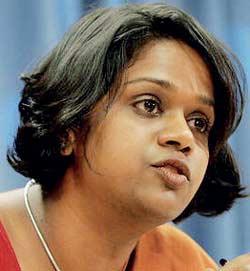 The present attention on Chemmani and other mass graves across Sri Lanka has revived interest in these issues, with questions asked whether Sri Lanka is able to finally have closure and reckoning for its past cycles of violence
Bhavani Fonseka, Human Rights Lawyer and Researcher at Centre for Policy Alternatives
He explained about scanning machines and other devices including high quality digital cameras which could detect subtle marks on skeletal remains. Ratnavale also highlighted the setting up of a DNA bank or laboratory and the creation of a DNA database. “Rather than taking all samples to Colombo, it’s convenient and important to have it in Jaffna itself and what better institution than the Jaffna university medical faculty and Jaffna teaching hospital to have these facilities. Already the hospital has allocated ample space in its new building to have the skeletal remains stocked. The DNA lab is a prime need at the moment and foreign assistance is needed and lot of such people are ready to help for the establishment of the DNA laboratory. This could also be used in criminal cases, to conduct paternity tests etc.,” he further said.
Ensuring a credible accountability process
For long years, families of victims subject to enforced disappearances have been longing for truth and justice. But their woes fell on deaf ears, while their demands were merely reflected on political stages to garner votes. Some of these mothers have passed the test of time while others await the return of their loved ones during each passing day.
In her comments, Human Rights Lawyer and Researcher at Centre for Policy Alternatives Bhavani Fonseka said that the excavations underway in Chemmani and other sites in Sri Lanka is a reminder of the long road ahead to finding answers and justice for many victims. “Many have been searching for the disappeared loved ones for years, some decades, demonstrating the resilience of many, but also the failures of past initiatives. The present attention on Chemmani and other mass graves across Sri Lanka has revived interest in these issues, with questions asked whether Sri Lanka is able to finally have closure and reckoning for its past cycles of violence,” she said.
However, Fonseka said that the work in these sites is also a reminder of the expertise, resources and technical support required for work around mass graves. “Media reports and interviews with the different government and state officials indicate that Sri Lanka requires considerable technical support to ensure the process is credible,” she added.
Speaking about the progress of the truth and accountability process, she further said that victims of enforced disappearances from across Sri Lanka have over the years and decades demanded for truth and justice, culminating in the establishment of the Office on Missing Persons (OMP) and criminalising enforced disappearances, and action with particular emblematic cases. “Despite some movement with reforms, there has been setbacks with finding answers and accountability. With renewed interest in these issues and the government committing to reforms, it is now critical for the OMP and other entities involved with mass graves and related work to be provided with the necessary resources and technical support.”
She further said that the renewed interest in these issues has also reignited hope that Sri Lanka will finally be able to reckon with its brutal past. “For this to happen, the government must give political leadership to ensure Sri Lanka moves forward in a credible process of truth seeking and justice which addresses the demands of the victims, counters impunity and sets in motion a path that encompasses reforms to ensure non-recurrence,” she underscored.
Current challenges faced by OMP
In his speech, Minister Herath further said that the government continues to strengthen domestic reconciliation mechanisms such as OMP, Office for Reparations and Office for National Unity and Reconciliation by guaranteeing their independence and making necessary financial and human resource allocation. Despite the establishment of the OMP in 2018, various interferences obstructed the proceedings of this domestic mechanism. Human rights activists have been calling upon successive governments to strengthen the OMP to expedite hearing cases on missing persons and bring about closure. But except for a handful of individuals who received compensation, many hearings, investigations and cases are yet to be heard or concluded.
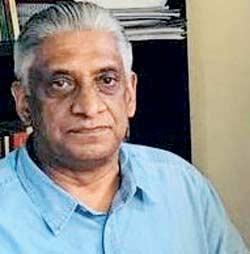 Not only people in the North, but people in the South are also watching the progress of these exhumations. What began with several skeletal remains is now turning out to be a massive mass grave
K. S. Ratnavale, Senior Counsel and Executive Director at the Centre for Human Rights and Development
Speaking about the challenges, OMP Executive Director Dr. J. Thatparan said that the OMP is a legal and independent body, dedicated to finding what happened to all missing persons as detailed in the Enforced Disappearances Convention and the OMP Act. “There were different commissions established in the past, but once the OMP was setup in 2018 all files were transferred here. Even though the OMP is a powerful institution as per the legal provisions, it is paramount to build trust among people. If there’s no trust between victims and the Organisation, it’s difficult to proceed to the next step of these cases. Even though the OMP has made strategic moves to get people involved, still there are so many bottlenecks when building trust among people. People want a solution without further delay and for this we need human resources and the capacity to expedite hearings and cases,” he explained.
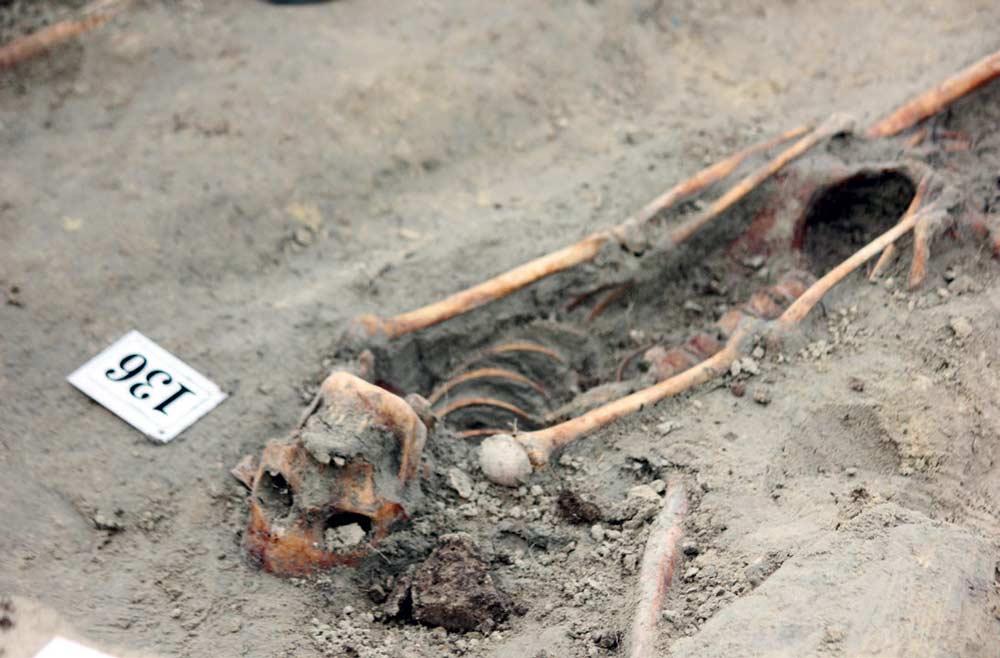
A skeleton exhumed at Chemmani mass grave site
Dr. Thatparan further said that the cadre allocation isn’t sufficient to accelerate the process and that they have to handle these matters carefully. “This is a reconciliation period and we shouldn’t cause further damage to the people. So we need professionals to understand the transitional justice mechanism and the concept of reconciliation and recruit a workforce who has been trained and skilled on this context and who can build trust among people. During this time we need a lot of recruits, but it is a challenge to prepare a conducive working environment. On the one hand people are migrating. Their remuneration is not attractive and it’s difficult to retain them. Thirdly it’s difficult to find people in the country with similar expertise. We have limited numbers and they don’t have the background of the transitional justice process or the past conflict so it’s difficult for them to contextualise these matters. These are the main issues we are facing. So at the moment we are looking to recruit volunteers, interns or even graduates who can support us and we are working closely with several other institutions to improve our cadre,” he added.
08 Jun 2026 27 minute ago
08 Jun 2026 1 hours ago
08 Jun 2026 1 hours ago
08 Jun 2026 2 hours ago
08 Jun 2026 2 hours ago