05 Dec 2025 - {{hitsCtrl.values.hits}}
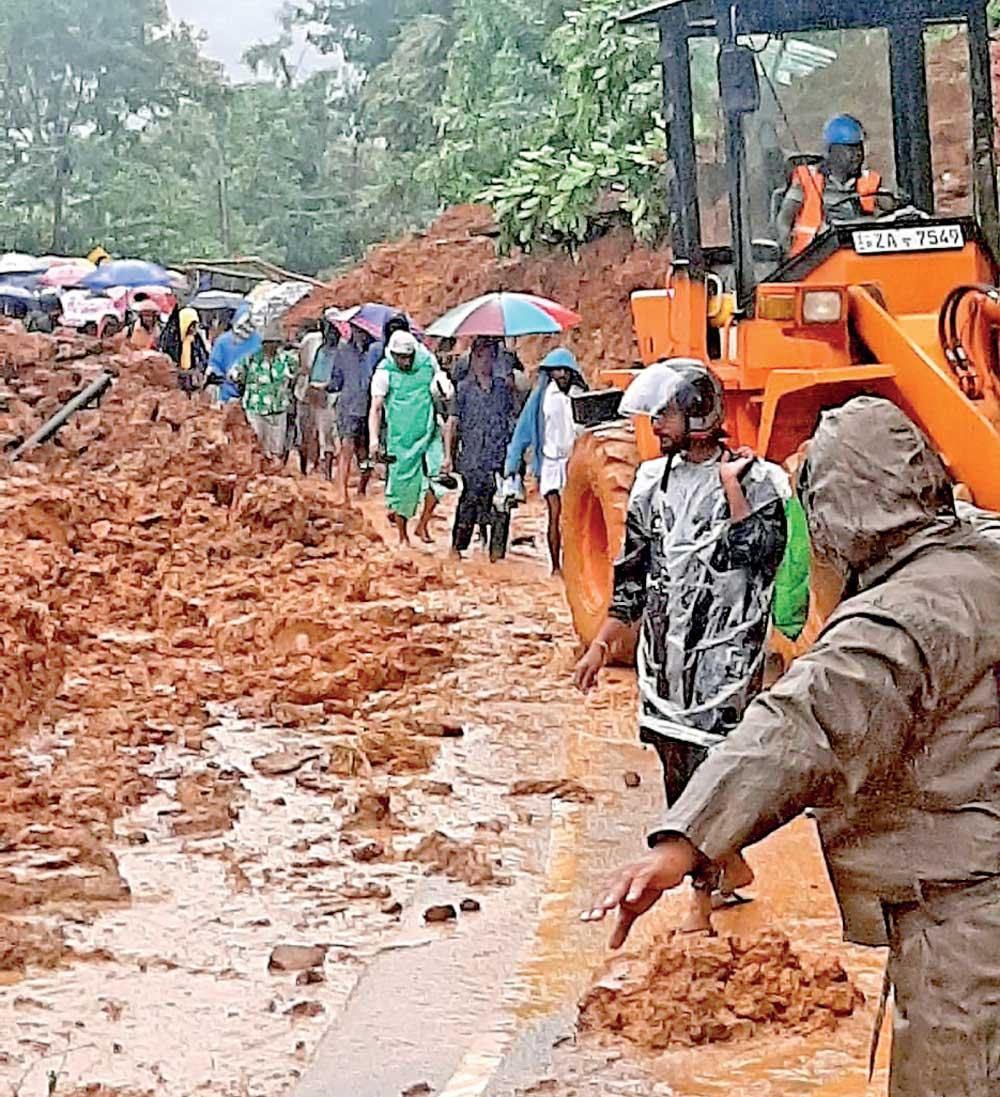
The government must commit to taking care of affected people until they are able to stand on their own. This involves a multi phased approach
 A natural catastrophe presents a devastating challenge, but also a singular opportunity the chance to “Build Back Better” (BBB). For Sri Lanka, a nation highly vulnerable to climate change impacts, this means moving beyond simple restoration to creating a more resilient, sustainable, and equitably governed country. Successfully navigating this complex process requires national unity, competent leadership, strategic foreign aid mobilization, the empowerment of local expertise, and a fundamental commitment to environmental protection.
1. The imperative of unified and competent leadership
The foundation of any successful post disaster recovery is a cohesive and high quality management system. The sheer scale and complexity of reconstruction necessitate a departure from ‘business as usual’ governance.
The role of unity and political will
A disaster knows no political boundaries, and the response must reflect this reality. National unity is paramount, ensuring that all political parties, civil society organizations, and community leaders align their efforts towards the singular goal of national recovery. This unity must be spearheaded by demonstrable political will from the highest levels of government. The leadership must clearly articulate a long-term vision for recovery, secure its legislative backing, and commit the necessary state resources. A unified front signals confidence to both affected citizens and international partners.
Prioritising competence over patronage
A major bottleneck in efficient public administration, particularly in disaster recovery, is the appointment of unqualified personnel based on political ties. The government must immediately get away with the concept of appointing party carders for vital public positions, especially those within the established or re-structured Reconstruction Authority, the Disaster Management Centre (DMC), and key infrastructure ministries. Merit based appointments: Vital positions such as the heads of the Reconstruction Authority, project managers for large infrastructure works, and environmental protection regulators must be filled solely based on demonstrated professional competence, technical expertise, and a proven track record in disaster management, engineering, finance, or public administration.
Transparent oversight: Establishing an independent oversight body, perhaps involving representatives from reputable professional associations (e.g., Engineers, Architects, Accountants), non-governmental organizations, and global development partners, would ensure transparency and accountability in the reconstruction process and resource allocation. This reduces the risk of corruption, a major inhibitor of recovery.
2. Strategic mobilization of foreign aid and local expertise Reconstruction requires massive financial and technical resources that Sri Lanka cannot fully provide alone. A strategic approach to foreign aid must be combined with a strong emphasis on empowering and retaining local knowledge.
Securing and managing foreign aid
International aid from multilateral institutions (like the World Bank, ADB, UN agencies), bilateral partners, and international NGOs (INGOs) is crucial. However, the government must proactively manage this process to maximize its effectiveness.
Transparency and accountability: All aid, both financial and in-kind, must be recorded in a public, easily accessible ledger. This includes tracking disbursements and the resultant outcomes, which builds trust with international donors, encouraging further investment.
Alignment with national strategy: Aid must be strategically channeled to support the national “Build Back Better” plan, rather than allowing donors to dictate separate, uncoordinated projects. A single, high-level Post Disaster Needs Assessment (PDNA) should be the foundational document guiding all foreign investment.
Debt structuring and flexibility: The government must negotiate for concessional loans, grants, and debt restructuring that account for the massive post catastrophe fiscal strain. Aid should be structured to allow for flexibility to meet evolving local needs.
Harnessing local expertise: Foreign assistance is only truly successful when it is linked to capacity building and the utilization of local experts and communities. Empowering Sri Lankan professionals: Local engineers, architects, planners, social workers, and academics possess invaluable context-specific knowledge from local building materials to cultural sensitivities and hazard prone areas. They must be placed in leadership and advisory roles. Foreign experts should primarily serve as technical support, transferring best practice knowledge to their Sri Lankan counterparts.
Community driven reconstruction: The people most affected are the first responders and possess the deepest understanding of their needs. A participatory approach is essential. Reconstruction plans, especially for housing and livelihoods, should be developed in consultation with local communities. This fosters ownership, ensures cultural appropriateness, and results in more resilient outcomes. For instance, the “core house” model, where a small, sturdy, disaster resilient house is built to be expanded later by the family, can be an effective, empowering approach.
Skills training and local economy: Reconstruction should be leveraged to boost the local economy. Foreign aid should include components for training local people in new, disaster resilient building techniques, providing them with stable employment and long term skills.
3. Learning from global resilience: The Japanese Model
While the context of post WWII Japan is different, recovering from conflict rather than a natural disaster, the lessons from the reconstruction of cities like Hiroshima and Nagasaki provide valuable insights into visionary and strategic recovery.
Long-term planning and vision
Japan’s reconstruction was characterized by a focus on comprehensive, long-term urban planning that did not merely restore the old but aimed for a radically improved future.
Land readjustment and better urban design: Japan implemented programs like land pooling and development to create higher quality urban environments, featuring wide roads, dedicated park spaces, and improved public utilities. Sri Lanka should adopt a similar approach, utilizing the disaster cleared areas to re-plan and modernize vulnerable communities with improved infrastructure and better access to services.
Resilience as a core principle: The Japanese model emphasizes building to withstand future shocks. For Sri Lanka, this means mandating and strictly enforcing disaster resilient building codes for all new construction and reconstruction, especially in high risk zones. This applies to public infrastructure (bridges, hospitals, schools) and private housing.
Social cohesion and healing
The enduring strength of the Japanese recovery was its focus on social and psychological resilience. The emphasis on remembrance and storytelling helped foster a sense of collective purpose. Sri Lanka must similarly focus on:
Psychosocial support: Providing immediate and sustained psychosocial support and mental health services to affected individuals and families is critical for emotional healing and reintegration.
Collective memory: Creating community spaces or initiatives that memorialize the disaster and celebrate the collective recovery effort can strengthen social cohesion and resilience.
4. Addressing environmental vulnerability for Long-term safety
A key part of “Building Back Better” for Sri Lanka must be a fundamental shift in its approach to nature and environmental assets. The destruction caused by the catastrophe is often amplified by pre-existing environmental degradation.
Strict Laws and enforcement for environmental protection
The government must institute strict laws to protect nature and natural assets around the country, recognizing that these assets wetlands, mangroves, forests, and buffer zones are essential natural defenses against disasters like floods, landslides, and storm surges. Wetland protection: The present filling of wastewater land for commercial purposes must be immediately halted and criminalized. Wetlands and marshes act as natural sponges, absorbing excess rainwater and mitigating flood damage, especially in dense urban areas like Colombo. Enforcement of the National Environmental Act (NEA) and the National Policy on Wetlands must be radically strengthened, making violations politically and financially costly.
Buffer zones and reforestation: Strict regulations should be enforced on construction near coastlines, riverbanks, and steep slopes. Reforestation of vulnerable slopes and the restoration of coastal mangroves must become national reconstruction priorities, utilizing these green and grey infrastructure solutions for future protection. Integrated land use planning: Future land use planning must integrate disaster risk reduction (DRR) principles, restricting development in known high hazard zones and clearly mapping out environmentally protected areas.
5. Comprehensive care and rehabilitation for affected people
The immediate human cost of the catastrophe requires a dedicated and compassionate long term strategy to support victims.
From relief to self-sufficiency
The government must commit to taking care of affected people until they are able to stand on their own. This involves a multi phased approach:
Immediate relief and shelter: Providing safe, temporary housing (transitional shelters) and essential services (food, water, medical care).
Livelihood restoration: Disasters often destroy the means of earning a living (farms, fishing boats, small businesses). The recovery plan must include targeted programs for livelihood restoration, such as micro finance for small businesses, provision of new equipment for farmers and fishers, and vocational training to transition to new, resilient economic activities. Housing and resettlement: For those in permanent high risk zones, responsible resettlement is necessary. This must be conducted with dignity, providing new, secure housing in safer locations with access to services (schools, healthcare) and new livelihood opportunities.
The role of the social safety net
The disaster will push many families into poverty. A robust, temporary expansion of the country’s social safety net is required. This involves transparent cash transfer programs, food assistance, and education support to ensure children’s schooling is not interrupted.
The challenge of comprehensive reconstruction is indeed high, but the history of nations, and Sri Lanka’s own experience with past crises, proves it is not impossible. Success hinges entirely on the establishment of a competent management system, the commitment of a unified leadership, and the political will to make tough, long-term decisions over short term political gains. The failure to do so guarantees that the next disaster will be even more devastating, setting the nation qaaback further. The principle must be clear: Build Back Better is not just a slogan; it is an indispensable national security strategy.
(The writer is a battle hardened Infantry Officer who served the Sri Lanka Army for over 36 years, dedicating 20 of those to active combat. In addition to his military service, Dr. Perera is a respected International Researcher and Writer, having authored more than 200 research articles and 16 books. He holds a PhD in economics and is an entrepreneur and International Analyst specialising in National Security, economics and politics. He can be reached at [email protected])
07 Jun 2026 3 minute ago
07 Jun 2026 22 minute ago
07 Jun 2026 2 hours ago
07 Jun 2026 2 hours ago
07 Jun 2026 2 hours ago