14 Aug 2025 - {{hitsCtrl.values.hits}}
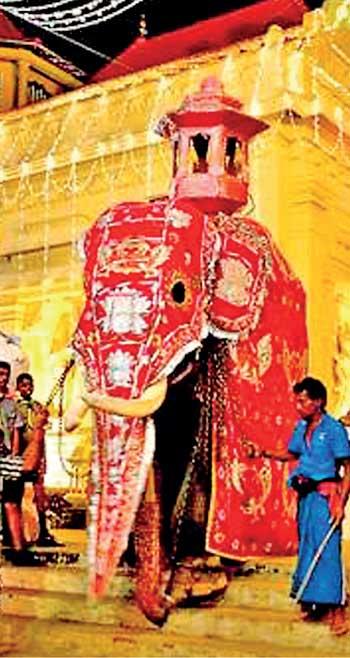 |
| The Bellanwila Esala festival ends with an ancient water-cutting ritual and alms offered at Bellanwila temple and Boralesgamuwa, followed by ‘Shanthikarma’ pooja on Sunday (17). FILE PHOTO |
By Sisira Wijesinghe
Months of July and August hold great socio-cultural and aesthetic value for Buddhists across this resplendent island, as they are the time for the ceremonial commemoration of the significance of both Esala and Nikini Full Moon Poya phenomena, as documented in ancient Buddhist scriptures. The Seasonal Perahera festival (pageants) with the crowning one in the charming hill capital, Kandy, Sri Dalada Maligawa, is annually conducted at Kataragama, Ratnapura, Bellanwila, Kotte, et al on a mammoth scale as great crowd-pullers since those spectacles attract captivating performers, artistes, dancers and elephants from all corners of the country.
Bellanwila Esala pageant festival, now being held for the 75th consecutive year in keeping with age-old practices and traditions, gives pride of place to the veneration of the Buddha with a week-long Pirith chanting ceremony, now a rare conduct of such chanting throughout day and night for seven consecutive days. Bellanwila Perahera too portrays a semblance of all rites and rituals, traditions and practices, associated with the historic Dalada Perahera, while the sequence of pageants that follows, i.e Dorakada Asna Anushasanawa Devadutha Perahera, Mal Perahera, Pavada Perahera, Ransivili Perahera and Randoli Maha Perahera and finally the Water Cutting ritual and the Perahera, adds varying dimensions to its religious momentum. This year marks the 75th pageant, which evolved to be a two-week-long national ceremony having commenced as a tiny pageant in the area in 1950 in order to ward off the ill effects, believed to have been caused by a cattle epidemic that destroyed the livelihood of hundreds of peasants and residents in and around Bellanwila in the late 1940s.
Bellanwila Esala Pageant is also a kind of synthesis of Buddhist and Hindu beliefs and is dedicated to the Buddha and a pantheon of celestial powers, including Vishnu, Kataragama, Saman and Vibheeshana, whose replicas and divine ornaments are carried atop colourfully caparisoned tuskers for veneration. Resonant drums of varying rhythms, folklore, jingling anklets, twinkling lights and a bevvy of dancers from up country, Sabaragamuwa, South and other provinces in their hundreds parade along the roads surrounding the temple, reminiscent of the ancient royal grandeur.
The late Chief Incumbent, Ven Bellanwila Sri Somaratana Nayake Thero, the architect of the modern glory of this temple and pioneering force behind the start of this renowned Perahera of this magnitude in the year 1950 was visionary and groomed two disciples, Ven Dr Bellanwila Dhammaratana Thero and Ven Prof Bellanwila Wimalaratana Thero who after the demise of Ven Somaratana Nayake Thero in 1984 took the reins and managed temple affairs adding more and more new people-friendl welfare projects by way of establishing vocational training centres, medical funds for the needy, pilgrims’ rest, new relic chamber, etc.
The Bellanwila festival’s organisational structure is one of the most daunting and demanding, undertaken determinedly by the prelate, Ven Dr Dhammaratna Nayake Thero, Viharadhipathi, actively assisted by both Ven Dr Boralesgamuwe Pemaratana Thero and Ven Bellanwila Sangharatana Thero and several other committees, inclusive of the Dayake Sabha, Kulangana Samithiya, Youth organisations, Perahera Committee, etc. However, collective efforts of all the above-mentioned groups and donors have so far facilitated the conduct of this mammoth spectacle undeterred, without fail, for 75 years continuously.
Had the late Ven Somaratana Thera been considered the pioneer of the temple’s modern revival, it was none other than his chief disciple, Ven Dr Bellanwila Dhammaratana Thero and late Ven Wimalaratana Thera who elevated the name of ‘Bellanwila’ to international forums and left a niche in overseas chronicles. In addition to this festival, the temple provides multiple social services to the needy. For example, a symbolic charge of Rs 20 from each vehicle parking in the temple car park yard rescues many lives of patients who want to undergo surgeries but without sufficient funds to do so. Every six months, these funds are disbursed after careful review and consideration to ensure they reach the most deserving.
This year’s Esala festival began after planting the symbolic ‘Kap’ on Wednesday (6) at the auspicious minute, just after commencement of the Pirith chanting. Followed by the Dorakada Asna and Anushasana, three flower offering pageants (Mal Perahera) and the remainder of the pageants began in accordance with traditions. This year, the Pavaada Perahera, which is regarded as one of the most sacred, in which relic casket of the Buddha and replicas of deities are taken on head atop white clothes (Pavaada) spread along its way for the first time, took place on Thursday (14). Amidst huge gatherings begins the Ransivili Perahera and the finale Randoli Maha Perahera subsequently.
The spectacular Randoli Maha Perahera (Aug 16), which composes of many caparisoned tuskers and hundreds of dancers and performers, consists of the Maligawa Perahera (offering to the omniscient Enlightened One), Sri Vishnu, Kataragama, Saman and Vibheeshana Devala Perahera in sequence. The whole of the mammoth arrangement led by the Incumbent Dr Bellanwila Dhammaratana Nayake Thero, who is also the Chief Sangha Nayake for Singapore and the Religious Advisor to the self-founded Buddhist Library in Singapore, is lavishly supported by resident monks, Ven Boralesgamuwe Pemaratana Thero, Ven Bellanwila Sangharatana Thero, Esala Perahera Committee, Dayaka Sabha, Kulangana Samithiya, Youth Organisations and many other peripheral groups, reaching its climax with the Randoli Maha Perahera, set to parade the streets.
Bellanwila Esala festival, invoking blessings on the country and her people, culminates with the ancient water-cutting ritual and the alms (Dewa Daana) offered both at Bellanwila temple and Boralesgamuwa, followed by ‘Shanthikarma’ pooja on Sunday (17).
11 Jun 2026 7 hours ago
11 Jun 2026 7 hours ago
11 Jun 2026 7 hours ago
11 Jun 2026 7 hours ago
11 Jun 2026 8 hours ago