03 Jun 2025 - {{hitsCtrl.values.hits}}
ICMA had rented an upstairs house at Skelton Road, Bambalapitiya, as its office. The downstairs housed a library, some space for study and a large room for branch committee meetings. These were held weekly from about 5 pm. There were about 15 members presided over by Mannakkara. During the year, a proposal was adopted to build their own premises. They had been moving from place to place and they felt that they should have a place of their own
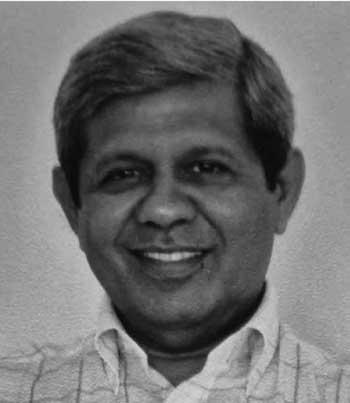 |
| Tissa Mannakkara |
By Upali Ratnayake
In 1985, ICMA London (which is now CIMA) had a competition for all the branches. At that time, the prominent branches were the ones in Ireland, Malaysia, Singapore, Hong Kong, Sydney, Melbourne, Dhaka, Mumbai, New Delhi, Calcutta, Madras and Colombo. There was an office in Toronto and, of course, several branches in England. The branches were asked to courier an illustrated report of the work it was doing together with a note on finance. The Sri Lanka Branch accepted the request and put together a report. Remember, at this time, there were no computers, mobile phones or photocopiers. However, they had a capable person, Reggie Candappa of Grants Advertising. He helped ICMA to arrange the report, the graphs and the photographs. This was then couriered to London. After a month, the result came on the fax machine. The Sri Lanka Branch was adjudged the best among all the branches for their member activity, student support, and professional support. Tissa Manakkara was President of the Sri Lanka Branch. He had the honour of visiting London to accept the award.
ICMA had rented an upstairs house at Skelton Road, Bambalapitiya, as its office. The downstairs housed a library, some space for study and a large room for branch committee meetings. These were held weekly from about 5 pm. There were about 15 members presided over by Mannakkara. During the year, a proposal was adopted to build their own premises. They had been moving from place to place and they felt that they should have a place of their own. After all, ICMA had to build its image if it was going to compete with other professional bodies. Already, they had had discussions with Minister Gamini Dissanayake, who allocated a plot at Elvitigala Mawatha. However, members were not too keen on the location. It was away from the centre of business and so out of reach of their own offices. However, a final decision was taken to accept the land. The next step was to convince London to provide funds. As President, Mannakkara had to lead the project. The Secretary of ICMA was Sir George Vallings, a retired naval officer. A final decision to apportion a sum of Rs 5.5 million was agreed upon, the next major task was to identify an architect. Of course, London was to send a consultant. The branch called applications from qualified architects to forward proposals for a building to house ICMA. Manakkara, as President, had to evaluate applications. He had other members, Muzzamil, Palihakkara, Thiyagarajah, Jinasena, FXR Pereira and Hettiaratchi to help him. After several hours of examination, they selected the Design Consortium run by Lakshman Alwis. The site was inspected and a building to fit the land was designed. It was to have three storeys to house a library, study areas, an auditorium and offices. Mannakkara led the building committee. He would have weekly site meetings with the architect and examine every detail of construction. He would go through every bill, every proposal, every bill of quantity. He would go round to inspect the work. The contractor had to get approval for all fittings. Manakkara worked in a ceramic company and had helped build their own office. Nothing escaped Manakkara and the contractors soon learned to respect him. London soon began to trust him and they would send the required money at his request. CIMA must be ever grateful to Manakkara for the solid construction built with absolutely no waste. Today it stands there as strong as ever. His decision to build it at Elvitigala has also paid dividends. Today, Elvitigala Mawatha has developed beyond belief and the building is worth a hundred times more.
In running seminars and programmes, Mannakkara would assist the committee chairman by attending planning sessions. He never had to force the staff to work. When he worked, it was impossible for the staff not to. He ran ICMA with very clean hands, making the rupee stretch far into every possible use. The business community respected him and they sponsored his professional programmes. He was able to satisfactorily represent the qualification to employers, so much so that every candidate who became a passed finalist had offers of employment. Nor were they underemployed. He would ensure the candidate was paid a suitable salary. Because of his policies, ICMA gained in popularity and became a qualification sought after by young professionals.
11 Jun 2026 13 minute ago
11 Jun 2026 30 minute ago
11 Jun 2026 55 minute ago
11 Jun 2026 1 hours ago
11 Jun 2026 1 hours ago