09 May 2018 - {{hitsCtrl.values.hits}}
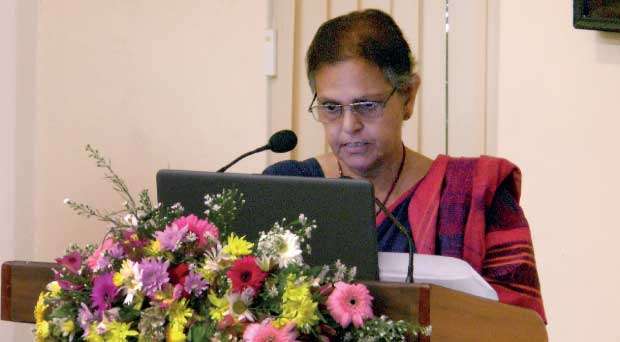
elegantly produced volume to commemorate 100 (1917-2017) years of the Girl Guides movement in Sri Lanka was compiled by a team and written primarily by Prof. Ryhana Raheem, formerly of the Open University of Sri Lanka, who was also a committed Girl Guide.

“Once a Guide, always a Guide,” she said when I protested that I don’t really have the credentials to review this book, because in my own time I had been an indifferent Girl Guide who dismally failed the simplest of tests. But her words resonate in the accounts in this book of a rather impressive group of women leaders who formed, shaped and navigated the Girl Guides movement in this country through the turbulent years of the 20th century and the first two decades of the 21st century.
This project to record the development of the Girl Guides movement is, in essence, an attempt at writing its history, never an uncomplicated task. This was compounded, as Prof. Raheem says in her introduction, by the loss of many old documents due to Colombo’s humidity and even the floods of 1990.
A significant part of the narrative is visual, with old sepia and black and white photographs showing Girl Guides and leaders evolving from wearing military style colonial dresses with hats to white saris and osaris
Still, these multiple sources have made for an impressive account of the Girl Guides movement that traces its growth alongside the sociopolitical history of the country. This interweaving of the particularities of the Girl Guides with the significant events of the country during the 100 years it covers is skillfully done in the narrative, making the text of interest to a much greater readership than the nostalgic ex-Girl Guide.
The book begins by tracing the beginnings of the movement in England, still very much the centre of the British Empire. The military roots of the Boy Scouts movement and its founder, the much decorated British army general Lord Baden Powell, veteran of the Boer War and the Great War, are no less evident in the origins of the Girl Guide movement with its principles of patriotism, collective industriousness, and leadership; its administrative units; its orders of hierarchy; its ritual salutes and march-pasts. All this was faithfully replicated in colonial Ceylon. First introduced by Jeannie Calverley at Girls’ High School Kandy, then at Methodist College Colombo and next at Southlands, Galle, Guiding spread fairly quickly to other missionary and local schools in the country.
A significant part of the narrative is visual, with old sepia and black and white photographs showing Girl Guides and leaders evolving from wearing military style colonial dresses with hats to white saris and osaris, and to the trouser suits and brightly-coloured T shirts of the present day field uniforms. The headquarters building remains a constant: built in the 1930s, and still the official hub, providing the venue for many activities.
Conservative girls’ schools
The book also attempts to describe the regional spread through an account of how guiding spread in the North and the East, specifically in Jaffna and in Batticaloa, and in the South, for example in Galle and Tangalle, in addition to its spread in Colombo and Kandy. In the conservative girls schools of Jaffna at the time, momentum to the spread of Guiding was gained, apparently, by the heroic deed of a Girl Guide called Ariyam Hudson Paramasamy who saved a girl from drowning in a well. Accounts like this, snippets of speeches during the considerable number of visits by Lord and Lady Baden-Powell to Ceylon (“the Guides of Ceylon are in fine fettle!” Lady BP is said to have declared at a rally) and of Miss Calverley, on her way to Colombo by ship to her post at Kandy Girls High School reading the Handbook for Girl Guides during the voyage, all add rather delicious touches to the book.
Independence and the subsequent decades of the 20th century saw the growth and the decentralization of the Girl Guides movement in Sri Lanka. Names changed to reflect the local culture, Brownies became Little Friends, and Owls, the leaders of Brownies were ditched for creatures who 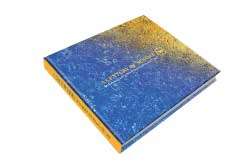 sound less inauspicious. The language of Guiding still remained largely English even after independence, even though the publication recalls how the Handbook for Girl Guides which Ms Calverley read on her sea voyage to Ceylon was translated into Sinhala and Tamil as early as in 1933 by Rene Blazé who worked in the “Vernacular Commission” of the time.
The accounts by successive Commissioners form a significant part of the narrative. These accounts present an interesting picture of the evolving tasks and responsibilities of the Girl Guides and how they responded to the changing needs of the country: Community based projects to uplift maternal health, child health, water and sanitation, and nutrition; skills training; leadership skills training; peace camps and training in conflict resolution, to interethnic friendship camps, Uthuru Mithuru, after 2009.
Sirimavo
Collaborations have included those with international organizations such as the Canadian International Development Agency (CIDA), Swedish International Development Agency (SIDA), UNICEF and UNDP, as well as networking with various departments of the Government. Impressive too it is to read about the recognition and honour that the Girl Guides received, often from the head of state no less (Prime Minister Sirimavo Bandaranaike was a Girl Guide in her day, a fact that appears to be capitalized on during the 1970s!).
Also of significance are the Commissioners’ accounts of how the movement survived during times of strife: the breakdown in communications with the UK during World War II, and surviving the disapproval of the shadowy rebel groups of the 1987-1989 Reign of Terror in the south (apparently the Tiger rebels approved of the Girl Guides). Chief Commissioner from 1983-1990 the late Venetia Gamage says that her tenure was a time when the country was caught between troubles in the North and in the South, forcing the Guides to be as low key as possible. The Commissioner during 1971 also recalls how Guiding came to a virtual standstill after the 1971 Insurrection and the ban on gatherings by youth. Tenacity however prevailed, of almost a missionary zeal; the movement managed to set up a Guide company for former female rebels of the Insurrection in a rehabilitation camp in Nugegoda in 1972 and for former female LTTE cadre in a similar camp in Ratmalana in 2010.
The book also attempts to describe the regional spread through an account of how guiding spread in the North and the East, specifically in Jaffna and in Batticaloa, and in the South, for example in Galle and Tangalle
A refreshing piece of honest, reflective writing is offered by two Commissioners, just when the reader might feel the absence of a more critical view on the SLGG movement. Yasmin Raheem, Chief Commissioner 2013- 2017 and Visakha Tillekeratne (the Current Chief Commissioner) consider the challenges faced by the Guides: the school-based structure of the movement that provides stability but has also engendered a very teacher-centric, top down approach to Guiding, the resistance to change, the lack of leadership skills to ensure sustainability, and the challenges to adapt to the changing needs of the 21st century. Interestingly, some of these challenges besiege most local organizations and hamper their growth.
In response to these challenges, the Guides, to their credit, have launched a Community Guiding project to include young women and girls who fall through the cracks of formal education such as street children, children of fishing communities and gypsy communities.
The Centenary publication, priced at Rs. 2500/= is available at the Headquarters of the Sri Lanka Girl Guide Association, Sir Marcus Fernando Mawatha, Colombo7.
From a movement that began in a handful of colonial schools in the early part of the 20th century, there are 60,000 Girl Guides in 2,000 schools all over the country today. The leadership of the Guides that in the early decades tended to be made up of the urban upper classes appears to be changing. Local languages are increasingly more accommodated in the activities of Guiding, while, at the same time, an international outlook is sustained.
This book manages to capture all this and much more in its pages. It is a far cry from the usual “commemorative volumes” that are often well intentioned, but end up being rather dismal indulgences in nostalgia, hastily produced, besieged by flowery, platitudinous prose, and non-existent editing. With its well-written content, meticulous editing and a sparse, but beautiful design, “A Century of Service” looks good enough to adorn your coffee table, and to learn about a fairly formidable organisation that is a significant part of contemporary Sri Lankan history. Not to mention becoming a part of any Girl Guide’s life, because, you know, “once a Guide, always a Guide.”
(The writer is the Head of the Department of English at the University of Kelaniya)
23 Jun 2026 2 hours ago
23 Jun 2026 6 hours ago
23 Jun 2026 8 hours ago
22 Jun 2026 22 Jun 2026
22 Jun 2026 22 Jun 2026