11 Oct 2025 - {{hitsCtrl.values.hits}}
By Huzefa Aliasger
Sri Lanka’s climate is warming rapidly, with temperature increases of 0.95°- 1.14°C expected by 2040, the World Bank said yesterday.
In a report, the World Bank said that greater heat stress and water uncertainty undermine livelihoods, especially for rural farmers and urban workers, and is expected to raise poverty levels by a further 1.8 per cent from the current rate of 24.5 per cent. The report on the country’s climate and development also mentioned that climate change poses significant challenges for Sri Lanka, such as potential economic losses that could range from 3.3 to 3.5 per cent of gross domestic product (GDP) by mid-century due to reduced labour productivity from heat stress, decreased agricultural yields, and intensified flooding in both urban and rural areas.
Labour heat is identified to be the most severe condition of climate change that will affect economic loss, according to the World Bank. The second most severe condition is inland flooding.
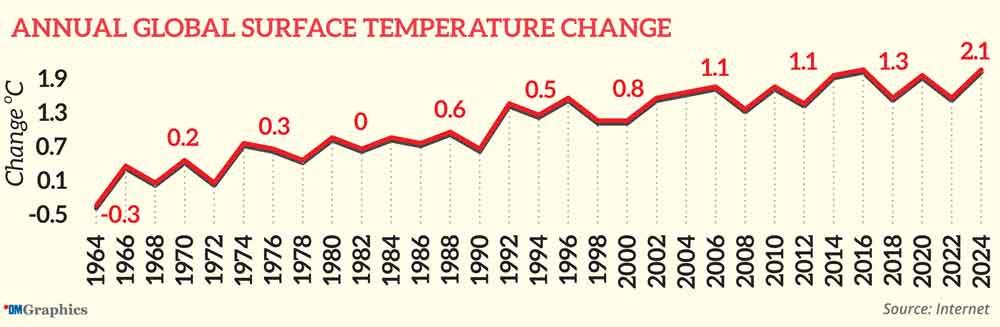
According to the United Nations Development Fund (UNDP), the last time El Niño affected Sri Lanka, between 2016 and 2017, more than 2 million people were affected, first by flooding and landslides, and then by a severe drought. Nearly half of Sri Lanka’s population, 48.8 per cent, lacks disaster preparedness, a key vulnerability factor aggravated by accelerating climate risks, while 35.6 per cent are vulnerable and deprived in relation to water sources.
The country’s natural resources are drivers of growth and buffers against climate impacts for the 80 per cent of Sri Lankans residing in rural areas and working in key sectors like tourism, agriculture and fisheries. However, these resources face continued degradation, amplified by climate impacts such as severe floods, droughts, landslides, and heatwaves.
04 Jun 2026 4 hours ago
04 Jun 2026 5 hours ago
04 Jun 2026 6 hours ago
04 Jun 2026 6 hours ago
04 Jun 2026 6 hours ago