16 Sep 2025 - {{hitsCtrl.values.hits}}
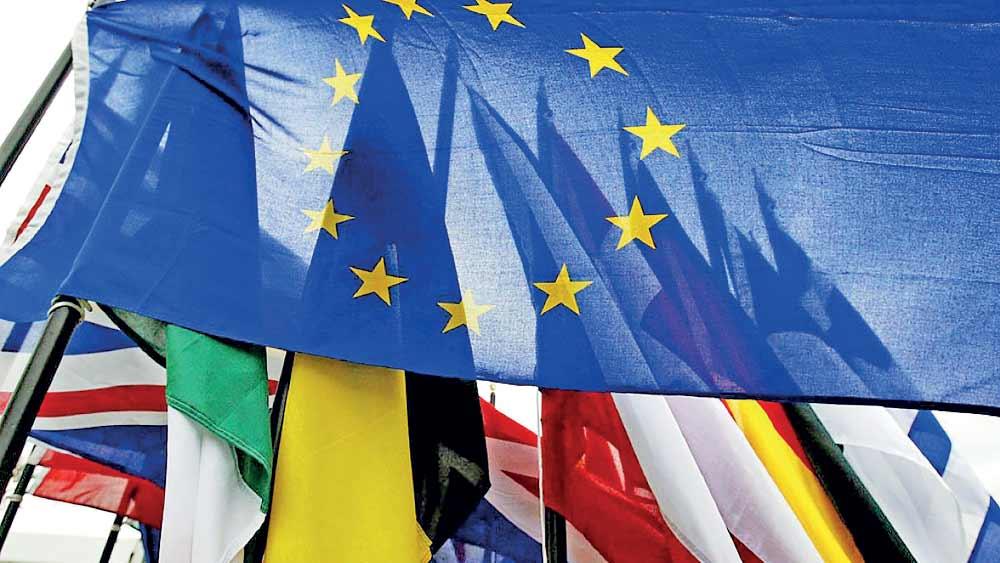
 Deforestation regulation EU will ban goods grown or produced on land recently cleared of forest; exporters must provide geo-location data and documentation
EU authorities can investigate supply chains on suspicion of forced labour; companies must present credible evidence of compliance
Sri Lanka’s strong labour laws offer an advantage, but exporters must build human-rights due-diligence systems and monitor high-risk suppliers
Sri Lanka remains attractive in textiles, apparel, rubber and agricultural goods benefiting from GSP+ low tariffs, and has growing potential in IT and business services despite no GSP+ cover
Many of these don’t apply to Sri Lanka and are not so important, but at least two of them do. It is important to take this into account. It’s still a while. It’s not so long until this comes into force. What the EU deforestation regulation actually demands is that companies can only place goods on the EU market if they have not been the cause of deforestation
Companies are expected to show credible evidence that no forced labour is involved. What’s important about this law is that it applies to all sectors and all countries. There are no exceptions. Anyone importing into the EU or selling goods inside the EU is in the scope of this law
EU imports from Sri Lanka amounted to 2.6 billion Euros in 2023. Sri Lanka is now under watch by the European Union for the extension of the GSP+ under the revised criterion to be effective after 2027
By Kelum Bandara
In the wake of Sri Lanka facing headwinds in its export growth because of U.S. tariffs and GSP+, it is now poised to encounter further challenges to overcome in accessing the European Union market because of new laws that will come into effect after 2027, according to a German expert.
In a virtual address to the Sri Lankan stakeholders from Berlin last week, Markus Loning, an expert on human rights and responsible business, said one of them is the EU deforestation regulation, which is relevant to the import of the items - wood, cocoa, coffee, palm oil, leather and beef, soy and rubber.
“Many of these don’t apply to Sri Lanka and are not so important, but at least two of them do. It is important to take this into account. It’s still a while. It’s not so long until this comes into force. What the EU deforestation regulation actually demands is that companies can only place goods on the EU market if they have not been the cause of deforestation,” he said.
Elaborating on the reason for the enforcement of such a regulation, he said the European Union does not want to incentivise further deforestation in any way.
“We want to refrain from buying products grown on plots of land where trees have been cut recently. They (European Union) are taking a baseline, which is a couple of years back. Then, they are looking at what is the plot of land, where this material comes from. That is why you will need to collect geo-location data and documents. They will ask whether this plot of land has been deforested recently. So any product that is linked to forest destruction will not be able to enter the European single market,” he said.
He said the next would be theEU forced labour regulation. Once this law comes into effect, the European Union authorities will investigate into supply chains if there is a suspicion of forced labour, but the burden of proof is different from the deforestation regulation.
The burden of proof is with the authorities in this case. The authorities must have suspicion and evidence. They will then go for an investigation, and the supplier will be able to demonstrate that this is true or not,” he said.
He said that it should be ensured that the goods imported are not made with the help of forced labour.
“Companies are expected to show credible evidence that no forced labour is involved. What’s important about this law is that it applies to all sectors and all countries. There are no exceptions. Anyone importing into the EU or selling goods inside the EU is in the scope of this law. This is something that has been heavily discussed back and forth, but at the end of the day, there was quite a strong consensus here that this is something that the EU is going to stick to,” he said
However, he said that Sri Lanka has very good labour laws in place and the standards are strong.
Key questions will target high-risk supply chains, including Sri Lankan factory suppliers. Companies must set up a human-rights due-diligence system to show their own operations meet legal standards—health, safety, wages and working conditions—and that they monitor high-risk suppliers. Relevant certificates support and document these efforts, according to him.
There’s a clear business opportunity for Sri Lankan companies as an alternative production base—especially in textiles and apparel, rubber-based and agricultural goods, which benefit from GSP+ low tariffs. In addition, IT and business services have strong potential to grow in the EU market, even though they are not covered by GSP+, as this applies to all business with Europe, he said.
EU imports from Sri Lanka amounted to 2.6 billion Euros in 2023. Sri Lanka is now under watch by the European Union for the extension of the GSP+ under the revised criterion to be effective after 2027.
04 Jun 2026 3 hours ago
04 Jun 2026 3 hours ago
04 Jun 2026 4 hours ago
04 Jun 2026 4 hours ago
04 Jun 2026 4 hours ago