04 May 2026 - {{hitsCtrl.values.hits}}


Nirma de Silva Wijeyeratne
Nirma de Silva Wijeyeratne’s literary journey extends beyond this debut collection. Her work has appeared in a range of UK-based journals and publications, including Acropolis, Green Ink Poetry, Roots, Amethyst Review and Southlight.
At the heart of Where the Kingfisher Waits lies a deep engagement with the natural environment. The poems are rich in sensory detail: birds rise suddenly into patterned flight, waterholes shimmer under the shade of kumbuk trees, and lotus and jasmine appear not merely as decorative elements but as carriers of cultural memory.
This awareness is further underscored by environmental architect and author Sunela Jayewardene, who notes the presence of “a delicate nostalgia for the loss of lifestyles and landscapes” throughout the collection.
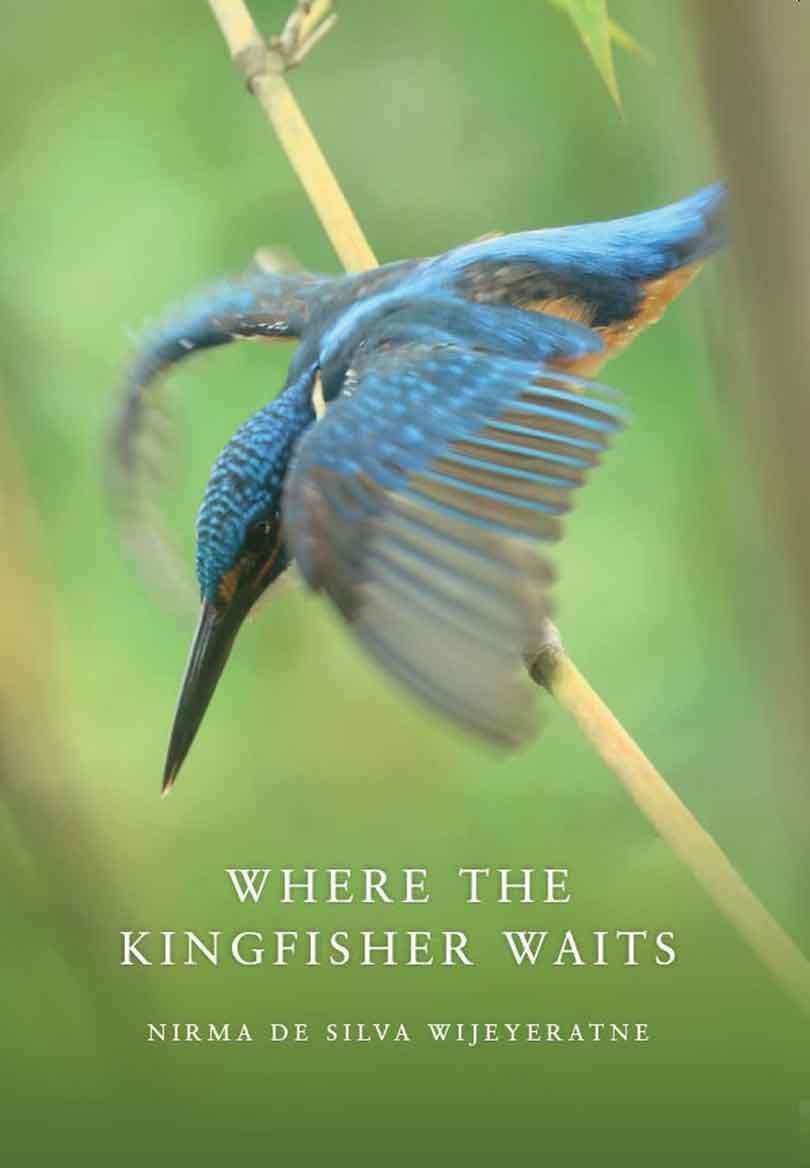
 A new collection of poetry by Sri Lankan writer Nirma de Silva Wijeyeratne is drawing critical attention for its evocative exploration of nature, memory and place, offering readers a reflective journey through landscapes both intimate and expansive.
Titled Where the Kingfisher Waits, the 65-page volume gathers poems inspired by the natural world, cultural heritage and lived experience. Through vivid imagery and finely observed detail, the collection moves seamlessly across settings — from sunlit rice fields and quiet forest clearings to ancient stupas and lakeside vistas — grounding each poem in a strong sense of place while inviting deeper emotional resonance.
Internationally acclaimed author Helen Macdonald has praised the collection for its sensitivity and craftsmanship. Having visited Sri Lanka for literary festivals and experienced its landscapes firsthand, she highlights the poet’s ability to weave together “memory and place, history and nature,” describing the work as one that reveals “a great richness of meaning from what lies all around us.” Her endorsement situates the collection within a broader global appreciation for nature writing that is both intimate and observant.
At the heart of Where the Kingfisher Waits lies a deep engagement with the natural environment. The poems are rich in sensory detail: birds rise suddenly into patterned flight, waterholes shimmer under the shade of kumbuk trees, and lotus and jasmine appear not merely as decorative elements but as carriers of cultural memory. The language is precise yet lyrical, often incorporating local terminology that anchors the work firmly in Sri Lanka’s ecological and cultural landscape.
Travel writer John Gimlette, known for his reflections on Sri Lanka, describes the collection as “exquisite poems from the heart and the forest.” His observation points to one of the book’s defining qualities — its ability to balance beauty with a subtle awareness of loss. Beneath the lush imagery lies an acknowledgment of fragility, whether in vanishing habitats or shifting human connections to the land.
This awareness is further underscored by environmental architect and author Sunela Jayewardene, who notes the presence of “a delicate nostalgia for the loss of lifestyles and landscapes” throughout the collection. Several poems engage directly with themes of conservation, reflecting on drying waterholes, diminishing biodiversity and the vulnerability of wild ecologies. These elements are handled with restraint, avoiding overt didacticism while quietly urging reflection on environmental stewardship.
Yet the collection is not solely outward-looking. Interwoven with its environmental themes are deeply personal narratives that explore grief, transition and healing. The poet reflects on the loss of her father, capturing moments of stillness that emerge amid emotional turbulence. In these passages, nature becomes both witness and companion, offering a space for contemplation and renewal.
Sri Lankan poet Ramya Chamalie Jirasinghe emphasises the collection’s emotional accessibility, describing it as a book to carry and return to during difficult moments. She observes that its “evocative and sensitive” portrayal of life and landscape reaffirms the capacity for healing and regeneration, suggesting that the poems resonate not only as artistic expressions but also as sources of quiet solace.
Nirma de Silva Wijeyeratne’s literary journey extends beyond this debut collection. Her work has appeared in a range of UK-based journals and publications, including Acropolis, Green Ink Poetry, Roots, Amethyst Review and Southlight. Her poems, often centred on nature and the environment, have also been featured in publications by the London Natural History Society and the Marylebone Birdwatching Society, reflecting a sustained engagement with ecological themes across different contexts.
In addition to her published work, the poet has been active in live literary spaces, participating in readings and collaborative performances in London, including an event at the House of Lords. She has also contributed to interdisciplinary programmes that combine poetry with immersive nature experiences, highlighting her interest in bridging artistic expression with environmental awareness.
One such initiative involved a collaboration with Malabar Hill, a boutique hotel in Sri Lanka, where poetry readings were held in settings such as lowland rainforests and rice fields. The hotel has supported the publication of Where the Kingfisher Waits, with its management expressing a commitment to conservation and the arts. By placing copies of the book in guest villas, the property aims to encourage visitors to engage more deeply with the natural surroundings through literature.
The physical production of the book mirrors its thematic focus. Compact and accessible, the soft-cover volume invites readers to dip in and out, reflecting the episodic yet interconnected nature of the poems themselves. Each piece stands independently while contributing to an overarching meditation on place, memory and transformation.
In a world often marked by noise and distraction, Where the Kingfisher Waits offers an alternative rhythm — one that privileges observation, stillness and attentiveness. Its poems do not demand urgency; rather, they unfold, rewarding readers who linger over image and language.
Now available at leading bookstores across Sri Lanka and distributed island-wide, the collection is priced at LKR 1,100. With its blend of lyrical beauty, environmental awareness and emotional depth, Where the Kingfisher Waits marks a significant addition to contemporary Sri Lankan poetry, inviting readers to pause, reflect and reconnect with both nature and themselves.
01 Jul 2026 20 minute ago
01 Jul 2026 2 hours ago
01 Jul 2026 2 hours ago
01 Jul 2026 2 hours ago
01 Jul 2026 2 hours ago