
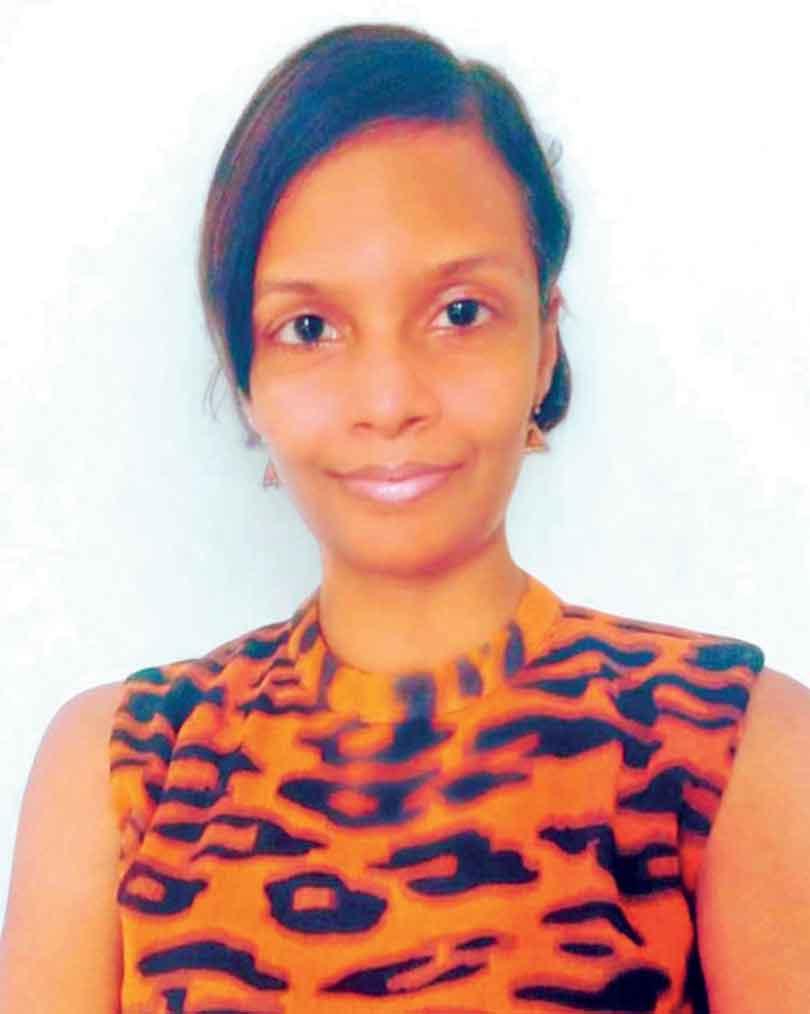
Sashika Corea
I just want to very importantly add, that when a medical doctor is needed (like in cases of chemical imbalance/clinical depression) or a special need is observed, appropriate referral will always be given towards receiving the needed additional help, whilst being continued to be supported through counselling.
More schools are accommodating of school counsellors and companies do more now to create awareness of mental health issues and resources for help even amongst their staff
 By Kshalini Nonis
Counselling is important as it offers a safe space to discuss difficult thoughts, emotions, and experiences, leading to improved mental health and emotional well-being. It helps people develop coping strategies for stress, manage relationships, increase self-awareness, and build resilience.
We has a chat with Sashika Corea Grief and Bereavement Counsellor/Person-Centered Counsellor at STILL Counselling.
Q Can you tell us briefly about your Counselling Service STILL?
STILL Counselling bases its practice on the experience of American trial lawyer Louis Nizer (1902–1994) who found with his interactions with numerous humans undergoing various difficult situations, that “words of comfort skilfully administered are the oldest form of therapy known to man”.
The healing capacity of a kind presence and comforting words (not rushed or insincere but thoughtful and meant on the part of the Counsellor) have been an essential form of therapy and a long-standing method of providing solace to human beings for many years.
STILL brings that solace as it cannot be over emphasised that to the troubled mind, a thoughtful and empathetic communication can be a profound source of healing and support within the therapeutic practice.
STILL Counselling is based on the power of human connection and the impact of well-chosen words in easing suffering and fostering confidence during times of challenge.
Through “STILL,” I provide on-line and in-person (location - Thalawathugoda) counselling for adults.
As strict confidentiality is maintained (apart from specific and special circumstances which are explained), the client is encouraged to answer honestly and freely.
Once the patient-intake form and consent form are returned, sessions will be scheduled for the counselling process to begin.
Q Is there any particular reason you chose the name STILL?
Whilst STILL counselling is for people of all faiths, in my own life from childhood to adulthood, there was a Reuben Morgen lyric and thought called “STILL” which encapsulated my life being held by a faithful anchor during times of trials and tribulations. The lyrics ends with two lines : “Father, you are King over the flood. I will be still, know You God”.
So the concept of how being Still in the midst of chaos is a reality has always been meaningful to me.
I especially chose the name STILL because the client comes from a place of turbulence and restless worry.
Q What are the types of counselling services offered at STILL?
Counselling services STILL Counselling offers include
Person-Centered Counselling : confidential sessions for anyone above 18 years of age.
Grief and Bereavement Counselling (for all ages) : confidential sessions for anyone who is struggling after losing a loved one.
Q What is Person-Centered Counselling and what does it comprise?
Person-Centered Therapy is confidential therapy built on unconditional positive regard, empathetic understanding and true genuineness and care towards the client seeking counselling.
Person-Centered Counselling is for anyone who feels down, lost, confused who longs to speak with someone but feels afraid due to a variety of reasons.
Person-Centered Counselling, also known as “client-centered therapy” is talk therapy during the session, which provides a supportive and non-judgmental space for the client to fully explore their thoughts, feelings, and experiences
.
Q What is its main goal?
In weekly sessions, the goal is to:
Build a trusting relationship
Foster self-awareness and understanding
Gently empower clients to see that there are options before them, making it possible to make their own decisions.
Q Can you tell us about Grief and Bereavement Counselling and how it would help someone to overcome the loss of a loved one?
When a person loses someone they love, they often keep these feelings of deep sorrow, sadness and missing locked up inside and within them, because the expectation in Sri Lankan society is to “be strong and carry on for the sake of spouse or children etc”.
But grief needs to be processed.
As human beings with feelings, we need to have a place in which to express and be true to these emotions of loss that we feel, before we can heal again. This is where STILL Counselling offers service.
For the grieving client who is struggling to cope with his or her loss, counselling skills of active listening, empathy, and genuineness will be used, to create a safe environment, allowing clients to express themselves freely and work through challenges at their own pace.
Following a tailor-made model of a maximum of 9 sessions, the client will not only receive understanding and acceptance of his/her pain but be helped to understand attachment and how it leads to very natural emotions of loss and grief.
I just want to very importantly add, that when a medical doctor is needed (like in cases of chemical imbalance/clinical depression) or a special need is observed, appropriate referral will always be given towards receiving the needed additional help, whilst being continued to be supported through counselling.
Q Can you explain what you mean by saying that grief needs to be processed?
Grief needs to be processed. Loved ones who are sorrowing, often don’t get an opportunity to process their emotions which can potentially lead to prolonged pain and delayed healing.
Like you asked, what does “processing emotions after a death” actually mean?
Processing emotions takes place within the counselling process. It involves acknowledging, understanding, and working through the complex feelings that arise from grief.
Processing emotions also involves reflection and introspection. In the session, we take time to reflect on the person who passed away, to feel and acknowledge the relationship you had with them, and the impact they had on your life.
Q What are the benefits of on-site counselling to online counseling?
Both on-line counselling and in-person counselling have benefits of their own for the client, based entirely on the client’s preference and personality type.
Some introverted people are shyer and open up far better with someone they feel they don’t know at first, when they see someone on a screen.
Counselling has only just become more widely used. Sri Lanka is a conservative culture where as a people we are not necessarily accustomed to air our personal emotions unlike in the west. We are taught to keep things to ourselves, so to talk to someone and open up at first can feel daunting.
Clients find the physical counselling space to provide a safe and calming environment, conducive to therapy, so some like to have counselling in-person each time.
Q Finally can you tell us whether in Sri Lanka more people are going for counselling unlike some years ago when it was not the done thing?
Despite there being nothing to ever feel ashamed about, needing counselling was erroneously seen as a failure, a weakness, a weak personality-defect and even an obstacle to being eligible for marriage or even certain types of employment.
However things are looking up. I do believe that things have been slowly moving towards a better understanding for an essential need for counselling in Sri Lanka.
More schools are accommodating of school counsellors and companies do more now to create awareness of mental health issues and resources for help even amongst their staff.
There’s also a growing trend of people in Sri Lanka seeking counselling services.
People know that even the very counsellors who are so proficient and well-put together, are acquainted with shock, pain, sadness and turbulence in their own lives as no human is exempt from going through circumstances that have needed a professional helping hand.
Q What are the reasons for this?
Several factors have contributed to this positive shift.
One is the growing awareness in Sri Lanka even through social media discussions and more open sharing of experiences.
Many organisations including the Sri Lanka National Association of Counsellors have done tremendous work to help raise awareness about mental health issues and the benefits of counselling.
Counselling being available reminds us all that it’s okay to seek help when you feel deeply and find it hard to confide in the immediate world around you.