22 Oct 2025 - {{hitsCtrl.values.hits}}
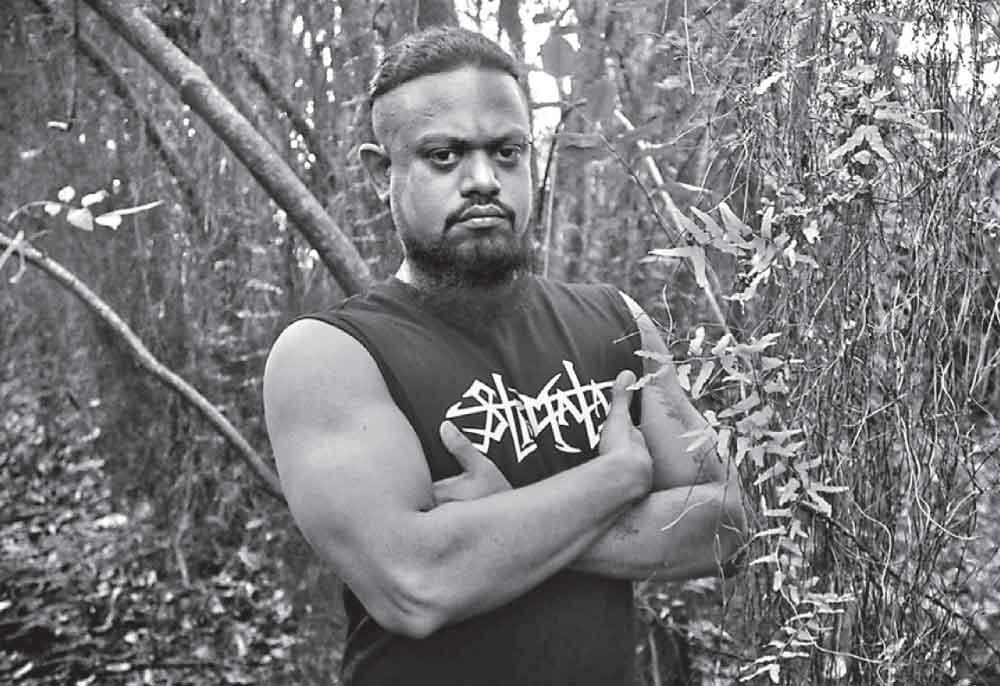
When you hear the name Suresh de Silva, you might first think of heavy riffs, thunderous drums, and a frontman who helped define Sri Lanka’s metal scene with his band Stigmata. But there’s a lot more to this creative powerhouse than just music.
He’s a Creative Consultant, a Brand and Business Strategist, a Creative Director, and the brain behind AION Strategy (Pvt) Ltd and SKYN Family Wellness Spa. Oh, and when he’s not busy changing how brands think, he’s lecturing on Digital Platform Strategy & Social Media Marketing — sprinkling a little rockstar flair into academia.
On today’s Buzz with Danu, I dive into his new book Stigmatized: Lessons from My Storms— a brutally honest, poetic, and powerful journey through chaos, healing, and redemption.
So turn up the volume, pour yourself something strong (even if it’s just coffee, and get ready to meet the man who turned pain into poetry, storms into songs, and reflection into art — Suresh de Silva.
Seven years is a long journey — what was the first spark that made you start writing “Stigmatized”?
 I can’t recall the exact moment the first spark ignited per se, but I do remember reaching a pivotal crossroads in my life - a time when I had endured and overcome countless challenges, and was finally beginning to carve a new chapter for myself. For years, I lived a reckless, abrasive, and self-destructive existence -intoxicated in more ways than one. I eventually realised that unless I changed my habits, choices, and behaviour, I wouldn’t survive much longer.
That awakening — that decision to rise from the proverbial ashes - became the genesis of Stigmatized: Lessons from My Storms. What began as fragments of reflection and catharsis slowly evolved into something far more personal: part biography, part confession, and part meditation on what it means to fall, fail, and find your way back to yourself.
The title is powerful — “Lessons from My Storms.” What kind of storms are we talking about?
Emotional? Social? Internal? All of the above - and more. I’ve lived a profoundly eventful life, one that’s been marked by extraordinary highs and devastating lows. There have been moments of tragedy, loss, and loneliness, along with fleeting flashes of triumph and grace. But the storms that shaped me weren’t just external; they were deeply emotional, spiritual, and internal.
Stigmatized: Lessons from My Storms became my way of confronting those tempests - to reflect, to understand where I was coming apart at the seams, and to begin the process of forgiveness and healing. Some of those storms I’ve chosen to shed light on in the book and share, not as mere tales of struggle and suffering, but as pathways to self-awareness, growth, and redemption.
You call the book “Stigmatized.” What personal experiences shaped that choice of word?
The title Stigmatized carries several layers of meaning for me. My band Stigmata, which I co-founded with Tennyson Napoleon, has been an inseparable part of my existence - it’s in my blood, my spirit, my very DNA. We have a song by the same name on our debut album Hollow Dreams - Sri Lanka’s first-ever heavy metal album - an eleven-minute odyssey that moves through phases of beauty, chaos, serenity, and intensity. Much like life itself, it shifts through seasons of calm and storm.
The word Stigmatized therefore felt almost poetic in how it encapsulated my journey. It echoes the music, the philosophy, and the identity that Stigmata has represented for over two decades, but it also speaks to something far more personal. I have often felt stigmatized by others, yes - misunderstood, misjudged, and at times vilified - but in truth, I was also guilty of stigmatizing myself. My own actions, choices, and demons became the very labels that marked me.
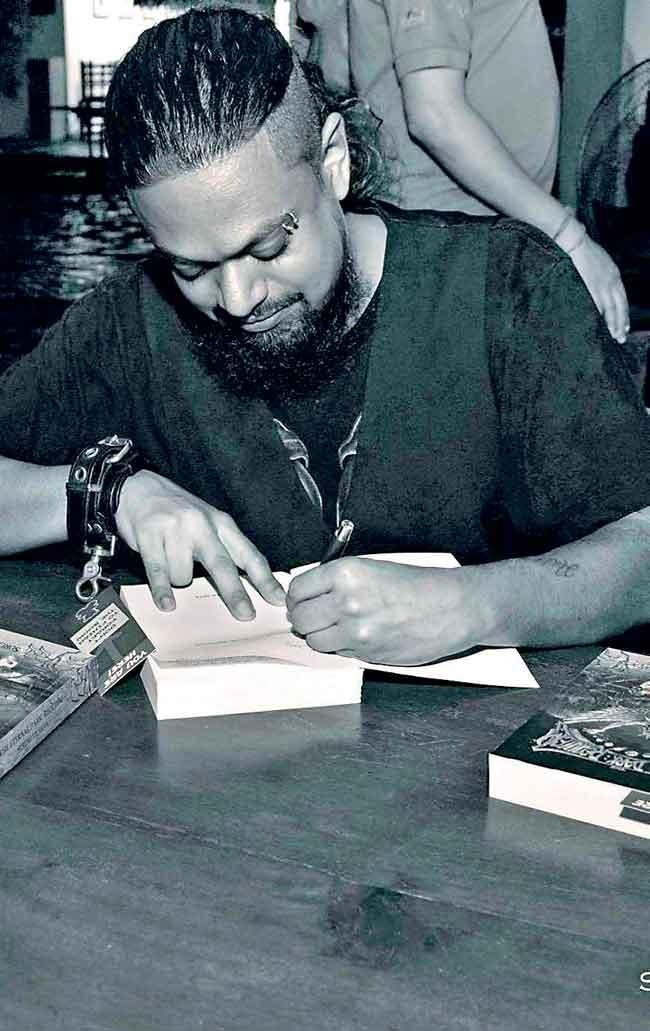
On a deeper, almost spiritual level, the title also symbolizes conscientious exposure - the courage to reveal my wounds, my scars, my truth for the world to see. Writing this book was my way of doing exactly that: an act of vulnerability and catharsis that took seven years of relentless reflection, discipline, and brutal honesty.
In our part of the world - Sri Lanka, South Asia, and much of Asia in general - there are deep-seated cultural notions that discourage men from expressing vulnerability. We’re conditioned to “bite the bullet,” “man up,” and simply carry on. Admitting to anxiety, depression, or emotional struggle is often seen as weakness. That’s absolute bullsh*t.
If someone picks up your book and reads just one page — what do you hope they feel?
It really depends on the page they turn to because this book doesn’t shy away from the dark and disturbing truths of my life. There are raw, unsettling passages where I’ve left no stone unturned, and others that are tender, redemptive, even quietly triumphant. But if a reader happens to land on one of the more optimistic sections, I hope they feel a sense of hope - the reminder that even the fiercest storm will eventually pass.
Was there a chapter that was the hardest to write — one that made you relive something painful or deeply personal?
Yeah. There are few in there. The ones about mom and dad were hard. The ones about losing some of my pets was hard. The ones on cranking open those rusty old attic doors of the mind remembering how as a kid I was bullied, and was very much alone was hard. Having to absolve myself of guilt and shame by admitting and penning how I wanted to end it all – that was very tough. There’s a fair share of stuff in there that was a dive through some dark and deep rabbit holes to places I never wanted to revisit. In hindsight writing and finishing this was one of the hardest things I have ever done in my life.
Seven years of reflection — that’s practically a relationship with your own thoughts. How did you keep going through that time?
To put it into perspective a lot had changed or begun to change in the last half decade or so. I have a family now: I am blessed with a wife, a beautiful daughter, we have a space we can call home that’s our own. I decided to pursue my higher education, I have a consultation firm, a few other business interests, I lecture teaching Digital Marketing, I have my own long form podcast called the Island Renaissance, am working on my debut solo album, and Stigmata is in a better place than it has been in a very long time with us celebrating our 25 year anniversary this year, working on new music with a Grammy nominated producer Jed Brewer in the US, we have tours around the world, and are working on our 5th album…so I have had some incredibly positive things to keep me anchored and grounded while having to reflect on some of the darkest periods of my life.
Did writing this book heal you, haunt you, or humble you?
I’d like to believe it did all three - it healed me, haunted me, and humbled me. Sometimes in droves. Sometimes simultaneously. And sometimes, each taking its own cruel or tender turn.
Writing Stigmatized was a reckoning - with my past, my choices, and my own humanity. There were nights it tore open old wounds I thought had long scarred over, and others when it brought a strange peace I didn’t know I was searching for. In the end, it reminded me that healing isn’t linear, forgiveness isn’t easy, and humility often comes at the cost of confronting your own pain, loss, and grief.
Were there moments when you wanted to give up — and if yes, what pulled you back to the pen?
Oh yeah. Absolutely.There were countless moments when I wanted to give up. Sometimes, I’d find myself shaking, sweating, and emotionally drained without even realising how much I’d been holding inside. Writing this book was not easy - it demanded revisiting memories I had long buried, confronting truths I’d long avoided.
What always pulled me back to the pen was gratitude. Gratitude for the life I still have, and above all, for my daughter, Calli; the greatest gift I’ve ever been blessed with. She reminds me that there’s light even in the darkest moments.
And if someone like me could survive the worst of life’s storms, maybe - just maybe sharing my stories could help someone else weather theirs. That thought gave me purpose. But truthfully, there was also something deeply personal about it - I needed to finish this journey for myself. Writing Stigmatized became a form of therapy, a way to unburden, to finally exorcize the demons of the past to be able to move forward a lot lighter, freer, and a bit more at peace.

You’re clearly someone who thinks deeply — do you write more for yourself, or for the reader who might need healing too?
It’s a juxtaposition. I start writing for myself nearly always – that’s how it stems from an honest, sincere place – however at some point along the way it starts to take shape into something much more than I intended with unexpected meaning and greater purpose and then I work hard to see it through, because it might be of value to someone other than myself. This is the same when I write lyrics.
Let’s talk stigma — it’s a heavy word. What are the biggest stigmas you think we still don’t address enough in our society?
That’s a great question - and there’s a lot to unpack. But to keep it in context with the book, I’d say one of the biggest and most neglected stigmas we still face is around men’s mental health.
In our part of the world - Sri Lanka, South Asia, and much of Asia in general - there are deep-seated cultural notions that discourage men from expressing vulnerability. We’re conditioned to “bite the bullet,” “man up,” and simply carry on. Admitting to anxiety, depression, or emotional struggle is often seen as weakness. That’s absolute bullsh*t.
Human beings are multi-dimensional. A man can be sensitive and still steadfast in his values. He can be compassionate without being naïve. He can be strong and decisive yet carry grief and despair within. We all weather storms – and no two storms are ever the same.
I don’t necessarily believe medication is the only solution to healing, though for some it might be required. What I do believe is that society as a whole - families, schools, workplaces, communities - must take greater responsibility for recognising and addressing the deterioration of mental health. It’s not just a personal battle anymore; it’s a collective one.
We need to move beyond treating the symptoms and start understanding the causes - to foster real empathy, dialogue, and meaningful action. Only then can we begin to heal as individuals and as a society.
Do you believe vulnerability is a strength or a risk -especially in a culture that teaches us to hide our pain?
Vulnerability is a choice - suffering is not. Yes, there’s always a risk in being vulnerable. When you open yourself up, you expose parts of you that are fractured; you risk being misunderstood, manipulated, or even hurt. But I don’t believe vulnerability is a weakness. In fact, it takes far more courage, strength, and self-awareness to accept and articulate your vulnerability than to conceal it behind pretence or pride.
29 Jun 2026 9 minute ago
28 Jun 2026 8 hours ago
28 Jun 2026 28 Jun 2026
28 Jun 2026 28 Jun 2026