20 Jan 2025 - {{hitsCtrl.values.hits}}
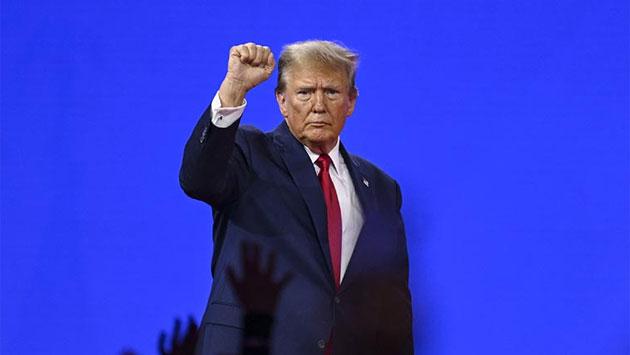 On January 20, 2025, U.S President-elect Donald Trump will take the oath of office for a second, non-consecutive term as the 47th President of the United States, making history as only the second president in U.S. history to do so, after Grover Cleveland in 1893.
His victory over Democratic vice president Kamala Harris in the 2024 election sets the stage for his return to the Oval Office, an office he previously occupied from 2017 to 2021. Trump's return to power marks a significant moment not only in American politics but also in global geopolitics, with major ramifications for regions such as South Asia. As the U.S. grapples with domestic challenges and international tensions, the Trump 2.0 presidency will have profound implications for the countries of South Asia, many of which are already navigating a complex landscape of economic growth, security concerns, and shifting alliances.
Trump will take the oath of office from inside the Capitol Rotunda on Monday due to forecasts of intense cold weather, upending months of meticulous planning for a massive outdoor event with crowds sprawling down the National Mall. The Rotunda is prepared as an alternative for each inauguration in the event of inclement weather. The swearing-in was last moved indoors in 1985, when President Ronald Reagan began his second term. Monday’s forecast calls for the lowest Inauguration Day temperatures since that day.
As President Trump enters the Oval Office for his second term, he is determined to make a dramatic start. After weeks of planning, Trump’s administration has set the stage for a “shock and awe” debut, designed to impress both domestic and international audiences. However, even before his second term has officially begun, he is already facing immediate challenges, notably the crisis of raging wildfires in Los Angeles, which threatens to distract from his high-profile moment.
As the second term of President Trump begins, his approach to global politics, particularly in South Asia, will continue to be defined by his “America First” doctrine. His policies have historically been unilateral and transactional, prioritizing U.S. economic and strategic interests, often at the expense of global multilateral frameworks and alliances. The region, with its geopolitical significance, economic diversity, and increasingly central role in the U.S.-China rivalry, will face both challenges and opportunities in the coming years.
Under President Trump’s first term (2017 -21), the United States pursued a foreign policy that was distinctly transactional and often unpredictable. His administration was driven by a desire to renegotiate or withdraw from existing international agreements and prioritize U.S. economic and security interests. This approach manifested in various ways: from trade wars with China to withdrawing from the Paris Climate Accords and the Iran Nuclear Deal, to imposing heavy tariffs on imports from various nations, including China, Mexico, and Canada. Trump’s emphasis on bilateral negotiations and direct, cost-benefit analyses marked a stark departure from traditional multilateral diplomacy.
For South Asia, the implications of this approach are far-reaching. Trump’s policies—ranging from trade tariffs to military alliances—directly affect the region’s economic and security landscapes. India, a key partner in countering China’s growing regional dominance, benefited from his administration’s emphasis on strengthening U.S.-India ties. Meanwhile, other South Asian nations, particularly those with less direct strategic importance to the U.S., have found themselves navigating the complexities of his transactional foreign policy.
Among the most significant beneficiaries of Trump's foreign policy in South Asia is India, which has emerged as a cornerstone of U.S. strategy in the Indo-Pacific region. Under Trump’s first term, U.S.-India relations deepened, driven by shared concerns over China’s assertive behavior in the region. As the U.S. continues to pivot to an Indo-Pacific strategy aimed at countering China’s growing influence, India’s role as a strategic partner has never been more crucial.
Trump 2.0 is likely to further bolster this relationship, with continued support for India’s defense and security needs. The U.S. has already become India’s third-largest source of arms, following Russia and France. In addition, strategic defense partnerships—such as the Communications Compatibility and Security Agreement (COMCASA) and the Basic Exchange and Cooperation Agreement for Geospatial Cooperation (BECA)—which were finalized during Trump’s first term, are expected to deepen military collaboration and intelligence sharing between the two countries.
The U.S. is also likely to provide India with enhanced military technologies, particularly in areas such as cybersecurity, space exploration, and naval defense. Given the rising tensions in the South China Sea and the Indian Ocean, the U.S. will likely look to India to play an even larger role in maintaining regional security, particularly in maritime affairs. The Trump administration’s emphasis on countering China will likely result in greater cooperation between the U.S. and India, particularly in joint military exercises, intelligence sharing, and defense technology.
However, India’s relationship with the U.S. under Trump will not be without challenges. The two countries are likely to clash over trade issues, including tariffs and intellectual property rights. Trump has repeatedly criticized India for its trade barriers and has pressured India to open up its markets further. During his first term, India lost its Generalized System of Preferences (GSP) status, which allowed it to export goods to the U.S. duty-free. These trade tensions are expected to persist in Trump 2.0, with India needing to balance its growing defense ties with the U.S. against its desire to protect its domestic industries and economic autonomy.
In contrast to India, Pakistan’s relationship with the U.S. under Trump’s first term was fraught with tension, largely due to Pakistan’s role in the war on terror and its strategic ties with China. The U.S. cut off security assistance to Pakistan in 2018, placing it on the Financial Action Task Force’s (FATF) grey list, and repeatedly criticized Islamabad for harboring terrorist groups that targeted U.S. interests in Afghanistan.
Under Trump 2.0, it is unlikely that the U.S.-Pakistan relationship will undergo a major shift, unless there is significant change in Pakistan’s domestic policies regarding terrorism and its relations with China. Trump’s approach to Pakistan has often been blunt, with a focus on pressuring Islamabad to take a more active role in counterterrorism efforts. While Trump’s rhetoric may soften at times, his administration’s policies toward Pakistan are unlikely to change unless there is a significant shift in Islamabad’s approach to these issues.
At the same time, Pakistan’s strategic importance in the region cannot be ignored. As the U.S. continues to focus on containing China’s influence in the Indo-Pacific, Pakistan’s relationship with China will remain a key factor in shaping U.S. policy. If Trump seeks to bolster its relationship with India, as expected, this could exacerbate tensions with Pakistan, especially if the U.S. pushes Islamabad to curtail its ties with Beijing.
For Bangladesh, Trump 2.0 presents both economic opportunities and challenges. The U.S. remains Bangladesh’s largest export destination and a major source of foreign direct investment (FDI). Bangladesh’s ready-made garment industry, which is heavily reliant on U.S. markets, will be closely impacted by Trump’s trade policies. While the U.S. has previously shown support for Bangladesh’s economic growth, particularly under President Obama’s administration, Trump’s “America First” doctrine could lead to greater scrutiny of trade relations, especially if tariffs on textiles and other goods are increased.
Bangladesh’s growing economic influence in South Asia could present opportunities for deeper trade ties with the U.S., but these opportunities may be offset by the challenges posed by Trump’s trade protectionism. If Trump continues to prioritize reducing the U.S. trade deficit and increasing tariffs, Bangladesh could face more barriers to entry in U.S. markets, which would hurt its economic growth and job creation in the garment sector.
In addition, Bangladesh’s political landscape, particularly its relationship with its own Muslim-majority population, will continue to be scrutinized by Trump’s administration. While Bangladesh has made strides in improving religious tolerance, concerns about the treatment of minorities, especially Hindus, could become a point of contention in U.S.-Bangladesh relations. However, Trump’s foreign policy is likely to prioritize economic and security interests over ideological concerns, meaning Bangladesh’s economic ties with the U.S. may remain a focal point of the bilateral relationship.
Sri Lanka and Nepal, both of which are relatively small players in the regional geopolitical landscape, will need to adapt to the shifting U.S. foreign policy priorities under Trump. Sri Lanka, which relies heavily on exports to the U.S. market—particularly in the apparel and textiles sectors—could face significant challenges if Trump’s tariff hikes, especially on Chinese goods, are extended to other countries.
Sri Lanka’s exports to the U.S. have historically been an important driver of its economic growth, and any disruptions to these trade flows could have wide-reaching consequences for the country’s GDP and employment in key sectors. While Sri Lanka is unlikely to be a primary target of Trump’s trade policies, the nation’s small share of U.S. imports means that it is vulnerable to broader shifts in global trade dynamics, particularly as the U.S. continues to adopt protectionist measures.
Nepal, with its neutral foreign policy stance, is expected to continue navigating its delicate balancing act between India and China. Nepal’s role in the broader U.S.-China rivalry is less pronounced, but the country’s position in the region will be influenced by Trump’s policies, particularly in terms of trade and security cooperation.
As Trump sets the stage for his second term, with his focus on fast action and immediate results, South Asia must be prepared for an era of rapid change. The region’s leaders will need to approach this new phase with pragmatism, agility, and foresight. The transactional nature of Trump’s diplomacy means that relationships will be shaped by immediate, tangible results rather than long-term ideological commitments. Countries in South Asia will need to carefully navigate these shifts, leveraging their strengths and alliances to secure favorable outcomes.
In the end, South Asia’s success under Trump’s second term will depend on how well it adapts to the changing global order. The region will need to remain flexible in its approach to both economic and security challenges, building relationships that align with its national interests while managing the tensions and uncertainties that come with Trump's leadership style. While the future remains uncertain, South Asia’s ability to respond strategically will determine how it fares in the coming years as Trump looks to cement his legacy on the world stage.
28 Jun 2026 1 hours ago
28 Jun 2026 2 hours ago
28 Jun 2026 2 hours ago
28 Jun 2026 2 hours ago
28 Jun 2026 3 hours ago