28 May 2025 - {{hitsCtrl.values.hits}}
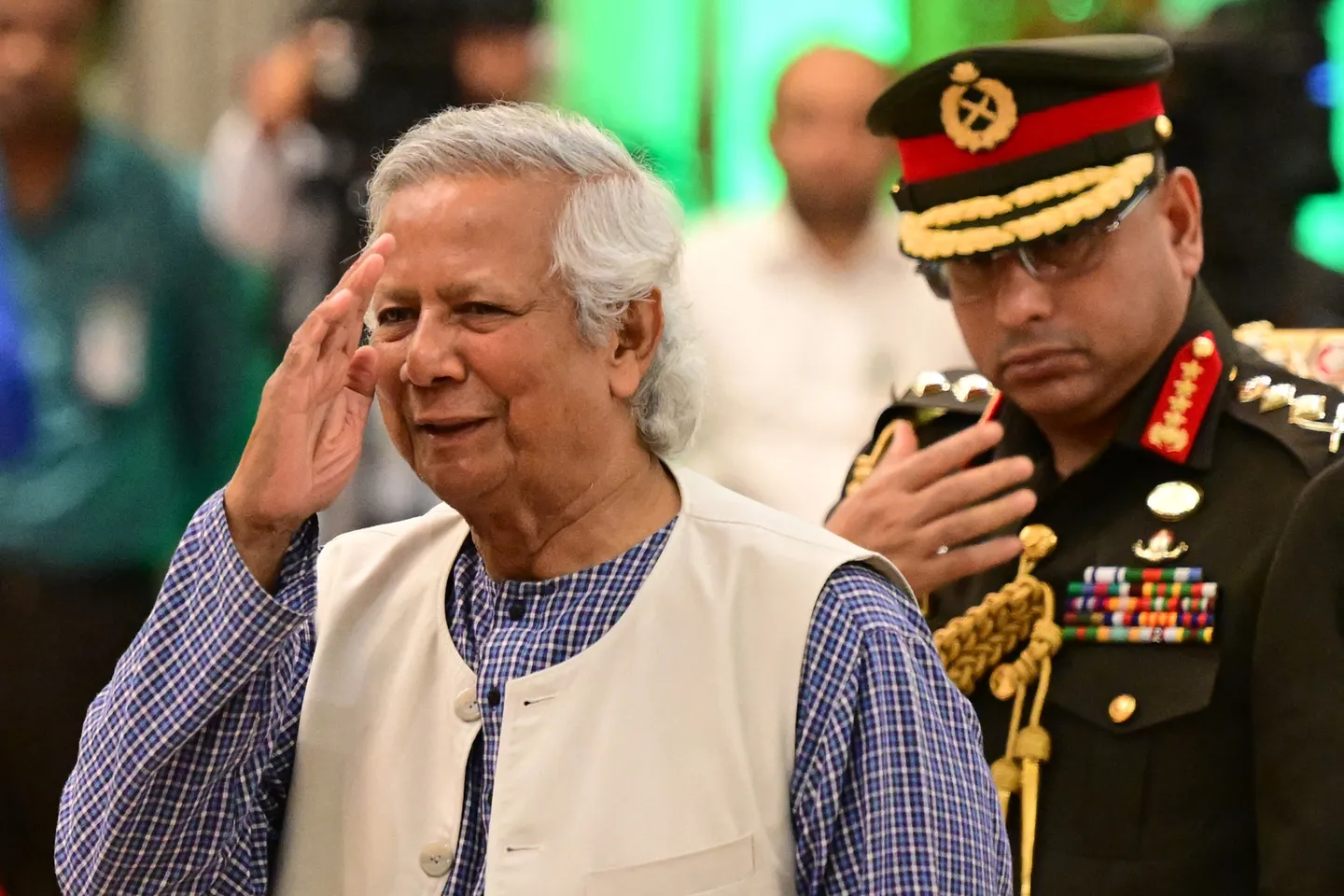 In Bangladesh, a quiet storm is brewing beneath the surface of apparent political stability. The caretaker government led by Nobel laureate Muhammad Yunus, once celebrated as a much-needed corrective to a broken political order is now drawing sharp unease from within the ranks of the armed forces.
As Yunus’s interim administration stretches far beyond its intended timeline, the military is beginning to signal its discontent, albeit obliquely, over the absence of a credible electoral roadmap and the slow drift toward indefinite governance.
At the core of this emerging crisis is a widening and potentially consequential rift between the Yunus-led civilian government and the military establishment. What began as a pragmatic alliance with the army backing Yunus to oversee electoral reform and prevent political collapse has started to fray. The support extended to Yunus was never unconditional. It was premised on a clear understanding: that his mandate would be short, procedural, and apolitical. But with no election in sight and power consolidating around a figure who was meant to be transitional, that understanding has eroded.
Tensions within the army are no longer confined to whispers. Mid-ranking officers and younger cohorts increasingly view the caretaker government’s protracted rule as a betrayal of constitutional norms. Subtle but telling reshuffles in sensitive military posts, as well as expressions of unease from retired generals, suggest that the officer corps is far from united behind the status quo. The military now finds itself at a crossroads: either remain complicit in legitimizing a government that lacks electoral mandate or risk institutional integrity by speaking out. Neither option is without cost, but the erosion of trust between the barracks and the civilian interim regime introduces a dangerous variable into Bangladesh’s already brittle political equation.
The Yunus administration came to power under extraordinary circumstances. Installed to cleanse a deeply compromised electoral system and enable a credible return to democratic rule, its initial legitimacy was anchored in three pillars: broad public support, military backing, and the power vacuum created by the ousting of former Prime Minister Sheikh Hasina. But Yunus’s prolonged tenure risks squandering all three.
The military’s discomfort is not a reversion to its past of coups and direct rule. Rather, it reflects a deeper frustration with a civilian partner who appears increasingly indifferent to the urgency of democratic restoration. Bangladesh’s army, once an overt political actor in the turbulent decades following independence, has in recent years receded from direct intervention, preferring a posture of strategic restraint. Its endorsement of the Yunus government was meant to prevent disorder not to incubate another quasi-authoritarian interlude.
Supporters of Yunus argue that extending the caretaker government’s tenure is necessary to ensure institutional reform and free elections. But the logic is dangerously recursive: the more elections are delayed in the name of reform, the more suspect the reform effort becomes. A caretaker government cannot evolve into an unelected custodian of political order. And in a region with a long history of military ‘resets’ under the pretext of national stability, Yunus risks testing the patience of his most critical institutional ally.
Bangladesh is however not yet in crisis. But it is inching dangerously close to one. Yunus whose international acclaim rests on moral leadership, democratic values, and institutional transparency must now reckon with the contradiction of presiding over a political impasse. The military, for its part, must guard against the temptation of political arbitration, no matter how deep its misgivings.
The path forward is clear: Bangladesh must move swiftly toward elections, with fixed timelines, independent oversight, and robust safeguards. Anything less risks deepening a crisis of legitimacy that neither the civilian government nor the military can manage alone.
The longer this impasse continues, the more combustible the civil-military dynamic becomes. And in that fragile space between restraint and rupture lies the uncertain future of Bangladesh’s democracy.
29 Jun 2026 30 minute ago
29 Jun 2026 31 minute ago
29 Jun 2026 33 minute ago
29 Jun 2026 35 minute ago
29 Jun 2026 45 minute ago