02 Apr 2026 - {{hitsCtrl.values.hits}}
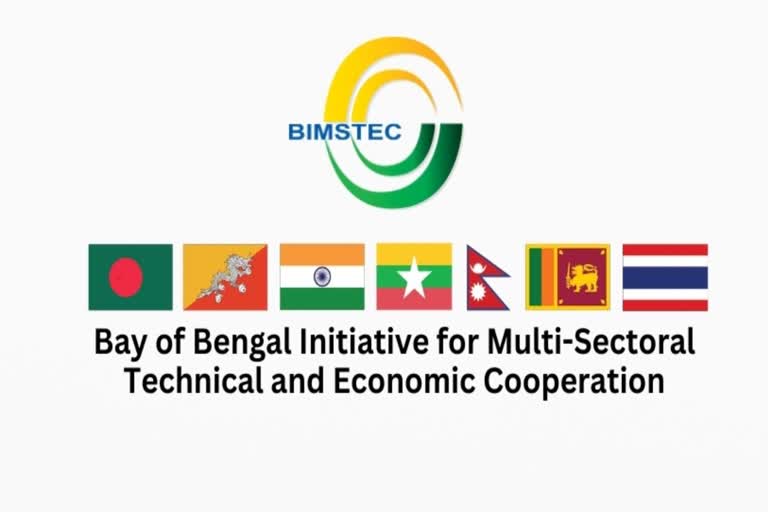 The Bay of Bengal Initiative for Multi-Sectoral Technical and Economic Cooperation (BIMSTEC) is a unique and strategically important regional organisation that connects South Asia with Southeast Asia.
Comprising Bangladesh, Bhutan, India, Myanmar, Nepal, Sri Lanka, and Thailand, BIMSTEC brings together economies with a total population of over 1.8 billion and a combined GDP of approximately USD 5 trillion. This regional alliance has great potential for fostering economic integration, enhancing connectivity, and supporting sustainable development.
For India, BIMSTEC is not just a regional platform but a key part of its broader geopolitical and economic strategy. Based on the twin pillars of the Act East Policy and the Neighbourhood First Policy, India’s engagement with BIMSTEC has grown over the years, making the grouping an important link in the Indo-Pacific framework. As global economic dynamics change and supply chains diversify, BIMSTEC provides India with a chance to boost regional cooperation and explore new growth opportunities.
Increasing trade and economic involvement
India’s trade relations with BIMSTEC countries have experienced remarkable growth over the past decade. From a modest USD 20 billion in 2014, bilateral trade has more than doubled to approximately USD 48 billion in 2024. This upward trend reflects not only improved economic ties but also the region's increasing significance in India’s external trade strategy. With continued policy support, this trade volume is expected to reach USD 100 billion by 2030, demonstrating the group's untapped potential.
The composition of trade has also experienced a major change. While traditional sectors such as petroleum products, pharmaceuticals, iron and steel, and textiles remain dominant, newer areas like digital services, fintech, renewable energy, and advanced manufacturing are becoming more important. This diversification shows a shift toward a more resilient and future-focused trade system.
Thailand and Bangladesh have become India’s top trading partners within BIMSTEC, highlighting strong bilateral ties. Meanwhile, countries like Nepal, Sri Lanka, Bhutan, and Myanmar contribute significantly to specialised sectors such as energy trade, agriculture, and border commerce. This interconnected trade network emphasises the complementary nature of BIMSTEC economies, promoting mutual growth and development.
Expanding investment footprint
Beyond trade, India has significantly increased its investment footprint across BIMSTEC countries. These investments are strategically focused on infrastructure development, energy cooperation, connectivity improvement, and digital transformation. In Bangladesh, Indian investments exceeding USD 3 billion cover sectors such as power generation, pharmaceuticals, and logistics. Similarly, in Sri Lanka, India has contributed to port development, railway rehabilitation, and energy projects, strengthening bilateral economic ties.
Energy cooperation remains a key part of India’s engagement with BIMSTEC. Hydropower projects in Nepal and Bhutan support local economic growth and boost India’s energy security. Cross-border electricity trade and transmission networks further strengthen regional integration. In Myanmar, India’s investments in gas exploration and projects like the Kaladan Multimodal Transit Transport Project demonstrate its dedication to improving regional connectivity.
These investments are backed by lines of credit, grants, and capacity-building initiatives, strengthening India’s role as a development partner. By aligning its investments with the development priorities of BIMSTEC countries, India is promoting a collaborative growth model that benefits the entire region.
Connectivity as a catalyst for integration
Connectivity is central to BIMSTEC’s potential. Enhanced physical, digital, and institutional connectivity can greatly improve trade flows, lower transaction costs, and foster people-to-people connections. India has led several connectivity projects, including the India-Myanmar-Thailand Trilateral Highway, port-led development through the Sagarmala programme, and cross-border rail and inland waterway initiatives.
Digital connectivity is emerging as a new frontier. Cross-border digital payment systems and fintech platforms have the potential to revolutionise trade settlements, particularly for small and medium enterprises. By leveraging digital technologies, BIMSTEC countries can overcome traditional barriers and accelerate economic integration.
Enhanced connectivity further facilitates the development of regional value chains in sectors like textiles, automotive components, and food processing. As global supply chains undergo restructuring, BIMSTEC provides a viable alternative for diversified and resilient production networks.
Strategic significance in the Indo-Pacific
BIMSTEC is strategically important for India within the Indo-Pacific region. It offers a platform to boost regional cooperation, improve maritime security, and support a rules-based economic system. India’s active participation in BIMSTEC also demonstrates its efforts to counter external influences and establish regional leadership.
The recent BIMSTEC Summit in Bangkok reaffirmed India’s commitment to regional cooperation. Emphasis on digital infrastructure, maritime connectivity, and climate-resilient trade mechanisms highlights a forward-looking approach to regional development. By promoting a collective maritime vision in the Bay of Bengal, India is strengthening its strategic presence while fostering economic collaboration.
Challenges hindering full potential
Despite its promise, BIMSTEC faces several structural and institutional challenges that limit its effectiveness. Intra-regional trade remains low at around 6–7%, indicating limited economic integration. Key barriers include inadequate connectivity, non-tariff restrictions, and the absence of a comprehensive trade facilitation framework. Sectoral underutilization is another concern. Areas such as energy cooperation, digital economy, tourism, and the blue economy remain largely untapped. Addressing these gaps requires coordinated efforts and a shared vision among member countries.
Unlocking BIMSTEC potential
To fully unlock BIMSTEC’s potential, a comprehensive reform agenda is essential. Strengthening institutional capacity is a vital first step. Establishing a strong trade facilitation framework and creating a regional development fund can provide the necessary push for integration.
Improving connectivity, both physical and digital, is equally important. Investments in transport infrastructure, logistics networks, and digital platforms can significantly reduce trade barriers and increase efficiency. Harmonising standards, simplifying rules of origin, and adopting digital clearance systems will further enhance trade.
Sector-specific cooperation will generate new growth opportunities. Energy integration through regional power grids, the expansion of digital and fintech ecosystems, and the development of tourism circuits will enhance economic growth across all BIMSTEC countries. Sustainability should also be a primary focus, with coordinated efforts in climate resilience, disaster management, and blue economy initiatives.
Strategically positioning BIMSTEC as an Indo-Pacific economic corridor can boost its global significance. By integrating with international value chains and drawing investments, the region can develop into a major centre for trade and manufacturing.
In conclusion, BIMSTEC serves as a promising model for regional cooperation in a rapidly changing world. Currently, India functions as a strategic platform for deepening economic ties, boosting connectivity, and promoting sustainable development. The steady growth in trade and investment, along with evolving sectoral trends, underscores the considerable potential of this regional grouping. With sustained policy support, improved connectivity, and increased collaboration, India and its BIMSTEC partners are well-positioned to reach a trade goal of USD 100 billion by 2030.
As the global economic landscape continues to shift, BIMSTEC can serve as a model for inclusive and resilient regionalism. By unlocking its full potential, India and its partners can not only promote regional growth but also help create a more balanced and interconnected global economy.
26 Jun 2026 12 minute ago
26 Jun 2026 44 minute ago
26 Jun 2026 1 hours ago
26 Jun 2026 1 hours ago
26 Jun 2026 1 hours ago