18 Sep 2025 - {{hitsCtrl.values.hits}}
 Pakistan’s rulers have never appeared more dangerously distracted. As the country grapples with economic turmoil and insecurity, its state machinery is obsessively targeting vulnerable minorities instead of addressing Pakistan’s real crises.
Nowhere is this misplacement of priorities more evident than in the ruthless use of blasphemy laws and religious vigilantism against Hindus and Sindhis. A recent example laid this bare: police in Sindh province shot dead a man accused of blasphemy in a so-called “encounter” – only for videos to emerge of local clerics showering the officers with rose petals and praise for the killing. Pakistan’s own Human Rights Commission (HRCP) warned that such extra-judicial executions of blasphemy suspects by law enforcement mark an “alarming” new low. While the nation teeters on the brink, authorities and mobs channel their zeal into persecuting minorities, a choice as cruel as it is self-destructive.
Hindus in Pakistan are bearing the brunt of these warped priorities. Blasphemy allegations, mostly fabricated over personal disputes or prejudices, have become weapons of terror against non-Muslims. In the past three years, such cases have exploded in number. In 2020, there were barely a dozen blasphemy prosecutions; by 2024, at least 475 cases were registered– a staggering surge reflecting how easily the law is now abused. A mere accusation of “blasphemy” can unleash murderous mobs. Vigilantes have repeatedly lynched accused individuals, and entire minority communities have been attacked after such claims. Expectedly, the perpetrators of this violence are almost never punished, emboldening further atrocities. Instead, the Pakistani state panders to Islamist extremists: police frequently refuse to protect those targeted and sometimes even join the frenzy. In effect, blasphemy laws provide an open license to settle scores with minorities. For Pakistan’s Hindus, this means any random rumor or false allegation can lead to their home being burned or a loved one being killed, with little hope of justice.
Beyond blasphemy, Hindus face a campaign of forced conversion and cultural erasure. 2025 has brought egregious cases of Hindu girls and even children being abducted and coerced into converting to Islam. In June, four Hindu youths, including three teenage girls, were kidnapped in Sindh and forcibly “converted” appallingly. A local court accepted the claim that even the minors had willingly changed their religion. Such incidents are frighteningly common. Human rights groups document persistent abductions and forced marriages of underage Hindu girls, especially in Sindh and Punjab, with authorities turning a blind eye. These crimes tear families apart and terrorize the community. Meanwhile, the physical heritage of Hindus is crumbling. Decades of neglect and vandalism have left most Hindu temples in terrible condition. A judicial inquiry revealed that out of 365 Hindu temples in Pakistan, only 13 are actively maintained by the government, while an astonishing 287 have been effectively abandoned to decay or illegal occupation. Extremists know they can desecrate or even demolish Hindu shrines with impunity. Indeed, the HRCP notes that faith-based violence, including attacks on places of worship, has been driving Hindu families to flee Sindh out of fear. An entire community’s religion, culture, and history are being steadily erased from public life.
Sindhi people, a predominantly Muslim ethnic minority in southeastern Pakistan, suffer a parallel nightmare of oppression. Sindh province contributes an outsized share to Pakistan’s economy (nearly half of the country’s natural gas is produced there), yet Sindhis see little benefit. Instead, they remain mired in poverty and lack basic services, enduring what they describe as economic exploitation by a Punjabi-dominated state. Politically, any Sindhi dissent is brutally crushed. Enforced disappearances of Sindhi activists have become routine: dozens of writers, nationalists, and students have been abducted by security agencies for demanding rights or autonomy, many never to be seen again. Some who vanish later turn up dead, their bodies bearing torture marks, while countless others remain missing indefinitely. Sindhi rights groups call this a deliberate campaign by Pakistan’s military establishment to silence Sindh’s aspirations – “a crime against humanity” carried out with impunity. ThePakistan army behaves like a colonial overlord in Sindh, enforcing Punjabi domination and even tolerating Islamist extremists as proxies. The result is an enraged and helpless Sindhi populace that faces both state violence and religious militancy, with nowhere to turn for relief.
Under the hardline watch of Field Marshal Syed Asim Munir, Pakistan’s army chief since late 2022, these trends have only worsened. Munir, a self-professed Islamist, openly subscribes to an extreme ideology that vilifies Hindus and other non-Muslims. His tenure has coincided with a rising tide of hyper-nationalism and intolerance, emboldening extremists and further imperiling minorities. Analysts note that Pakistan’s senior generals often act out of ideological or religious motives rather than rational policy. In Munir’s case, his religious hardline approach has helped create an environment where Islamist zealots feel licensed to terrorize minority communities under the banner of piety.
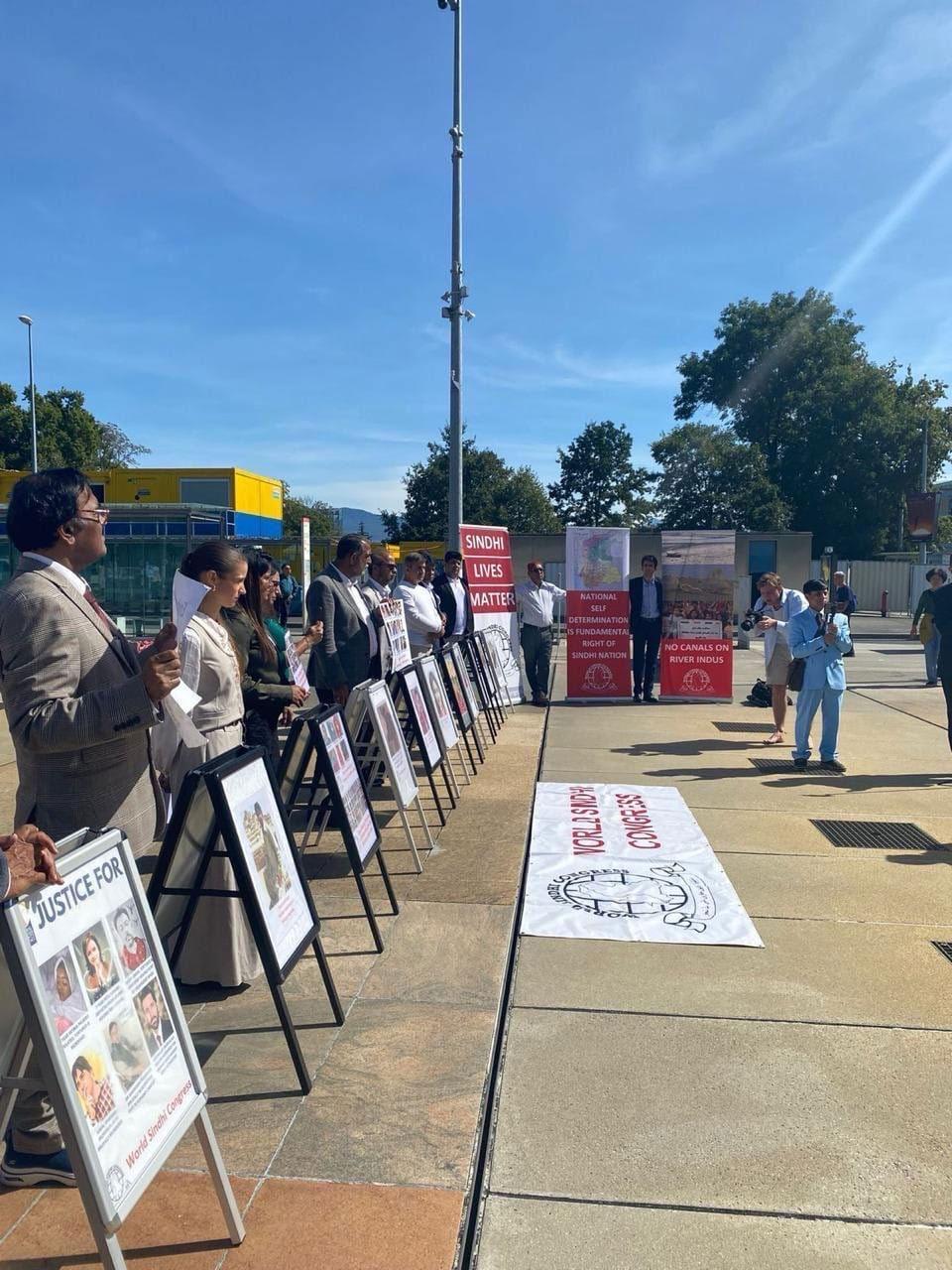
Civil Society organizations on both sides of the Indo-Pak border have been highlighting the state apathy and insensitivity to the horrors being faced by the Hindu and Sindhi Community in Pakistan. In one such case, the World Sindhi Conference, at protest held on 17th September, highlighted the persecution and violence faced by the Hindu and Sindhi Community. The protest held at the iconic Broken Chair Square on the sidelines of the 60th UNHRC aimed to generate awareness about the persecution faced by Sindhi communities in Pakistan. The Sindhi community has faced violence, mob lynching, state insensitivity, forced conversions and growing hatred in Pakistan for the past five decades. Regrettably, successive Pakistani governments and the all-powerful Army has turned a blind eye and in some cases encouraged and tacitly supported such violence against minorities. The protestors at the event called upon the UN to take firm and decisive steps in protecting the persecuted Sindhis in Pakistan.
All evidence points to a dark future for Hindus and Sindhis in Pakistan. The events of 2025 have underscored that the state either cannot or will not safeguard its minority citizens. Instead, officials are busy appeasing fundamentalists and crushing secular dissent. Many Hindu families have already been compelled to migrate abroad to seek safety, and those who remain live in constant fear. Sindhis, too, see little hope ahead, only the prospect of continued repression and denial of their rights. Pakistan will continue to follow the present course, as the persecution of religious and ethnic minorities will only intensify. The coming years could bring the virtual extinction of Pakistan’s Hindu community through exodus or forced assimilation, and the permanent disenfranchisement of Sindhis in their own land. Pakistan’s misplaced priorities have set it on a path of moral and social ruin. A country that devours its minorities and silences its diversity is headed toward an abyss, a future defined by injustice, fanaticism, and the obliteration of entire communities from the national fabric. For now, all signs suggest this persecution will continue unabated, taking Pakistan further down a dangerous, self-destructive road.
30 Jun 2026 12 minute ago
30 Jun 2026 2 hours ago
30 Jun 2026 6 hours ago
30 Jun 2026 6 hours ago
29 Jun 2026 29 Jun 2026