02 Jan 2023 - {{hitsCtrl.values.hits}}
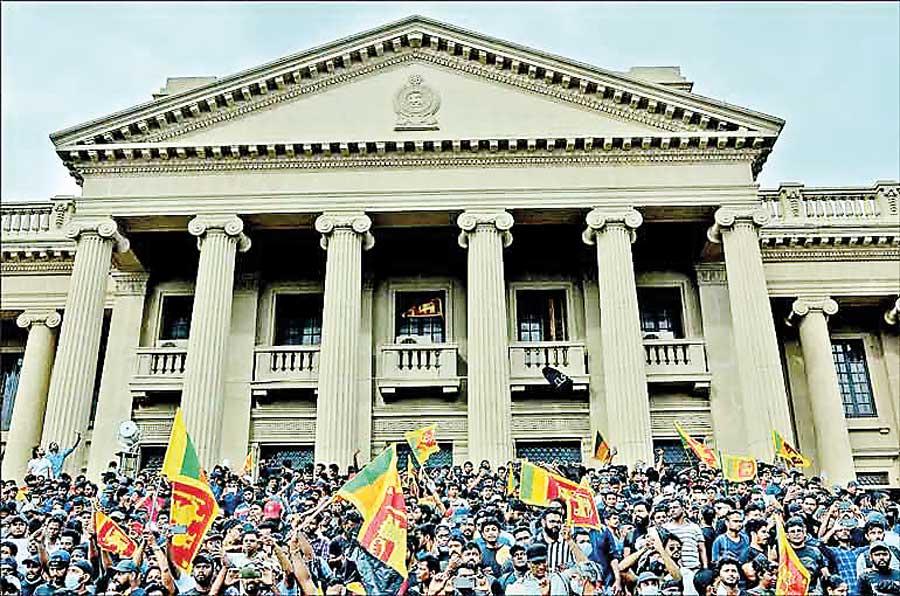
Recently, the government ministers as well as some members of the Chamber of Commerce were quoted as saying that the protestors were destabilising the country. On behalf of the ‘Aragalaya’ movement, one Swasthika Arulingam responded by asking the same question – who destabilised the country?
I quote from the media reports of her statement. “Your people. Your members refused to bring their profits back into the country. You failed to pay our workers’ wages. Our workers are starving on the streets. Our mothers are starving. Our children are not going to school. That is why we came to protest here. You, the political elite and business elite, will not come out of this crisis after pushing us into a ditch and into a corner. We will not allow this. When we come out of this crisis, we will come together and we will defeat this oppression against the people of this country.”
What does ‘elites’ mean and why do they always rule?
The word ‘elite’, first coined in 1902, has become a term of abuse. However, history is the story of one elite replacing another. Vilfredo Pareto (1848–1923), an economist, who turned his hand to sociology, developed his theory of the ‘circulation of elites’. The term élite, used in its current sociological sense, first appeared in his 1902 book ‘Les Systèmes Socialistes’ (‘Socialist Systems’).
The circulation of elite is a theory of regime change described by Pareto. Changes of regime, revolutions and so on, occur not when rulers are overthrown from below but when one elite replaces another. According to literature, the effect on non-elite has not been given much importance, as the theory concentrates more on explaining the significant role played by the elite class in society. One could argue that time is opportune for the non-elite class to take over government power, without replacing one elite with another.
Five years ago in January 2018, this writer’s article under the caption ‘Where there is no bread, there is no law;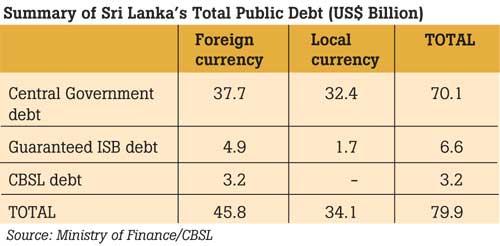 where there is no law, there is no bread’ was published in daily newspapers, where it was argued that in Sri Lanka, corruption and mismanagement have reached such proportions that the young electorate, especially the millennials, viewed political leaders with suspicion. They are really fed up with all the political parties, including those in the government as well as in the opposition. I reproduce below one para from my article. “The successive governments have failed in bringing social justice and much-needed economic welfare to the people. Consequently, the income inequality and social unrest are fast spreading across the regions, sub-districts and cities. Most of the professionals and academics are of the view that the quality of life of not only the poor, even the middle class, is drastically declining. The immediate future scenario would be that more and more people would become dissatisfied with the government machinery. This will lead to social unrest, which makes the system ungovernable.”
It goes without saying that this is more relevant in today’s context. However, the good news is the current administration has been able to contain inflationary tendencies to a certain extent, which skyrocketed up to end-October, where the Colombo Consumers Price Index-based inflation rate has now come down to 57 percent during the month of December.
Nevertheless, this is at the expense of scaling down the economic growth-forced recession, where unemployment and poverty have increased to unbearable limits. In the event the current negotiations on debt restructuring with selected creditors failed, the much-needed International Monetary Fund (IMF) facilities would not be forthcoming on the due dates.
How does the government then finance the twin deficits during the next quarter? It means the treasury will be compelled to seek the Central Bank to buy Treasury bills, thus creating excessive money printing on the one hand and on the other hand, the commercial banks may not be able to meet the forex requirements to import fuel and other essential goods with the persistent deficit in the balance of payments account. This may end up in massive social unrest once again. The successful conclusion of the current negotiations, in particular with the Chinese counterpart, is of paramount importance to enable the IMF board to approve the US $ 2.9 billion facility and obtain the first tranche. Contrary to popular belief, if they are able to succeed in this process, it is possible to put in place the required macroeconomic fundamentals in order, to stabilise the economic condition. The current process of debt restructuring should be viewed in that perspective. However, the origin of public debt is more important than the remedy of debt restructuring.
Cause of debt more important than remedy
A recent research article by Ilias Bantekas, Professor of International Law and Arbitration, published in Bin Khalifa University under the caption ‘Lebanon’s public debt default: The Greek experience shows the cause is as important as the remedy’, may be useful for us to be more careful in our debt restructuring efforts. According to the above research paper, an independent parliamentary committee’s extensive findings clearly showed that until the beginning of the global financial crisis in 2008, Greece’s debt-to-GDP ratio was one of the lowest in Europe and certainly sustainable.
So, why did it shoot through the roof the following year? This is because the Greek banks had accumulated private debt (in the form of loans) to the tune of about 100 billion euros. Then Greece’s debt-to-GDP ratio skyrocketed and its creditworthiness declined. It now had a newly discovered debt of 100 billion euros and these facts were buried under the popular narrative. The independent research carried out suggested that in order to fully understand Lebanon’s debt crisis, it is not sufficient to simply examine the remedial measures suggested by the IMF. The origins of a country’s debt are far more important because it tells us how the debt was accumulated and by whom.
Accordingly, Prof. Bantekas advises the Lebanese government as follows: “No restructuring process should commence before the truth about the debt takes place. No person of sound mind would mortgage their house simply because a bank told the owner he had incurred a debt of which he was unaware. The owner would first inquire about this debt and if he found that it was wrongly or unjustly incurred, he would refuse to pay it. This is the very least the Lebanese people can demand.”
Lesson learnt from past experience
As for the debt restructuring process, it is important to critically analyse the existing stock of total debt – domestic and foreign debt, the origin and nature of the debt stock and the composition of its holders/creditors. The lesson learnt from the experience in Greece and Lebanon in debt restructuring would be that a more comprehensive analysis of the origin of debt is more important than just following debt restructuring mechanism (even though it’s highly sophisticated) in terms of the IMF recipe. According to the Finance Ministry and Central Bank sources, the total public debt has skyrocketed to 145 percent of GDP. Earlier, the IMF has predicted Sri Lanka’s debt was around 122 percent of GDP. Was it only the Central Government debt, where it was only 104 percent of GDP, by end-2021?
As per the latest statistics, Sri Lanka’s total public debt was US $ 79.9 billion. Further, the total borrowing requirement for the 2023, as reflected in the approved government budget, would be Rs.4.9 trillion. This is despite increasing the tax revenue and the proposed debt restructuring exercise. The total additional borrowings during the first quarter could be as much as Rs.1, 250 billion (US $ 3.6 billion), as per Budget 2023. The challenge here is how we are going to arrange bridging finance at least for the next three months ending March 2023, awaiting the IMF Board decision.
It is therefore suggested that the authorities should make available to public by way of presenting some kind of ‘forecast of quarterly budget deficits’ and how it expects to finance such deficits on a monthly basis as well as the origin, nature and composition of public debt.
(Jayampathy Molligoda is a company director and former Chairman of the Sri Lanka Tea Board)
08 Jul 2026 9 minute ago
08 Jul 2026 31 minute ago
08 Jul 2026 1 hours ago
08 Jul 2026 1 hours ago
08 Jul 2026 2 hours ago