02 Jan 2023 - {{hitsCtrl.values.hits}}
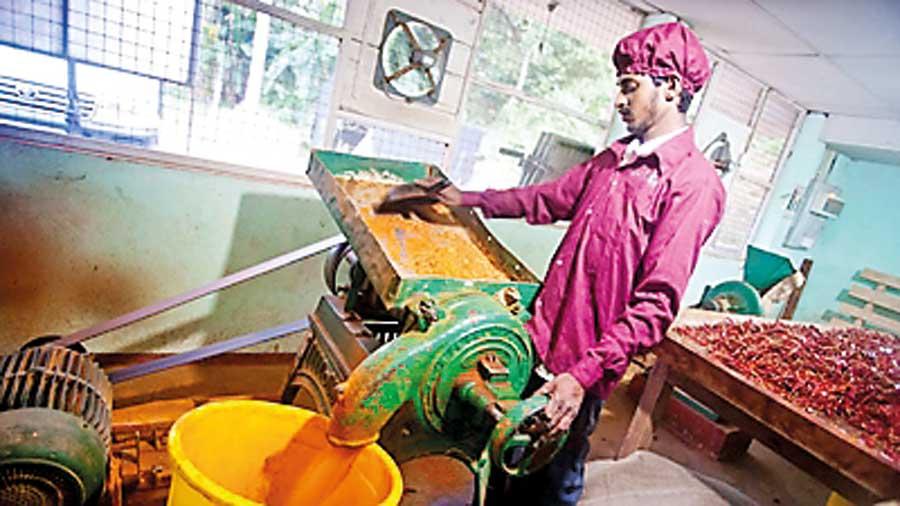
This is an attempt to understand what has caused the small and medium enterprise (SME) businesses to decline and its link to ethical and moral behaviour over a period of time.
Brief history, evolution of business ethics and its connectivity to Islamic principles
Trading has been in our blood from the time our country was under colonial rule. The origins of some of our businesses can be traced to over centuries ago, with a very few that have survived the test of time. Last two to three decades in particular, with the advancement of information technology, have seen a paradigm shift in the way businesses have evolved.
Today, with so much scrutiny on the processes and demand for transparency and visibility than ever before, it is paramount for businesses to evolve and embrace the need of the hour, instead of being left behind. This is also in line with what Islam teaches about business ethics.
Islam places great emphasis on business ethics in human life. Faith incorporates ethics and morals, which are key ingredients in positive behavioural changes and actions needed by human race. That triggers the cultural change and behaviour required to be ethically driven. This is not only applicable for SME businesses owned by Muslims but in general, it encompasses all faiths.
Prophet Mohamed (pbuh) was asked what was the best kind of earning and he replied, “That for which a man works with his hands and honest trading.” This has a very deep meaning and most of the issues faced by our SME businesses are centred on it.
To refresh the five key Islamic principles for business:
■Trading in lawful items
■Honesty in dealings and uphold integrity in all walks of life
■Treat staff well and take care of their welfare
■No deception or fraud
■Charity
Key insights about SME businesses
In summary, here are some key facts:
■Predominantly, either sole proprietorship or partnerships. Some of the family businesses fall under this category
■Significant number of businesses are conducted in key business centres with Pettah and the surrounding area being the major trading hub
■Very minimum creativity, with trading being the main activity with mostly legacy businesses
■Lack of visibility in the way businesses are conducted, with most focused on day trading. No long-term planning
■Relies on imports and other locally manufactured goods, with very little value addition
■Minimum value being added with cash dealings being the main exchange. Banking used only for payments to vendors and other statutory payments
Why have SME businesses declined as a whole over past two to three decades?
Sri Lanka as a whole has seen significant declines in morals, ethical standards and principles across all walks of life, due to the failure to address the issue at the outset instead, allowed unethical practices to thrive. This has affected the way our businesses are conducted. Earlier, we only saw unethical business practices confined to a particular business area. Today, we see rampant corruption, bribes and other unethical practices, including conflicts of interest.
The overall decline in the morals/ethics of the board of directors, inappropriate behaviour and practices of some of the medium to large companies have had a negative influence on some of the SME businesses, which directly or indirectly depend on these large entities. Sad to say, even some of the ethics and business practices are just confined to annual reports. This has become a social malaise with no end in sight.
Such unhealthy practices have had a negative impact on our SME businesses, partly due to the lack of creativity and drive to adopt new strategies to avoid being caught in the business trap. In spite of this, there are a minority of our businesses that conduct themselves in an ethical manner. However, majority of our businesses are caught in this web of unethical business practices.
Most of the SMEs either:
■Believe in making money by any means, which leads to bribery and corruption, involving government/state officials. Ex: Falsifying records by maintaining two sets of books
■Aware of the inherent structural challenges but don’t want to change and continue with the status quo/age-old culture
■Ignorant and refuse to heed professional advice, as they assume to be experts in running all facets of their businesses
■Engaged in cheating or lying in some form or shape. Ex: Tax evasion is rampant and goes hand-in-hand with black money/money laundering. Ex: Invest in Ponzi schemes, sugar scams, to name a few.
This is the general view among majority of the people. Isn’t it time to think afresh and improve the image about general business practices than repeating the same errors, yet expecting different results? It is a common misconception where the size of the bank balances or expansion of business through unethical means are considered benchmarks to evaluate success. Does this really matter if it is not for the greater good of the country?
Instead of addressing fundamental weaknesses and cracks in the business models of these SME businesses, many choose to take the easy way out by leaning on politicians for business success. Shouldn’t we ask ourselves if it is really worth it from a long-term value perspective?
Ask those who truly practice ethical principles in their respective businesses and how they managed to stay afloat despite all the challenges, particularly during the global pandemic. In fact, these businesses have had other avenues being opened up. That’s how blessings could be received in different forms and shapes. They could be good role models and mentors for our SME businesses.
What can we do to support these SME businesses follow ethical practices?
First and foremost, the SME businesses must be ready for a mindset change and the will to succeed by ethical means regardless of the circumstances. Few takeaways:
1) Support business analysis
Build a pool of active, semi-retired and retired professionals from different backgrounds to perform a business analysis of selected SME businesses based on strata representing different industries, social status, income levels and type of businesses i.e., sole proprietorship/partnership/limited liability entities, etc. Demonstrate the value proposition of retaining the status quo of the current business model versus following the best practices and ethics.
Lack of economic insights are often the challenge faced by the entrepreneurs, as they lack the skill to draw observations from their financial transactions. More often than not, this has either prevented them from making informed decisions or made incorrect decisions based on wrong assumptions and data, leading to poor financial health.
2) Assist in transformation of select SME businesses
Drawing up an action plan for a gradual shift towards transparency, accountability and visibility. Follow it up with periodic monitoring of progress and find practical solutions to overcome the challenges faced during the implementation.
3) Look out for innovative products and services and assess fit-for-purpose for SME businesses under review/scrutiny
Identify ideas/businesses that will assist in solving pressing social and ecological issues and link up with start-up institutions such as Lanka Impact Investing Network (LIIN) or Lanka Angel Network to evaluate business ideas before reviewing best fit as a long-term replacement or switch over business model. Ex: Export-oriented organic agro-based, healthcare, tech solutions, eco-friendly projects, etc.
4) Assist in raising equity as opposed to debt
Majority of the SME businesses are debt ridden and one of the primary reasons for either going bankrupt or struggling for traction. Support is conditional to implementing reforms and business restructure.
How can we support ethical business practices?
There is a vacuum for a not-for-profit organisation to fill this gap. Here are ways and means of facilitating ethical business practices among SME businesses.
■Identify businesses that follow best practices and uphold ethical business. These SMEs are to be given a recognition award
■Membership in these not-for-profit organisations should be earned by gradually building it, instead of issuing it lock, stock and barrel. SMEs must earn the right to be part of the organisation.
■Create exclusive membership for those who practice ethics based on agreed criteria. Ex: Perform smart audits, any conflict of interests and independent feedback from stakeholders i.e., customers, suppliers, etc.
■Sponsor workshops and seminars in creating awareness among SME businesses on the importance of adopting diversity, equity and inclusivity (DEI) and environmental, social and governance (ESG)
■Identify unique export-oriented businesses (environmental and eco-friendly) either existing or new and pitch to SME businesses or interested high-net-worth individuals
■Consultation window for SME businesses to seek professional help on business model, restructure, funding methodologies and forecasting, etc.
Closing remarks
Do we want to change this unhealthy and unsustainable way of doing business or are we just happy to continue with the same rhythm that has seen a decline in our morals, values and principles? This is the choice we have to make to earn our respect back within and outside the country. That’s why there is a huge vacuum for a not-for-profit organisation to assume a crucial and specific role in lending a hand in these SME businesses to help them adopt best practices. Change cannot happen overnight but if we are to survive and be resilient during difficult times, we need to work towards changing the behaviour and culture of our business community.
The challenges in business we face today are going to change significantly with further advancement in the IT industry and in customer demand dynamics. Ex: Customers are now demanding more visibility on supply chain, fair compensation to workers, etc. Out of the active labour force of approximately 16 million, at least 75 percent of the 8.3 million non-working population are women, which is an indication of the opportunity that exists to rectify this unhealthy position in the future.
Getting SMEs on the right track is a critical success factor as far as the country is concerned, as it is the backbone of the economy. That is why it’s important for all of us help the SME businesses to adopt best practices, be ethical entrepreneurs and explore new opportunities.
(Zowfir Zaheed is a finance and business turnaround advocate, having worked across different service sectors i.e., energy, COGP (chemical, oil and gas, petroleum), media and financial services, both in Sri Lanka and overseas, with extensive experience in finance and strategy. He now specialises in business turnaround services to the SME sector and with specific interest in start-up advisory. He can be reached at [email protected])
08 Jul 2026 4 minute ago
08 Jul 2026 26 minute ago
08 Jul 2026 1 hours ago
08 Jul 2026 1 hours ago
08 Jul 2026 1 hours ago