02 Jan 2026 - {{hitsCtrl.values.hits}}
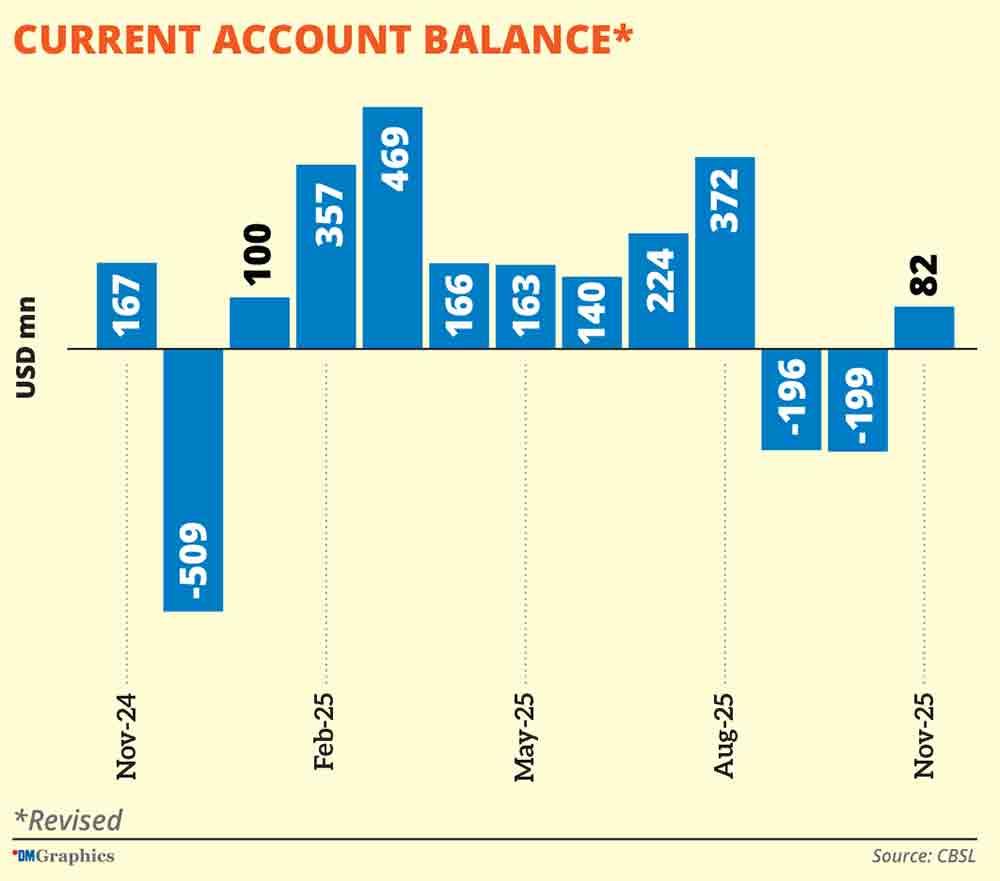
Sri Lanka’s external position regained some footing in November, with the current account swinging back to a surplus after two months of deficits, even as widening trade gaps and rising import costs underscored the fragility of the recovery.
The Central Bank said the current account posted a surplus in November, lifting the cumulative surplus for the first eleven months of 2025 to US$ 1.68 billion, supported largely by resilient workers’ remittances and a growing services account.
However, pressures from merchandise trade intensified, with the trade deficit widening year-on-year in November and expanding to about US$ 6.9 billion during January – November, driven in part by a sharp rise in vehicle imports.
Vehicle imports reached US$ 281 million in November alone, pushing cumulative imports of personal and commercial vehicles to US$ 1.75 billion for the eleven months to November, reflecting pent-up demand following earlier restrictions. At the same time, Sri Lanka’s terms of trade deteriorated as import prices rose faster than export prices, adding to cost pressures on the economy.
The services account remained a key buffer, with its surplus growing to around US$ 3.4 billion in the January - November period, despite a year-on-year decline in November due to softer tourism earnings and lower inflows from transport and other services.
Tourist arrivals improved both month-on-month and year-on-year in November, though earnings were marginally lower than a year earlier, highlighting sensitivity to pricing and seasonality.
Workers’ remittances continued to be a bright spot, rising to US$ 673 million in November and lifting cumulative inflows to about US$ 7.2 billion in the first eleven months, a robust 20.1 percent increase from a year earlier. Foreign investors remained net buyers of government securities during the month, even as equities saw net outflows. Gross official reserves, including the swap line with People’s Bank of China, stood at around US$ 6.0 billion by end-November, despite ongoing external debt service payments. The rupee, meanwhile, depreciated 5.6 percent against the US dollar in 2025, reflecting both global currency dynamics and domestic demand pressures.
Taken together, the data point to an external sector that is stabilising, but still exposed. Remittances and services are cushioning the economy, while import-led trade pressures and softer terms of trade signal the need for careful calibration of demand, imports and capital flows in the months ahead.
06 Jul 2026 4 hours ago
06 Jul 2026 4 hours ago
06 Jul 2026 4 hours ago
06 Jul 2026 5 hours ago
06 Jul 2026 5 hours ago