03 Dec 2025 - {{hitsCtrl.values.hits}}
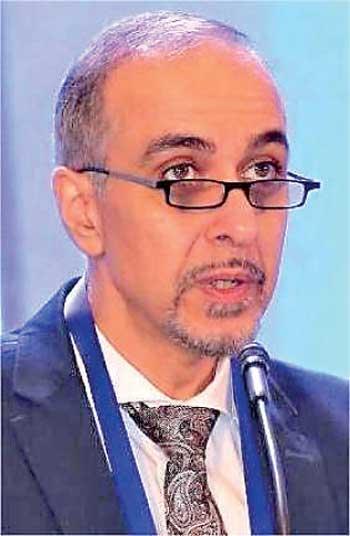 |
| Gevorg Sargsyan |
The World Bank has handed Sri Lanka a sharply defined economic reform recipe, a four-pillar blueprint aimed at dragging productivity out of a two-decade decline and steering the country from fragile stabilisation to durable, investment-driven growth.
Delivering a forward-looking call to action, World Bank Country Manager for Sri Lanka and Maldives Gevorg Sargsyan said the country is now at a “defining moment”, where its next phase of growth hinges entirely on embracing second-generation reforms.
“Sri Lanka cannot return to a debt-fuelled growth model. The future must be built on productivity, competition and private investment,” he said addressing the Sri Lanka Economic and Investment Summit 2025 hosted by the Ceylon Chamber of Commerce (CCC) yesterday.
Despite recent shocks and a projected near-term growth rate of 3–3.5 percent, Sargsyan said the administration’s 7 percent growth target is “absolutely achievable”, but only if Sri Lanka embraces deep structural reforms. He highlighted that while stabilisation has been achieved, austerity has hit households hard, poverty has doubled since 2021, and one million young people will enter the workforce over the next decade.
The World Bank official laid out a four-pillar reform agenda aimed at productivity gains, competitiveness, and inclusive growth.
First, Sri Lanka must reopen its economy and restore competition. Exports have fallen from 40 percent of GDP in 2000 to around 20 percent today, while high tariffs, slow customs and weak domestic competition have suppressed productivity. Coconut yields lag East Asian peers by two to three times, and port rankings have slipped from the top 20s to the 60s and 70s globally.
Second, factor markets need urgent reform. Businesses struggle to access land, attract skilled labour, and secure financing. Sargsyan called for a modern insolvency framework, consolidated labour legislation aligned with global standards, and transparent state-land administration rules.
Third, private and foreign investment must become the engine of growth. Public resources alone cannot fill the gap. He urged a clear national investment strategy, greater openness, and a transparent framework for public–private partnerships, citing Sri Lanka’s strengths in ports, energy, and tourism.
Finally, the transition must protect people. Reforms will create winners and losers, and targeted, data-driven social protection, reskilling programmes, and temporary safety nets are essential, particularly in the aftermath of the recent disaster.
“Sri Lanka has already proven its resilience. You have done the hard things to stabilise the economy. Now you must build higher.”
Sargsyan added that the World Bank stands ready to work with the government and private sector to convert stabilisation into sustained, inclusive prosperity.
“This is the moment to act. Sri Lanka’s next chapter must be built on bold, second-generation reforms.”
(SAA)
19 Jun 2026 1 hours ago
19 Jun 2026 4 hours ago
18 Jun 2026 7 hours ago
18 Jun 2026 8 hours ago
18 Jun 2026 9 hours ago