24 Nov 2023 - {{hitsCtrl.values.hits}}
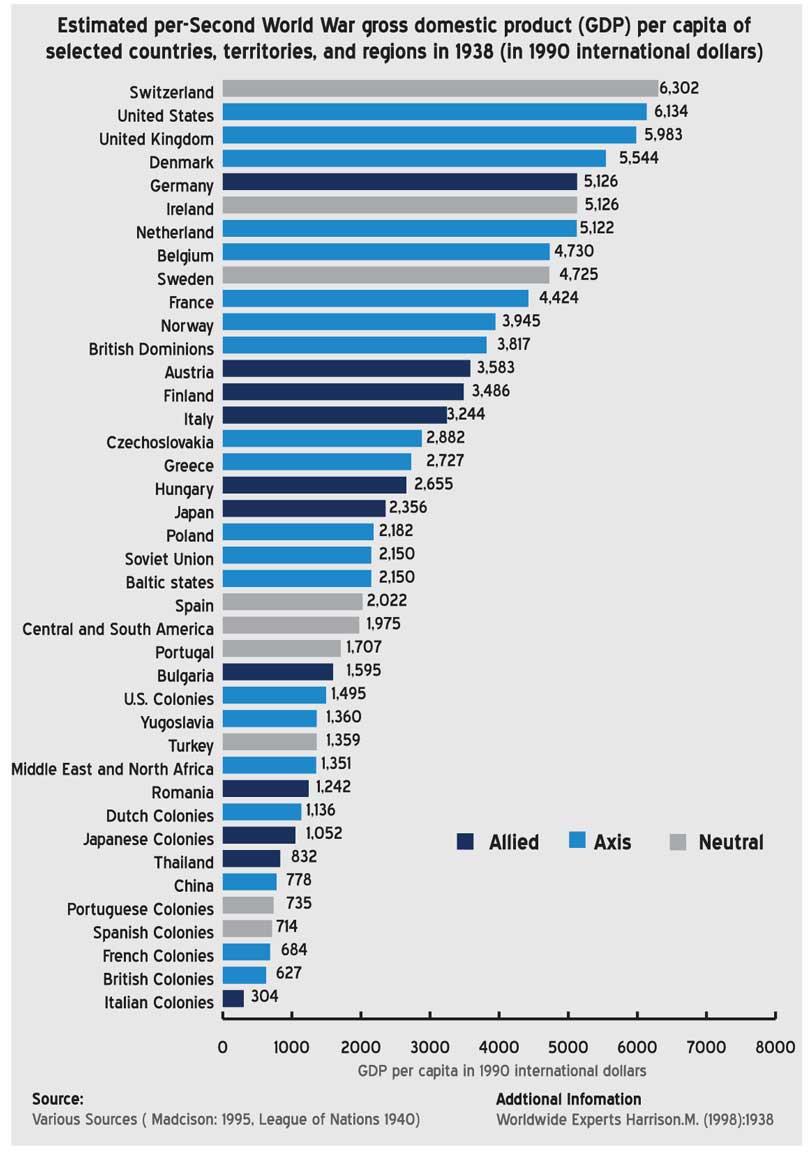
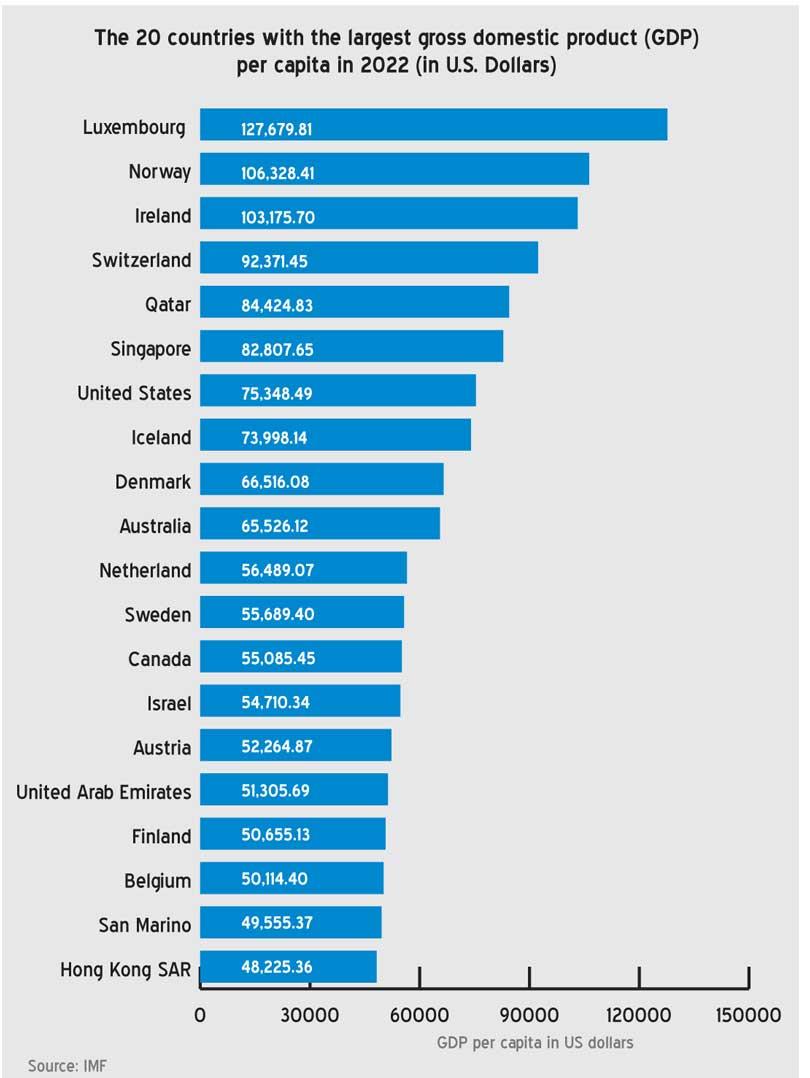
 Since independence Sri Lanka has been struggling to arrive at a developed state. We seem to be failing at it, making the same mistakes over and over again. The western institutes, which run the global financial systems and development aid, require poor nations to follow a linear development process, which reinforces and consolidates the current global order. That is why only a handful of nations have been able to exceed to a developed state since the end of the Second World War. See list of the top nations in 1938 and 2022.
However, Sri Lanka has had many chances during this time to leap frog in its development with projects if properly executed. The accelerated Mahaweli project was one such project, where we were talking of exporting surplus electricity to south India. From 1976 to 1986, all the major hydro projects were completed, except for Moragahakanda, with a capacity per annum, which was completed in 2018. This opportunity cost is (30 years X 25 MW) around 750 MW of energy towards the development of the country, not counting the savings by reduced consumption of fossil fuels for energy generation and agricultural output during this time. This is a typical symptom of Sri Lanka where the “last Mile” is never completed because there has been a political change in governance.
Becoming ‘Gaza’ of India
In 1988, President Premadasa took over from President J.R. Jayawardena (Ironically, the Mahaweli Project was first initiated in 1961 under the Sirimavo Bandaranaike Government). President Premadasa’s political priorities were different (housing) to that of the previous regime, thus relegating the last bit of the project. This was the one opportunity which would have allowed Sri Lanka to stay ahead of the energy demand curve to ensure a continuous reliable supply of energy demanded by the nation for its development.
However, opposite has happened. We have sat back and waited until we ran out of generation capacity and become reliant on emergency power purchasing at unsustainable rates, making Sri Lankan businesses uncompetitive in the global markets. Since then, Sri Lanka has not been able to keep ahead of the energy demand of the nation to the point that today it’s holding back its development. Now, in 2023, we are going with the begging bowl to India to buy electricity from India. This by the way is a massive national security risk. We are handing over massive leverage to a nation that has clearly had problems with us. We are in fact willingly and voluntarily becoming the ‘Gaza’ of India. In the future, India can shut off the electricity supply, if we don’t do as they please.
This level of insanity among our political elite and government planners is a new level of stupidity.
White elephants
This pattern of stopping, relegating or truncating nationally important projects, which gives us an opportunity to leap ahead when the people or parties that govern Sri Lanka change, is been practiced up to date. One can see a continuum of projects from the one undertaken to connect the Ratmalana airport (a white elephant since the Katunayake airport was built) with the Katunayake airport via the Baseline Road (which is still not completed as at today) and the Katunayake Expressway. We are all familiar with the delays in the construction of the expressway. Had we been able to complete this project, we would have connected the two industrial areas of Ratmalana and Katunayake with two airports and the Colombo port with less than one hours travel time between them. This connectivity would have been a massive incentive for trade and investment and brought back the Ratmalana airport back to life from its white elephant status.
The standard excuse during this period was that we were fighting a war; however, things seem to have gotten worse since the end of the war in 2009. Since 2009, the Colombo Port City and Nelum Tower projects were stalled for nearly 18 months and an international airport was used for paddy storage while another was built in the north. Now we have three international airports (Ratmalana, Mattala and Jaffna), which are white elephants. Adding insult to injury is that in October 2023, several SriLankan Airlines flights were routed back to Trivandrum in India, due to bad weather, while the three white elephant airports stayed unused in Sri Lanka.
No public outcry, no industry concerns for loss of opportunity and escalation of costs, absolutely no accountability at any level of industry or government. The Civil Aviation Authority and Airport and Aviation Services seem to be at ‘child’s play’. It seems that the need of the hour is a national aviation strategy for the country that transcends politics. The icing on the cake was the cancellation of the Light Rail Transit system, as it could not transport cargo containers.
The above are some of the examples of nationally significant projects, which would have allowed Sri Lanka to leap forward in its development but never implemented as intended. The public is aware of them, as they were publicised through media, simply due to their size and cost. A number of much smaller projects that are abandoned and stopped that are dotted around the country are numerous. They range from essential roads and bridges linking communities to structures that are needed to house government services and other commercial activities that need to be provided close to where people reside. Each new minister restarts his or her ministry without even considering the activities that have been done by the predecessor. A clear sign that this is happening is the trail of half completed projects or ‘white elephants’ we see dotted around Sri Lanka, which is highlighted by newspapers from time to time.
The economic disruption caused by these decisions, where investors are made to wait, contracts are not honoured, contractors and suppliers, who are never paid or need to wait forever to be paid, destroys investor confidence. Additionally, this puts many small and medium businesses in to bankruptcy. Over the years, it has deincentivised many investors, international and local organisations to work with the government.
This has allowed only a handful of organisations to work with the government. This in turn has allowed irregularities to creep in and be tolerated in the procurement process without much publicity. This apathy in turn opens the door to multiple layers of corruption.
Corruption in the country now transcends the political, administrative and societal strata. This has made some investors leave the country, taking their investment even before the projects have been approved, as the kickback requested is so large that it makes the project unviable. An example of administrative-level corruption, which was highlighted in the local media, is the Google Balloons internet coverage for Sri Lanka. Google finally pulled out its service offer from Sri Lanka.
Slash-and-burn mentality
Parallel to this, many legislative initiatives, which also would have propelled Sri Lanka to the next level of development. This legislation never got off the ground, due to grassroots-level opposition to them. Legislation for a paradigm shift in human rights, employment laws, education, trade, aviation, etc. has been held back, due to insular petty thinking. According to the Census and Statistics Department, in 2021, only 22 percent of the Sri Lankan population was English literate. In the same year, only 22.9 percent of households owned a desktop or a laptop computer. Perhaps these are early indicators of the digital divide taking root in our society, due to corruption.
This type of thinking and acting is akin to the ‘slash-and-burn’ technique (relating to or denoting an environmentally destructive method of agriculture in which existing habitat is cut down and burned off before a new artificially engineered mono agriculture is practiced, typically leaving behind only very large trees that are too big to cut down) used in agriculture. Where, each new farmer destroys a new area to harvest his crops and by crop, I mean the alleged commissions and or bribes that our politicians are apparently accustomed to take, thereby completing the analogy. The irony is that a leading politician was recently quoted in the media saying that “if not for the free education policy that most Sri Lankans would still be slash-and-burn farmers”. It appears that Sri Lanka over the years has been successful in educating the slash-and-burn farmers, however, apparently the educated farmers, who are now politicians, have not been able to abandon the slash-and-burn mentality.
Going forward, we must develop a national development plan that will be implemented despite who takes political leadership. This gives room for the political party to develop and implement their vision as well as keep the country strategy developing unabated. This requires politicians of great stature to run this country. Such people may not be forthcoming, given the electoral system and small mindedness of most people who exercise their vote.
(Roshanga Wickremesinghe is the author of the book ‘How Small Countries Can Compete and Grow - A Case for Sri Lanka’. He is the founder of R & R Associates Consulting, a sector-independent strategy consulting practice.)
26 Jun 2026 2 hours ago
26 Jun 2026 2 hours ago
26 Jun 2026 2 hours ago
26 Jun 2026 2 hours ago
26 Jun 2026 3 hours ago